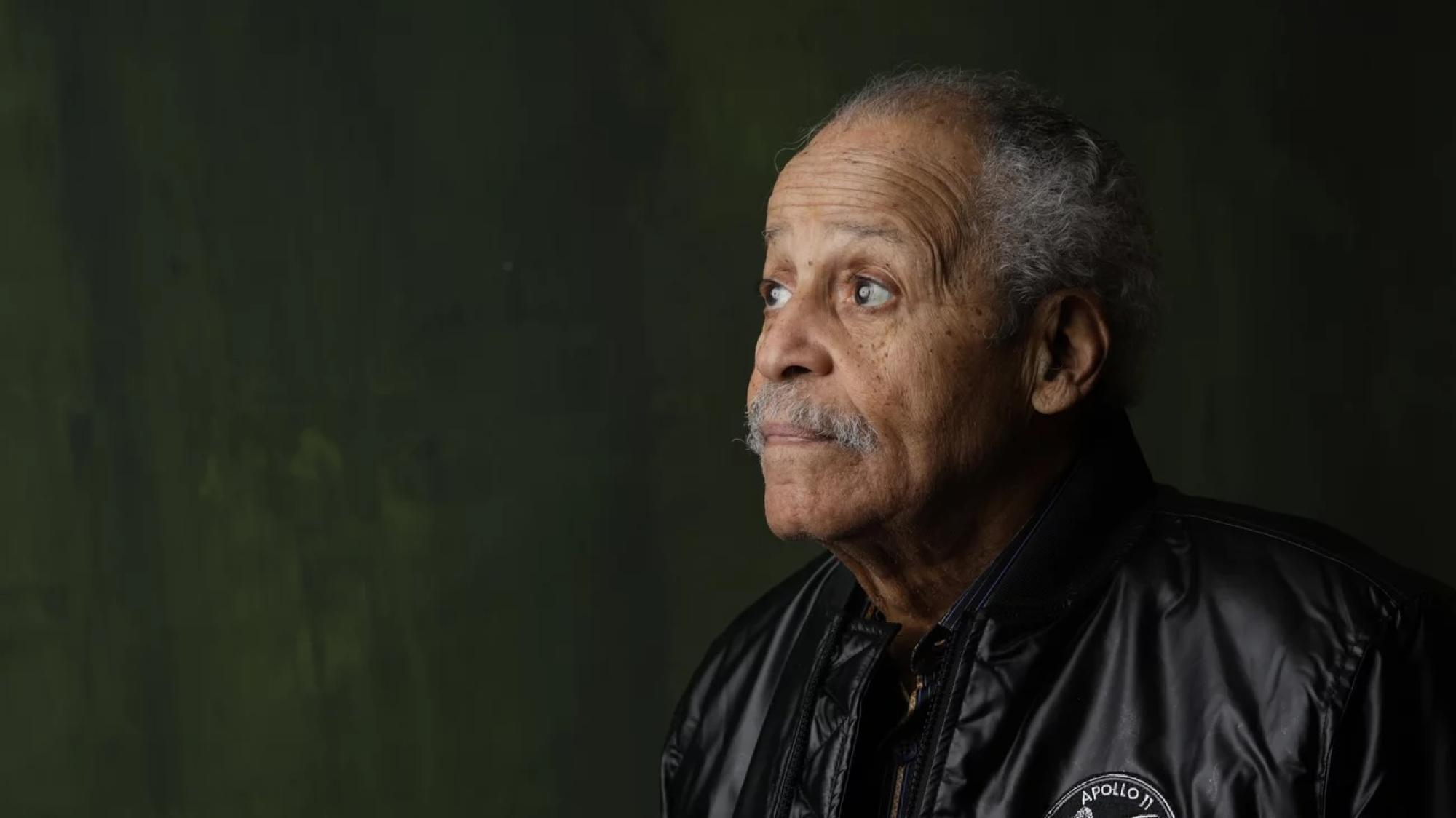
Ed Dwight, the man who six decades ago nearly became America's first Black astronaut, made his first trip into space at age 90 on Sunday along with five crewmates aboard Blue Origin's New Shepard rocket. The approximately 10-minute suborbital flight put Dwight in the history books as the oldest person ever to reach space. He beat out Star Trek actor William Shatner for that honor by just a few months. Shatner was a few months younger when he went up on a New Shepard rocket in 2021. In the 1960s, Dwight, an Air Force captain, was fast tracked for space flight after then-President John F. Kennedy asked for a Black astronaut. Despite graduating in the top half of a test pilot school, Dwight was subsequently passed over for selection as an astronaut, a story he detailed in his autobiography, Soaring On The Wings Of A Dream: The Untold Story of America's First Black Astronaut Candidate. After leaving the Air Force, Dwight went on to become a celebrated sculptor, specializing in creating likenesses of historic African American figures. Speaking with NPR by phone a few hours after Sunday's launch, Dwight said, I've got bragging rights now." "All these years, I've been called an astronaut," Dwight said, but "now I have a little [astronaut] pin, which is ... a totally different matter." He said he'd been up to 80,000 feet in test flights during his Air Force career, but at four times that altitude aboard New Shepard, the curvature of the Earth was more pronounced.
Latest
Latest News
Each news summary is created according to strict standards. Here's how we do it.
Each summary is created using a consistent editorial procedure. The target length is approximately 16 lines of 11-point Arial text in a 650-pixel-wide column. Up to 25% of a summary may be set in bold to emphasize the most important ideas. Summaries are composed of verbatim excerpts presented in the same sequence as they appear in the original news source, with very minor editorial additions. Where material has been omitted between excerpts, the omission is indicated with ellipses (...). Any words added by an editor for clarity or context appear in [brackets]. Our original news editor was Fred Burks. Tod Fletcher edited most summaries from 2007 through 2014, and Mark Bailey has served as news editor since 2014.