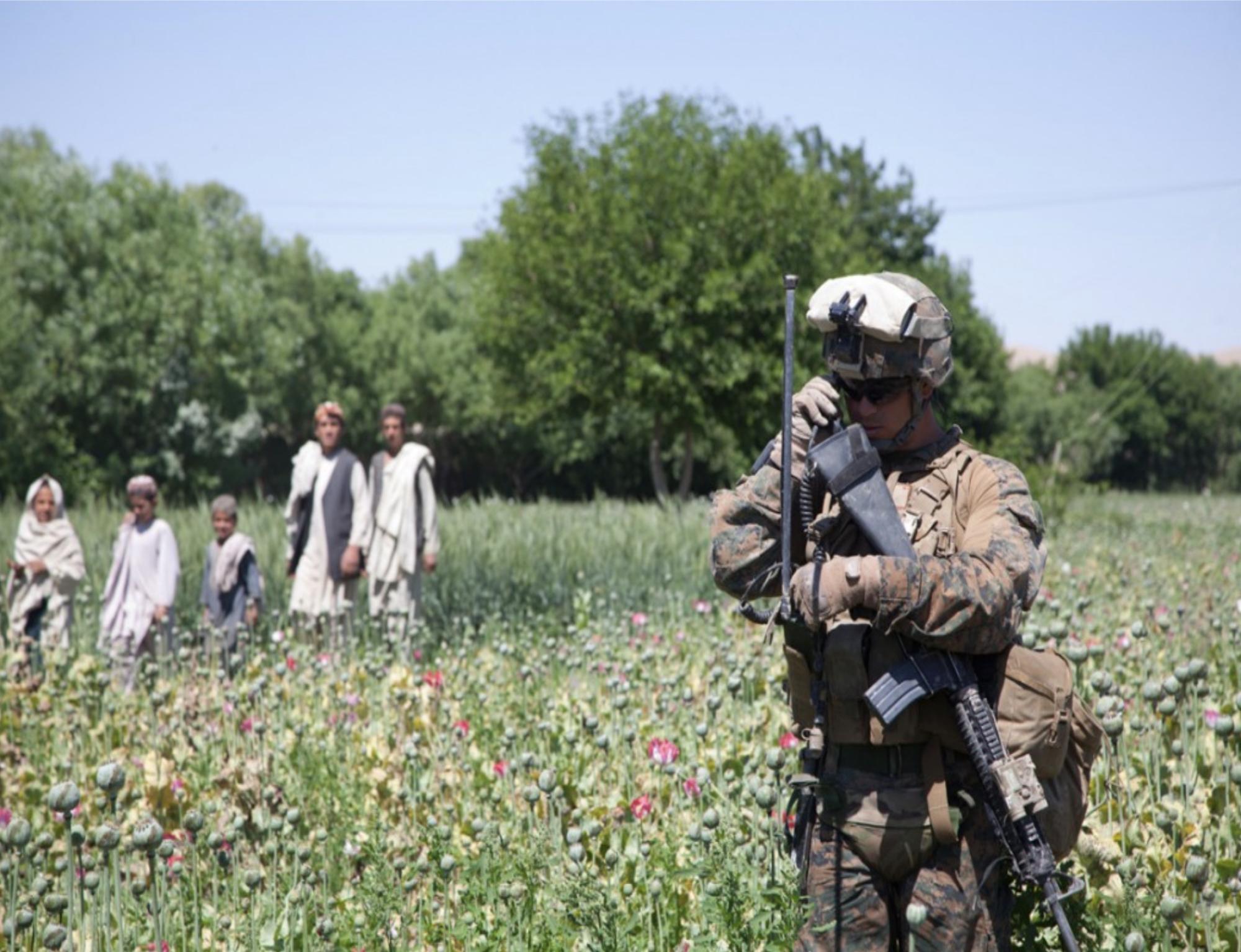
The Justice Department is investigating allegations that officers of a special Venezuelan anti-drug unit funded by the CIA smuggled more than 2,000 pounds of cocaine into the United States with the knowledge of CIA officials - despite protests by the Drug Enforcement Administration. That is a huge amount of cocaine. But it was hardly a first. The agency has never been above using individuals or organizations with known links to drug trafficking. Until recently, no DEA country attach overseas was allowed to initiate an investigation into a suspected drug trafficker ... without clearance from the local CIA station chief. CIA ties to international drug trafficking date to the Korean War. Nowhere, however, was the CIA more closely tied to drug traffic than it was in Pakistan during the Afghan War. As its principal conduit for arms and money to the Afghan guerrillas, the agency chose the Pakistan military's Inter-Services Intelligence Bureau. The ISI in turn steered the CIA's support toward [an Islamic fundamentalist who] received almost half of the agency's financial support during the war. But many of his commanders were also major heroin traffickers. Soon the trucks that delivered arms to the guerrillas in Afghanistan were coming back ... full of heroin. The heroin traffic blossomed in the shadows of a CIA-sustained guerrilla war. The conflict and its aftermath have given the world another Golden Triangle: the Golden Crescent, sweeping through Afghanistan, Pakistan and parts of the former Soviet Union. Many of those involved in the drug traffic are men who were once armed, trained and financed by the CIA.
Latest
Latest News
Each news summary is created according to strict standards. Here's how we do it.
Each summary is created using a consistent editorial procedure. The target length is approximately 16 lines of 11-point Arial text in a 650-pixel-wide column. Up to 25% of a summary may be set in bold to emphasize the most important ideas. Summaries are composed of verbatim excerpts presented in the same sequence as they appear in the original news source, with very minor editorial additions. Where material has been omitted between excerpts, the omission is indicated with ellipses (...). Any words added by an editor for clarity or context appear in [brackets]. Our original news editor was Fred Burks. Tod Fletcher edited most summaries from 2007 through 2014, and Mark Bailey has served as news editor since 2014.