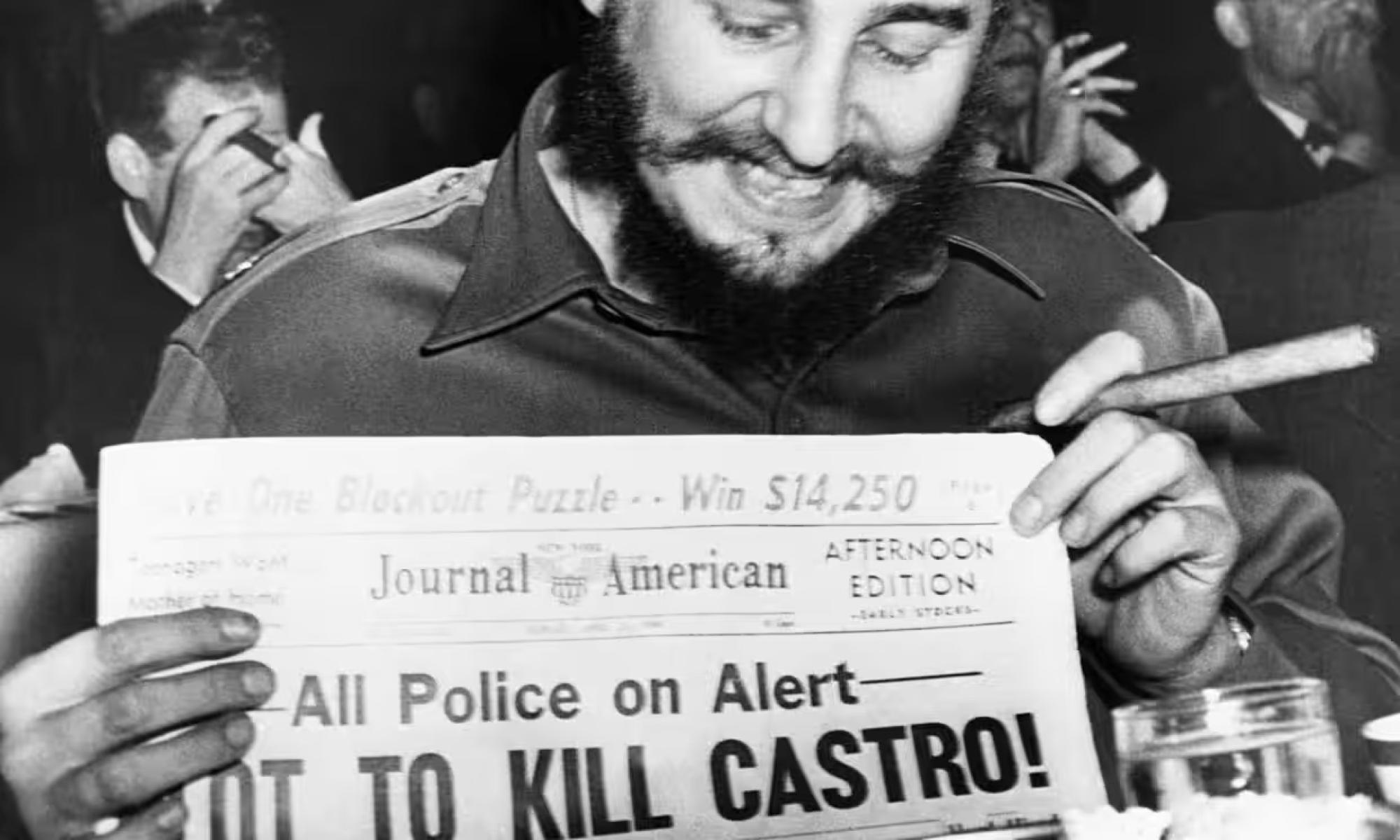
[The CIA] has since 1945 succeeded in deposing or killing a string of leaders, but was forced to cut back after a Senate investigation in the 1970s. Some of the most notorious of the CIAs operations to kill world leaders were those targeting the late Cuban president, Fidel Castro. Attempts ranged from snipers to imaginative plots worthy of spy movie fantasies. But although the CIA attempts proved fruitless in the case of Castro, the US intelligence agency has ... succeeded in deposing or killing a string of leaders elsewhere around the world either directly or, more often, using sympathetic local military, locally hired criminals or pliant dissidents. On Friday, [North Korea accused] the CIA and South Koreas intelligence service of being behind an alleged recent assassination attempt on its leader Kim Jong-un. Such a claim cannot be dismissed as totally outlandish given the long list of US involvement in coups and assassinations worldwide. The agency was forced to cut back on such killings after ... then president Gerald Ford signed in 1976 an executive order stating: No employee of the United States government shall engage in, or conspire in, political assassination. In spite of this, the US never totally abandoned the strategy, simply changing the terminology from assassination to targeted killings. A leaked document obtained by WikiLeaks and released earlier this year showed the CIA in October 2014 looking at hacking into car control systems, [potentially allowing] an agent to stage a car crash.
Latest
Latest News
Each news summary is created according to strict standards. Here's how we do it.
Each summary is created using a consistent editorial procedure. The target length is approximately 16 lines of 11-point Arial text in a 650-pixel-wide column. Up to 25% of a summary may be set in bold to emphasize the most important ideas. Summaries are composed of verbatim excerpts presented in the same sequence as they appear in the original news source, with very minor editorial additions. Where material has been omitted between excerpts, the omission is indicated with ellipses (...). Any words added by an editor for clarity or context appear in [brackets]. Our original news editor was Fred Burks. Tod Fletcher edited most summaries from 2007 through 2014, and Mark Bailey has served as news editor since 2014.