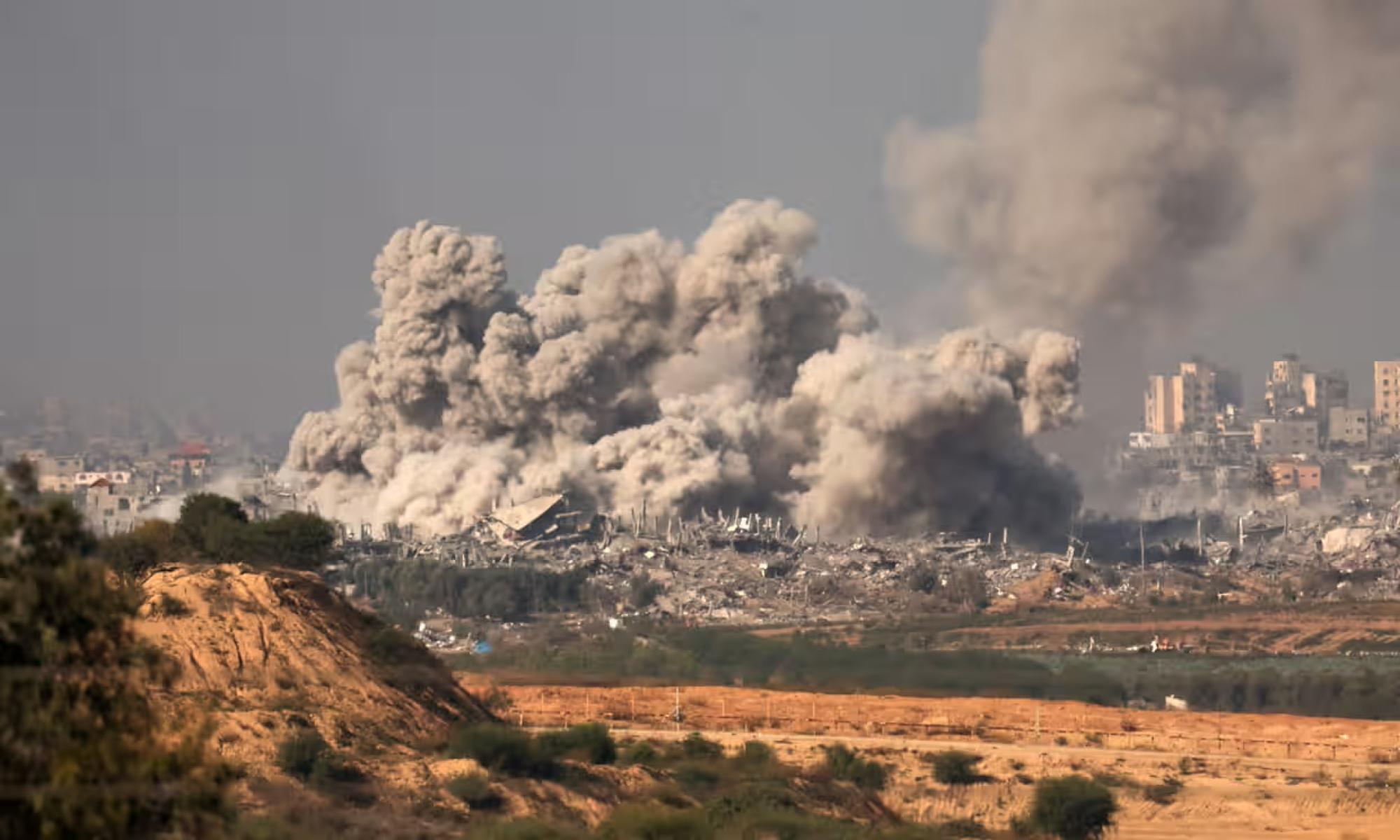
Israel's military has made no secret of the intensity of its bombardment of the Gaza Strip. There has, however, been relatively little attention paid to the methods used by the Israel Defense Forces (IDF) to select targets in Gaza, and to the role artificial intelligence has played in their bombing campaign. After the 11-day war in Gaza in May 2021, officials said Israel had fought its "first AI war" using machine learning and advanced computing. The latest Israel-Hamas war has provided an unprecedented opportunity for the IDF to use such tools in a much wider theatre of operations and, in particular, to deploy an AI target-creation platform called "the Gospel", which has significantly accelerated a lethal production line of targets. In early November, the IDF said "more than 12,000" targets in Gaza had been identified by its target administration division. Aviv Kochavi, who served as the head of the IDF until January, has said the target division is "powered by AI capabilities" and includes hundreds of officers and soldiers. According to Kochavi, "once this machine was activated" in Israel's 11-day war with Hamas in May 2021 it generated 100 targets a day. "To put that into perspective, in the past we would produce 50 targets in Gaza per year. Now, this machine produces 100 targets a single day, with 50% of them being attacked." A separate source [said] the Gospel had allowed the IDF to run a "mass assassination factory" in which the "emphasis is on quantity and not on quality".
Latest
Latest News
Each news summary is created according to strict standards. Here's how we do it.
Each summary is created using a consistent editorial procedure. The target length is approximately 16 lines of 11-point Arial text in a 650-pixel-wide column. Up to 25% of a summary may be set in bold to emphasize the most important ideas. Summaries are composed of verbatim excerpts presented in the same sequence as they appear in the original news source, with very minor editorial additions. Where material has been omitted between excerpts, the omission is indicated with ellipses (...). Any words added by an editor for clarity or context appear in [brackets]. Our original news editor was Fred Burks. Tod Fletcher edited most summaries from 2007 through 2014, and Mark Bailey has served as news editor since 2014.