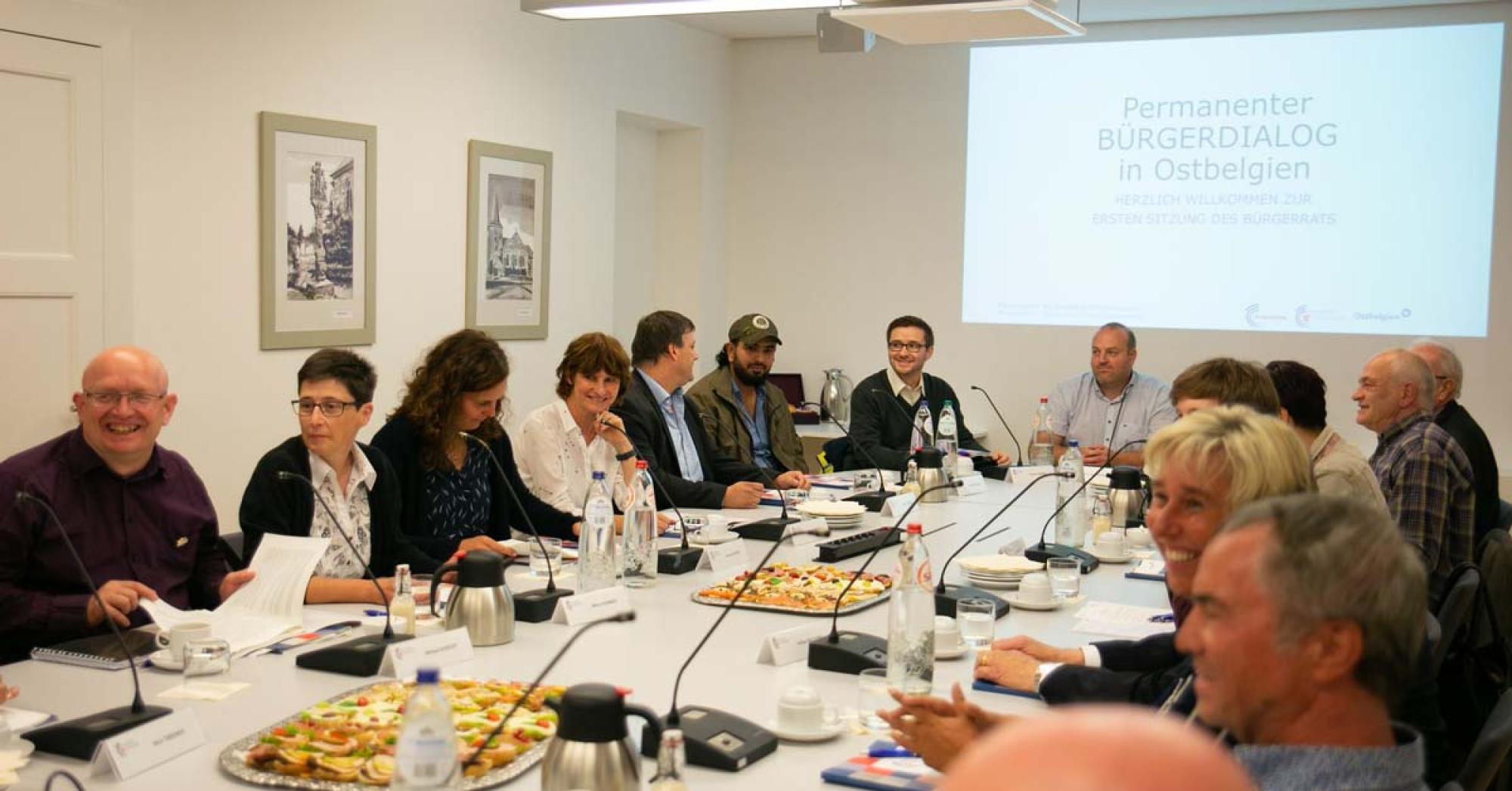
In 2019, Ostbelgien, a town in Belgium with about 80,000 residents, took a gamble on a new approach to governing: The city's parliament voted to establish a permanent Citizens' Council and Assembly, giving randomly-selected citizens the power to make decisions. They called it, aptly, the Ostbelgien Model. "Its main objectives are providing citizens not only a permanent voice in the process of decision making but also a systematic monitoring system to ensure they are heard," the International Observatory on Participatory Democracy writes. "Ultimately, the project seeks to increase accountability and reinvigorate the agenda-setting power of common citizens." Now, about six years into the experiment, which was created with the express purpose of increasing trust in government, participants say it's working. Once a year, about 1,500 letters are sent to randomly chosen residents in Ostbelgien. Recipients indicate their interest. Of those who express interest, about 30 are chosen to become members of the citizens' assembly. The newly formed assembly meets once a week for about two months, with each participant receiving a stipend of 155 euros (or $133) per day. They are assigned a topic of concern and have in-depth discussions about how the government should proceed, with an appointed moderator present to help move things along. Their recommendations to the parliament are not binding, but lawmakers are required to consider them.
Latest
Latest News
Each news summary is created according to strict standards. Here's how we do it.
Each summary is created using a consistent editorial procedure. The target length is approximately 16 lines of 11-point Arial text in a 650-pixel-wide column. Up to 25% of a summary may be set in bold to emphasize the most important ideas. Summaries are composed of verbatim excerpts presented in the same sequence as they appear in the original news source, with very minor editorial additions. Where material has been omitted between excerpts, the omission is indicated with ellipses (...). Any words added by an editor for clarity or context appear in [brackets]. Our original news editor was Fred Burks. Tod Fletcher edited most summaries from 2007 through 2014, and Mark Bailey has served as news editor since 2014.