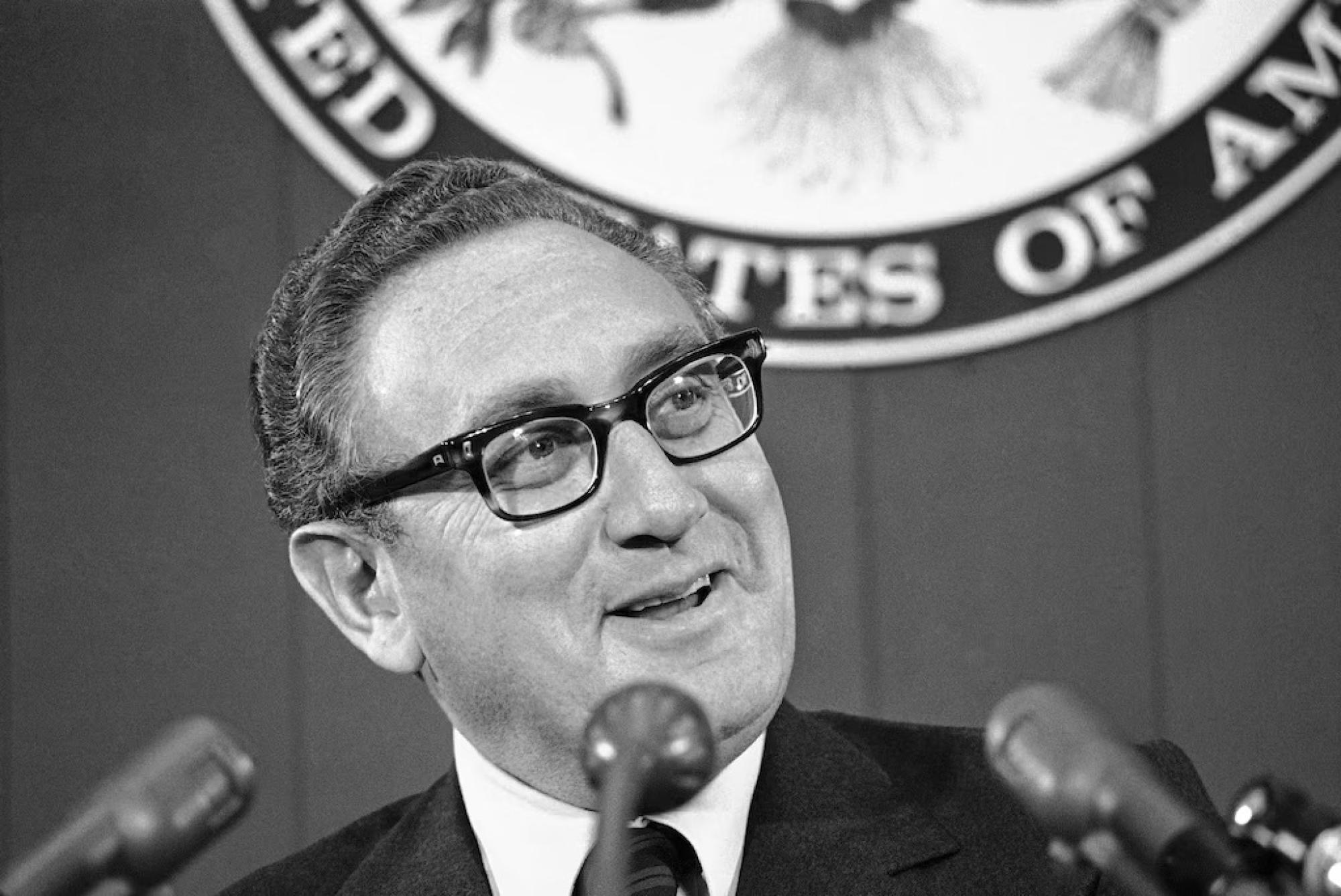
Some consider Henry Kissinger a master statesman who advanced American interests. Others argue that his achievements were exaggerated, preferring to highlight his violations of international law and his complicity in war crimes. Tom Wells' The Kissinger Tapes: Inside His Secretly Recorded Phone Conversations ... is a collection of selections from more than 15,000 of Kissinger's secretly recorded telephone conversations from his time as President Richard Nixon's national security adviser (1969"1974) and secretary of state (1973"1974). For Kissinger, lies weren't a strategic tool limited to selective uses in international statecraft. They appear to have been part of his personal makeup. Wells notes that he was "a habitual and easy liar." During the clandestine bombings of Cambodia in 1969 and Laos in 1970, for example, Kissinger and Nixon implemented a false-reporting system to hide the strikes from both the State Department and the public. Kissinger claimed to Secretary of State William P. Rogers that he was unaware of the Pentagon Papers, the classified government study, leaked in 1971, that revealed the U.S. government had systematically deceived the public about the Vietnam War; in fact, he knew of the study from the outset. Kissinger repeatedly denied knowledge of wiretaps on officials and journalists, but the FBI later noted that he instituted much of the surveillance himself. For Kissinger, issues of human rights and self-determination were secondary at best.
Latest
Latest News
Each news summary is created according to strict standards. Here's how we do it.
Each summary is created using a consistent editorial procedure. The target length is approximately 16 lines of 11-point Arial text in a 650-pixel-wide column. Up to 25% of a summary may be set in bold to emphasize the most important ideas. Summaries are composed of verbatim excerpts presented in the same sequence as they appear in the original news source, with very minor editorial additions. Where material has been omitted between excerpts, the omission is indicated with ellipses (...). Any words added by an editor for clarity or context appear in [brackets]. Our original news editor was Fred Burks. Tod Fletcher edited most summaries from 2007 through 2014, and Mark Bailey has served as news editor since 2014.