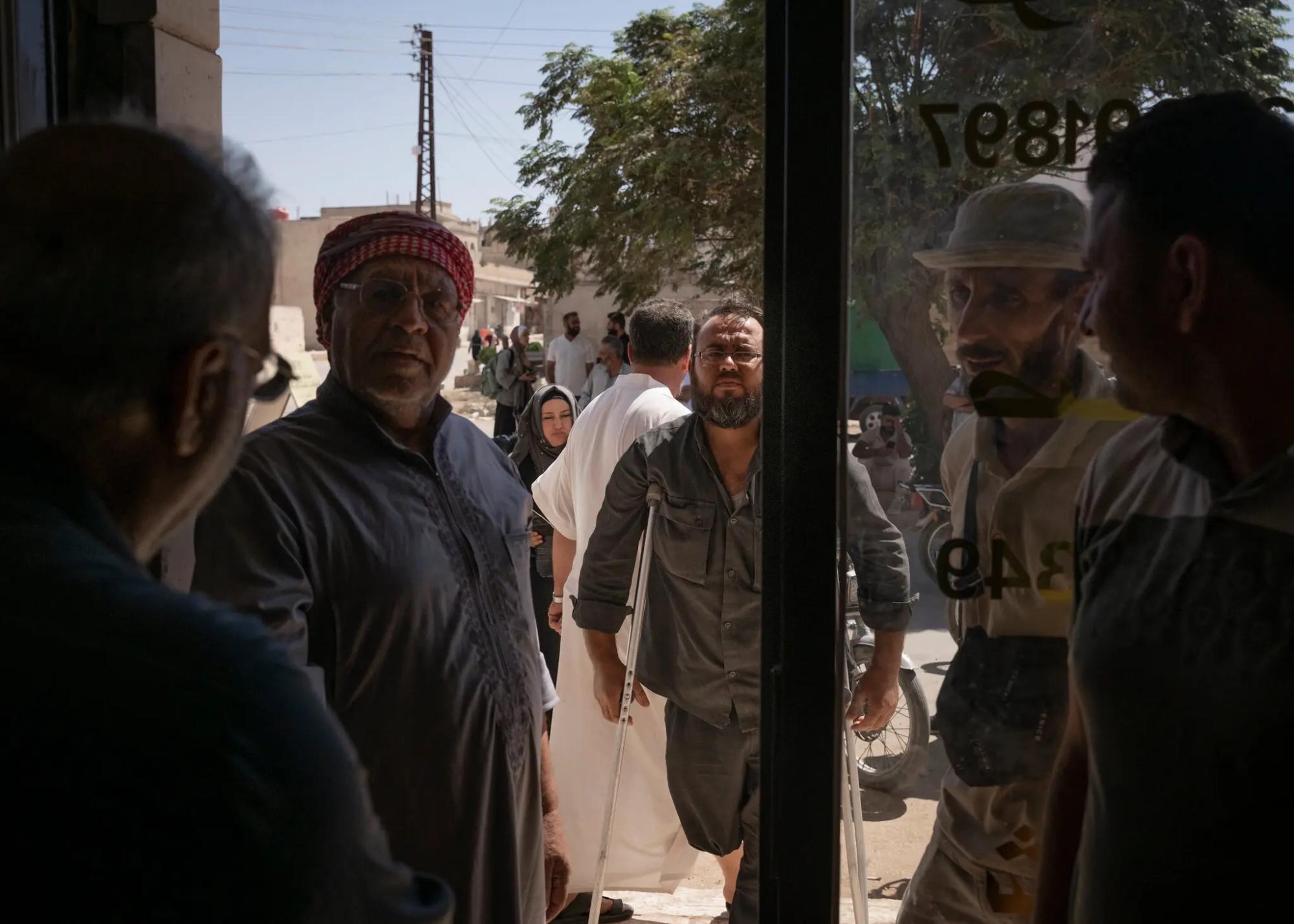
At a bustling money changer in northwestern Syria, a 46-year-old farmer gripped a plastic card like a lifeline. She had never heard of cryptocurrency, but the card held $500 of it to help restart her farm after nearly 14 years of civil war. Where had such technology come from, she asked. The answer surprised her: Afghanistan. Blockchain-based cash transfers are not the kind of innovation that many people would expect from a country better known for its repressive Taliban leadership, which views the internet with suspicion. But in a nation that has largely turned its back on the world, an Afghan start-up is building tools that it hopes will transform how humanitarian aid is delivered in countries shattered by conflict. "We've lived through these challenges ourselves, so we know how to develop an approach that works," said Zakia Hussaini, 26, a programmer at the start-up, HesabPay, which designed the technology driving Ms. Almahmoud's card. An early proponent of the platform was the United Nations High Commissioner for Refugees. The agency uses it to support more than 86,000 families in Afghanistan in one of the biggest public blockchain aid initiatives in the world. Mercy Corps, which donated the funds to Ms. Almahmoud, worked with HesabPay to expand its reach to include Syria, and programs for Sudan and Haiti are in development. Today, the platform has more than 650,000 wallets in Afghanistan, of which about 50,000 are in regular use.
Latest
Latest News
Each news summary is created according to strict standards. Here's how we do it.
Each summary is created using a consistent editorial procedure. The target length is approximately 16 lines of 11-point Arial text in a 650-pixel-wide column. Up to 25% of a summary may be set in bold to emphasize the most important ideas. Summaries are composed of verbatim excerpts presented in the same sequence as they appear in the original news source, with very minor editorial additions. Where material has been omitted between excerpts, the omission is indicated with ellipses (...). Any words added by an editor for clarity or context appear in [brackets]. Our original news editor was Fred Burks. Tod Fletcher edited most summaries from 2007 through 2014, and Mark Bailey has served as news editor since 2014.