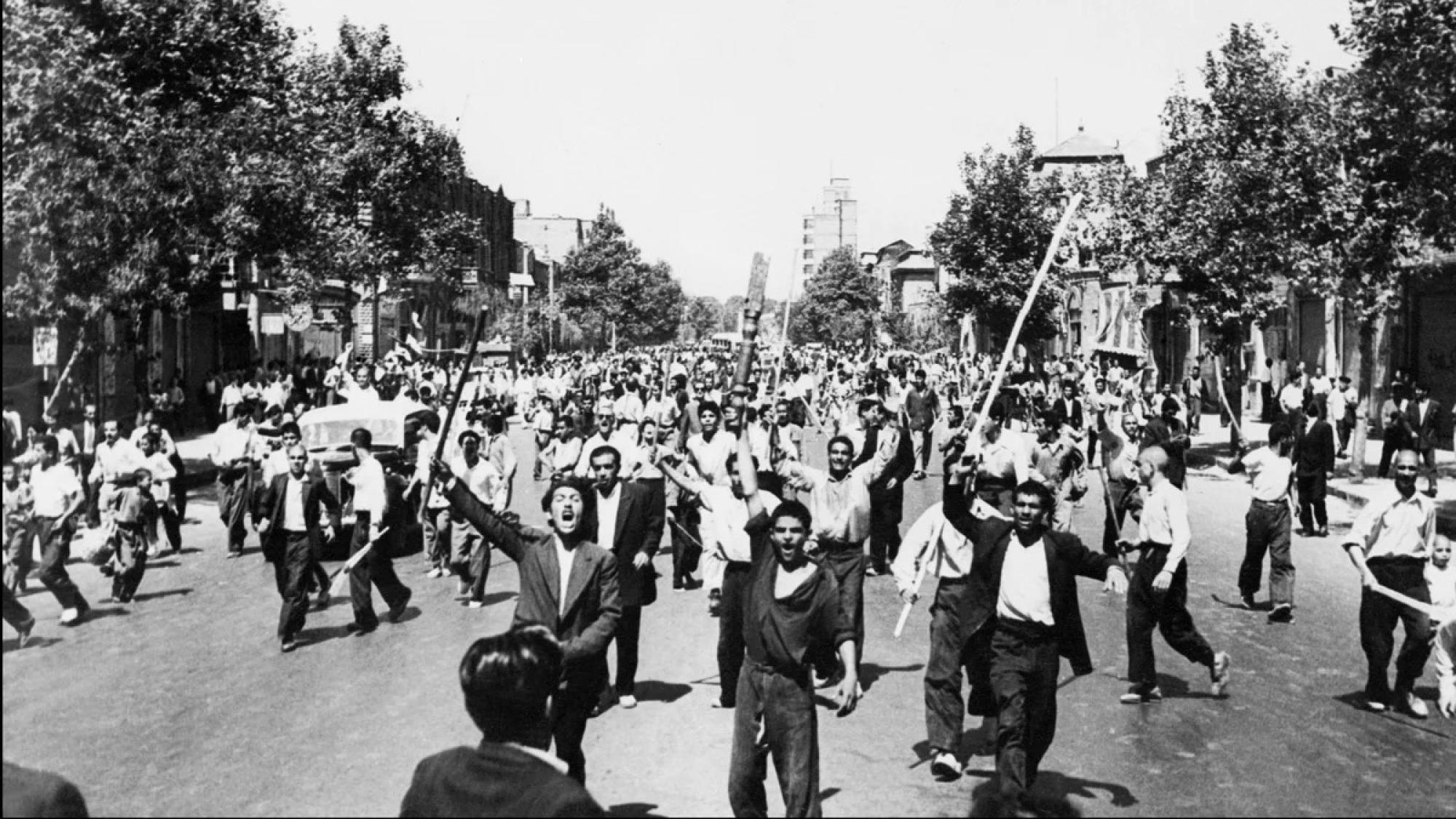
Following Iran's missile barrage into Israel last week, carried out in retaliation for Israel's assassinations of Hamas and Hezbollah leaders, vice president and Democratic presidential nominee Kamala Harris called Iran a "destabilizing, dangerous force" in the Middle East, opening a new chapter in a long history of US hawkishness against Iran. This past Monday, she went even further, calling Iran the United States' "greatest adversary." It's hard to hear such statements without hearkening back to New Year's Eve, 1977, a year before the Iranian Revolution broke out. In the heat of growing civil unrest in Iran, US president Jimmy Carter attended a lavish state dinner with the shah of Iran, Mohammad Reza Pahlavi. Twenty-four years earlier, during "Operation Ajax," the CIA, in collaboration with the British MI6, had orchestrated a coup that ousted the democratically elected Iranian prime minister Mohammed Mossadegh, who had won on a platform of nationalizing Iranian oil and taking it back from Western control. The coup set into motion the destruction of the country's budding democracy and would haunt Iranians for decades. The United States has worked to destabilize Iran for nearly a century. With the Democratic presidential nominee once again trotting out hawkish tirades against Iran while backing Israel's new assault on Lebanon, American officials seem to have learned nothing from history.
Latest
Latest News
Each news summary is created according to strict standards. Here's how we do it.
Each summary is created using a consistent editorial procedure. The target length is approximately 16 lines of 11-point Arial text in a 650-pixel-wide column. Up to 25% of a summary may be set in bold to emphasize the most important ideas. Summaries are composed of verbatim excerpts presented in the same sequence as they appear in the original news source, with very minor editorial additions. Where material has been omitted between excerpts, the omission is indicated with ellipses (...). Any words added by an editor for clarity or context appear in [brackets]. Our original news editor was Fred Burks. Tod Fletcher edited most summaries from 2007 through 2014, and Mark Bailey has served as news editor since 2014.