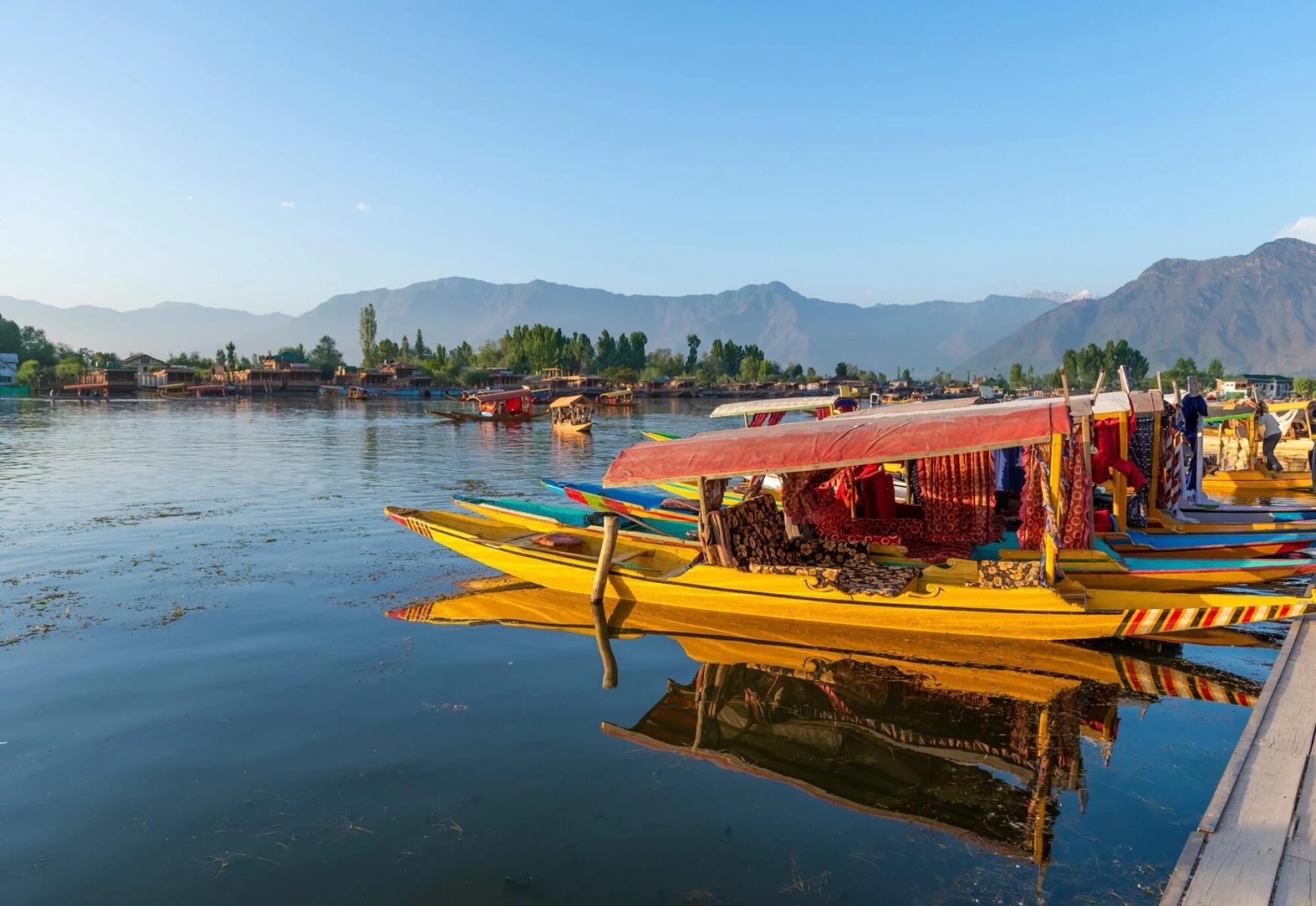
Wooden boats set out from houseboats and island homes carrying children dressed in school uniforms, their backpacks tucked between oars and lunch pails. Their destination: Kashmir's floating schools classrooms anchored on the lake in this Himalayan region of the Indian subcontinent that has been claimed by both India and Pakistan, and scarred by decades of conflict. For the children of these watery hamlets, reaching school has never been simple. There are no roads connecting their homes to the nearest city, Srinagar, just narrow canals, shifting water levels and the long paddle to land. In the early light, children like 11-year-old Mahira begin their school day with a boat ride that lasts nearly 40 minutes. At one of the floating schools currently in operation, plans are underway to add a computer corner, powered by solar panels, so children here can learn digital skills too. For the students, these schools are not just classrooms but spaces of belonging. And despite minimal funds, teachers on the lake say these schools have improved attendance and engagement " especially for girls. Mahira says her favorite subject is English because "it feels like opening another world." Her younger brother prefers science, especially when it helps him understand the fish and plants of the lake. The first floating school appeared in 2020, when the pandemic closed classrooms across the valley and families on Dal Lake decided to act. They cleared space on floating land, set up benches and a blackboard, and began teaching.
Latest
Latest News
Each news summary is created according to strict standards. Here's how we do it.
Each summary is created using a consistent editorial procedure. The target length is approximately 16 lines of 11-point Arial text in a 650-pixel-wide column. Up to 25% of a summary may be set in bold to emphasize the most important ideas. Summaries are composed of verbatim excerpts presented in the same sequence as they appear in the original news source, with very minor editorial additions. Where material has been omitted between excerpts, the omission is indicated with ellipses (...). Any words added by an editor for clarity or context appear in [brackets]. Our original news editor was Fred Burks. Tod Fletcher edited most summaries from 2007 through 2014, and Mark Bailey has served as news editor since 2014.