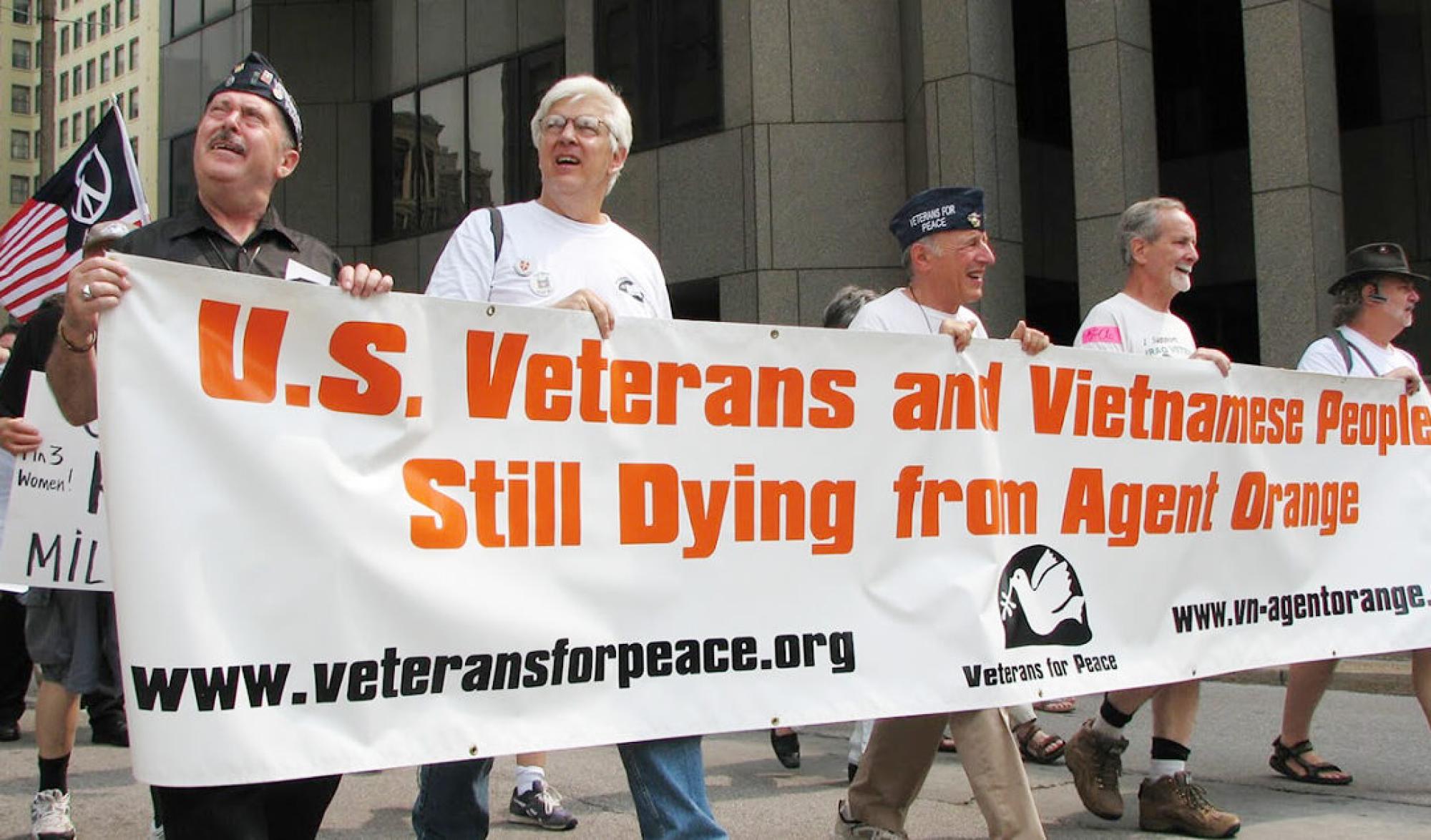
November 30 marks the International Day of Remembrance for all Victims of Chemical Warfare. Between 1961 and 1971, the U.S. military sprayed an estimated 20 million gallons of herbicides over southern Vietnam, along the Ho Chi Minh Trail in Laos, and parts of Cambodia. Nearly two-thirds was Agent Orange, later discovered to be contaminated with 2,3,7,8-Tetrachlorodibenzo-p-dioxin (TCDD) " a potent, long-lasting dioxin. TCDD is a known human carcinogen and an endocrine disruptor, linked to cancers, reproductive disorders, and birth defects that can span generations. By the letter of the CWC, Agent Orange is not classified as a "chemical weapon." If you ask a Vietnam veteran suffering from Parkinson's, cancer, heart disease, or any of the 19 types of conditions the Department of Veterans Affairs (VA) associates with Agent Orange exposure, you'll hear a very different story. To them, it was every bit a weapon designed to destroy life and health. A 2018 Government Accountability Office report found that over 757,000 veterans " about one in four who served " were receiving benefits linked to Agent Orange. The 2022 PACT Act broadened that circle to veterans who served in other areas where Agent Orange was used. By 2024, more than 84,000 new Vietnam-era veterans were granted compensation, many due to exposure. Fifty years after the Vietnam War ended, the toxic legacy of Agent Orange and other dioxins lingers on.
Latest
Latest News
Each news summary is created according to strict standards. Here's how we do it.
Each summary is created using a consistent editorial procedure. The target length is approximately 16 lines of 11-point Arial text in a 650-pixel-wide column. Up to 25% of a summary may be set in bold to emphasize the most important ideas. Summaries are composed of verbatim excerpts presented in the same sequence as they appear in the original news source, with very minor editorial additions. Where material has been omitted between excerpts, the omission is indicated with ellipses (...). Any words added by an editor for clarity or context appear in [brackets]. Our original news editor was Fred Burks. Tod Fletcher edited most summaries from 2007 through 2014, and Mark Bailey has served as news editor since 2014.