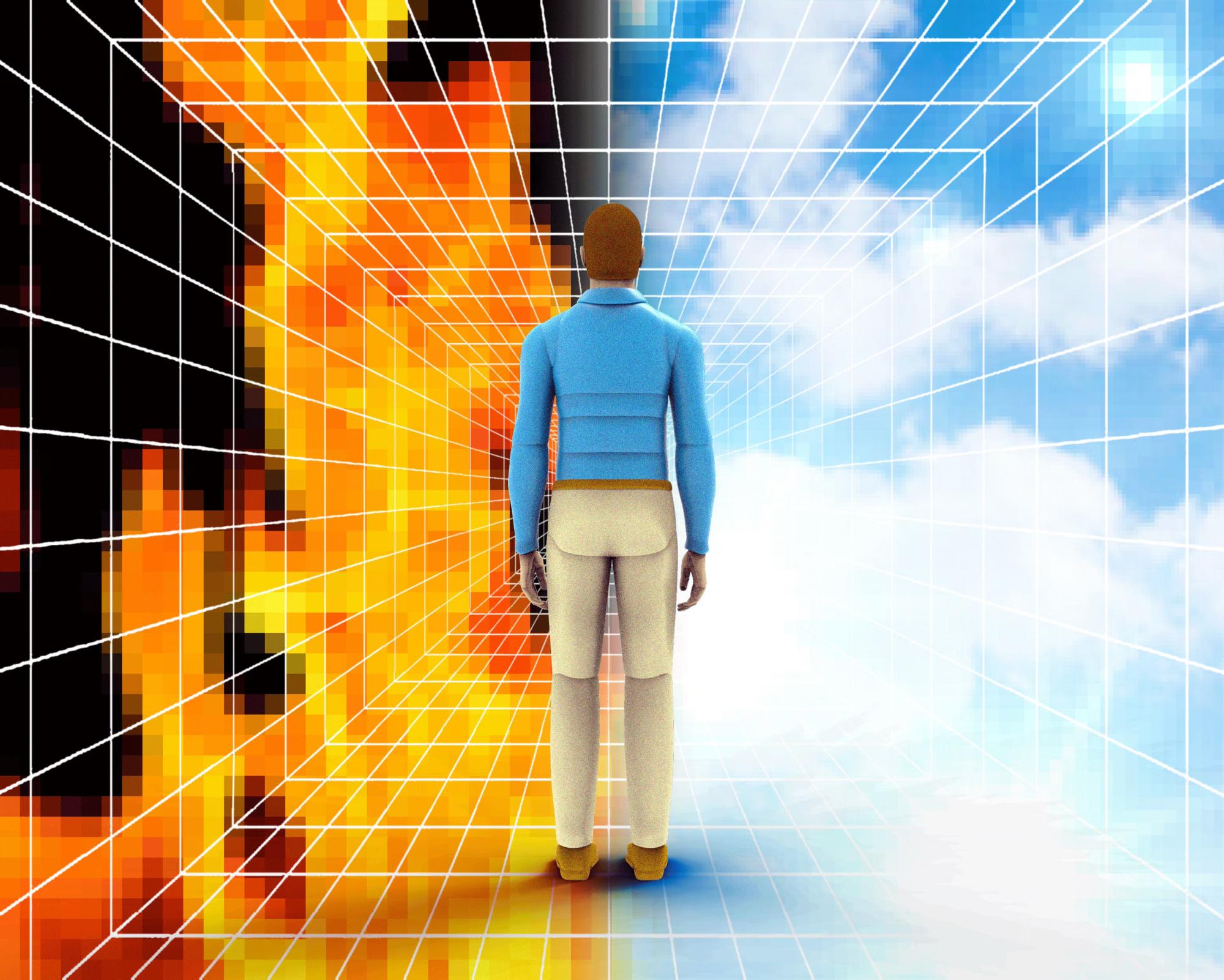
AI is projected to generate nearly unfathomable amounts of revenue. Any mention of AI tends to be accompanied by warnings that deeper jobs cuts across many more industries are coming for us all. Jensen Huang, CEO of chip giant Nvidia, said in 2025: "Every job will be affected, and immediately. It is unquestionable. You're not going to lose your job to an AI, but you're going to lose your job to someone who uses AI." Increasingly, people young and old flock to a new gold rush in Silicon Valley to toil away on AI-fueled startups. If AI's worst-case scenario for tech jobs plays out ... that's still nowhere near the apocalyptic future of labor that many fear. "Is it, in fact, going to destroy all of the jobs?" Naidu asked. "I'm not convinced. Even take software. Software is only about 4 to 6% of GDP. So it's a lot, but it's not like the whole economy can be replaced by Claude Code." Convincing people that AI will replace human workers in droves is a clever marketing tactic. Not only does it stoke rabid investor speculation, but it distracts from a more realistic application of AI: to surveil and micromanage employees to squeeze yet more productivity out of them, all the while pressuring them to feel grateful that they have any kind of work. Gig workers, the people who pick you up in Ubers and deliver your food on platforms like DoorDash, have already been the guinea pigs for this kind of algorithmic management, and labor experts predict it will spread.
Latest
Latest News
Each news summary is created according to strict standards. Here's how we do it.
Each summary is created using a consistent editorial procedure. The target length is approximately 16 lines of 11-point Arial text in a 650-pixel-wide column. Up to 25% of a summary may be set in bold to emphasize the most important ideas. Summaries are composed of verbatim excerpts presented in the same sequence as they appear in the original news source, with very minor editorial additions. Where material has been omitted between excerpts, the omission is indicated with ellipses (...). Any words added by an editor for clarity or context appear in [brackets]. Our original news editor was Fred Burks. Tod Fletcher edited most summaries from 2007 through 2014, and Mark Bailey has served as news editor since 2014.