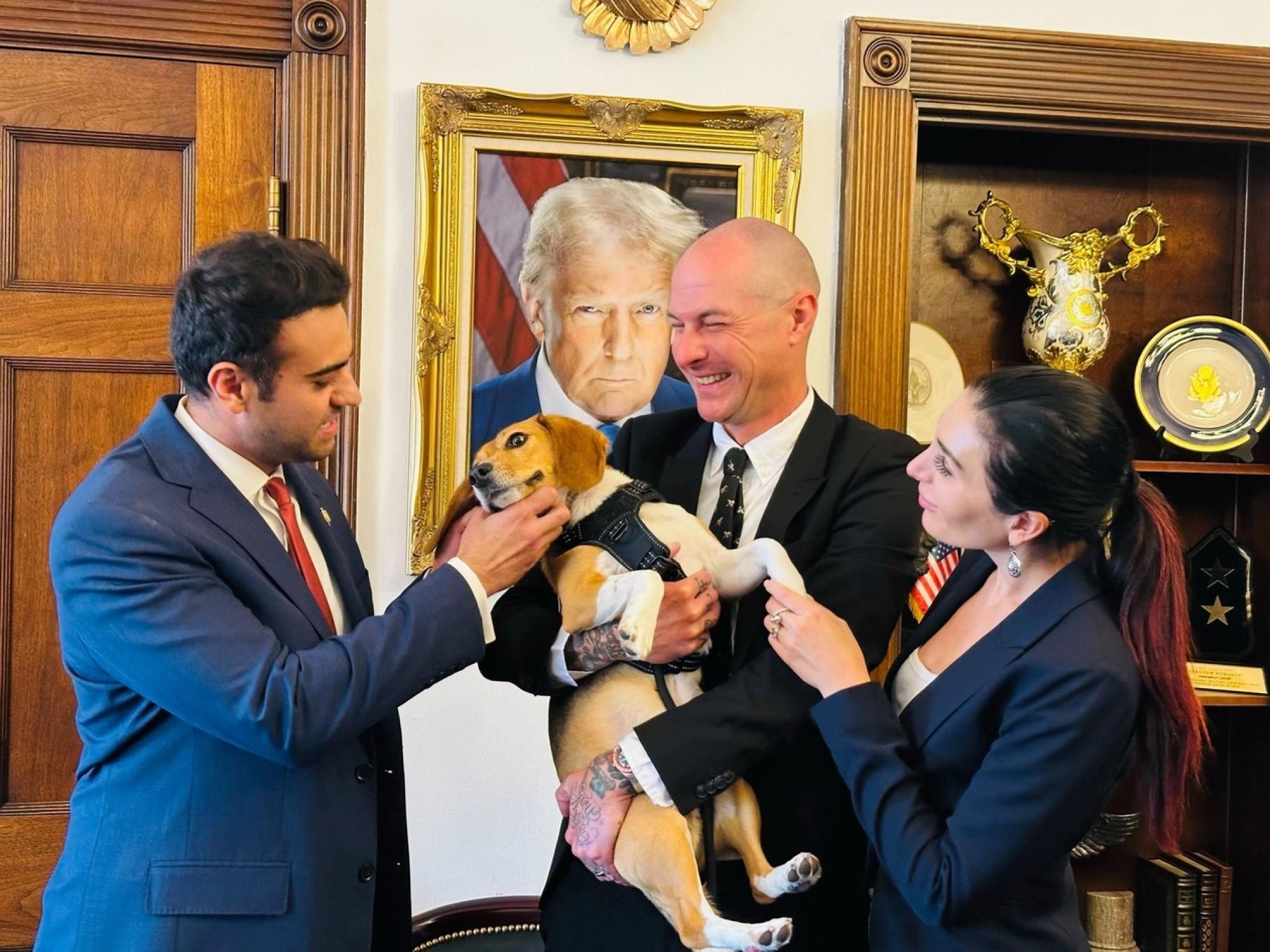
Robert F. Kennedy Jr.'s making animal welfare a component of his Make America Healthy Again mission. The health secretary has asked his agencies to refine high-tech methods of testing chemicals and drugs that don't involve killing animals. He thinks phasing out animal testing and using the new methods will help figure out what's causing chronic disease. Last week, the National Institutes of Health announced it would spend $87 million on a new center researching alternatives to animal testing and permit agency-supported researchers to use grant funding to find homes for retired lab animals. Kennedy signed off because he thinks the new methods will enable scientists to more quickly and inexpensively draw conclusions about how chemicals and drugs work. He expects that'll confirm his belief that chemicals in the environment and in food are making Americans sick and also speed cures for chronic diseases like cancer, heart disease and diabetes. The new center will attempt to develop a standardized alternative to animal testing that relies on tiny, lab-grown 3D tissue models, enlisting help from across the NIH and the Food and Drug Administration, which regulates pharmaceuticals. Harnessing science and technology to protect animals isn't an obvious Trump agenda item. But the president has a pattern of taking ideas from the left and repackaging them for his base, to great success.
Latest
Latest News
Each news summary is created according to strict standards. Here's how we do it.
Each summary is created using a consistent editorial procedure. The target length is approximately 16 lines of 11-point Arial text in a 650-pixel-wide column. Up to 25% of a summary may be set in bold to emphasize the most important ideas. Summaries are composed of verbatim excerpts presented in the same sequence as they appear in the original news source, with very minor editorial additions. Where material has been omitted between excerpts, the omission is indicated with ellipses (...). Any words added by an editor for clarity or context appear in [brackets]. Our original news editor was Fred Burks. Tod Fletcher edited most summaries from 2007 through 2014, and Mark Bailey has served as news editor since 2014.