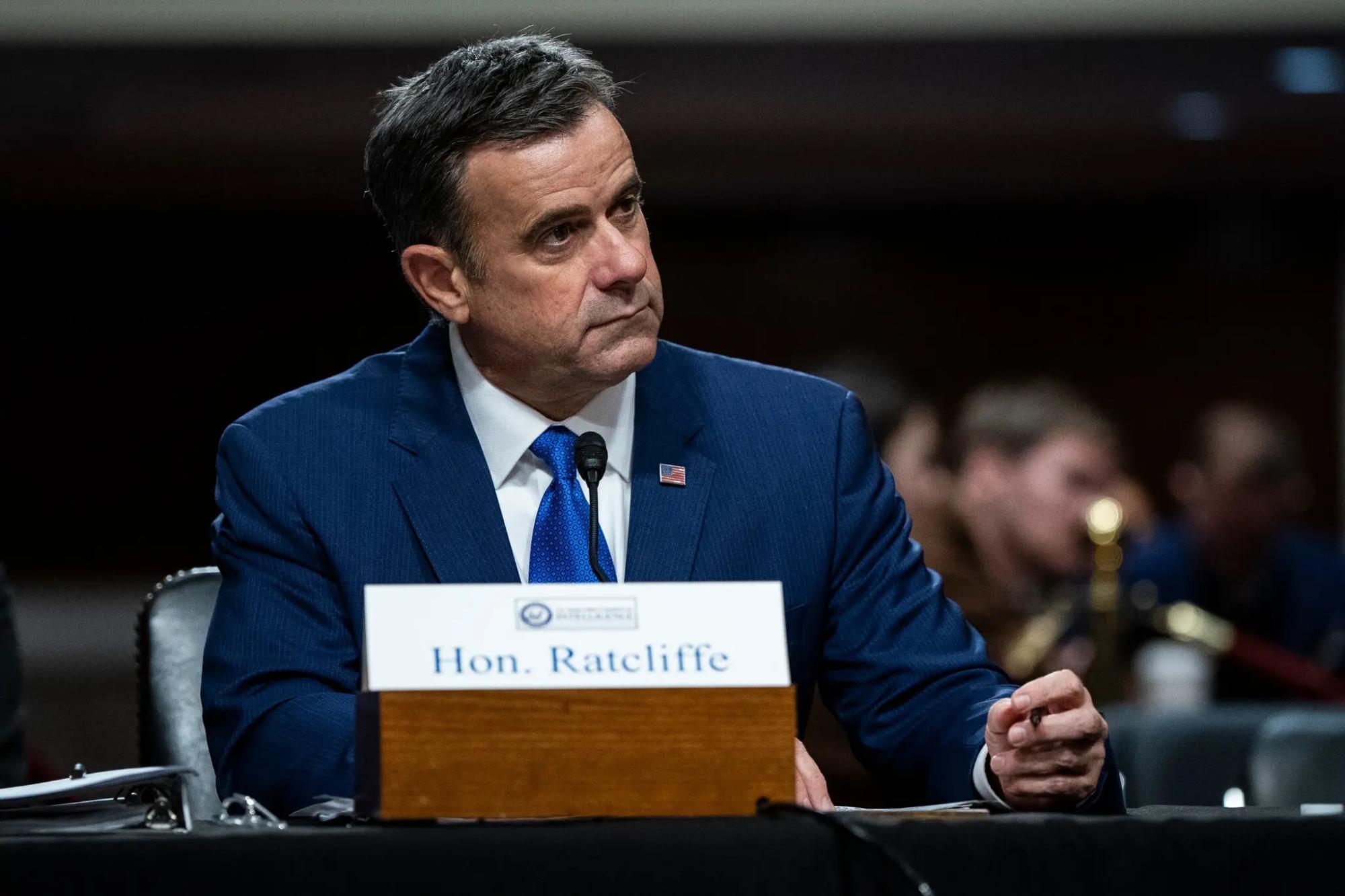
The C.I.A. has said for years that it did not have enough information to conclude whether the Covid pandemic emerged naturally from a wet market in Wuhan, China, or from an accidental leak at a research lab there. But the agency issued a new assessment this week, with analysts saying they now favor the lab theory. There is no new intelligence behind the agency's shift, officials said. John Ratcliffe, the new director of the C.I.A., has long favored the lab leak hypothesis. He has said it is a critical piece of intelligence that needs to be understood and that it has consequences for U.S.-Chinese relations. The announcement of the shift came shortly after Mr. Ratcliffe told Breitbart News he no longer wanted the agency "on the sidelines" of the debate over the origins of the Covid pandemic. Mr. Ratcliffe has long said he believes that the virus most likely emerged from the Wuhan Institute of Virology. Even in the absence of hard intelligence, the lab leak hypothesis has been gaining ground inside spy agencies. But some analysts question the wisdom of shifting a position in absence of new information. Five agencies, including the National Intelligence Council and the Defense Intelligence Agency, assessed that natural exposure most likely caused the epidemic. But they said that they had only low-confidence in their assessment. Until now, two agencies, the F.B.I. and Department of Energy, thought a lab leak was more likely. But their theories are different.
Latest
Latest News
Each news summary is created according to strict standards. Here's how we do it.
Each summary is created using a consistent editorial procedure. The target length is approximately 16 lines of 11-point Arial text in a 650-pixel-wide column. Up to 25% of a summary may be set in bold to emphasize the most important ideas. Summaries are composed of verbatim excerpts presented in the same sequence as they appear in the original news source, with very minor editorial additions. Where material has been omitted between excerpts, the omission is indicated with ellipses (...). Any words added by an editor for clarity or context appear in [brackets]. Our original news editor was Fred Burks. Tod Fletcher edited most summaries from 2007 through 2014, and Mark Bailey has served as news editor since 2014.