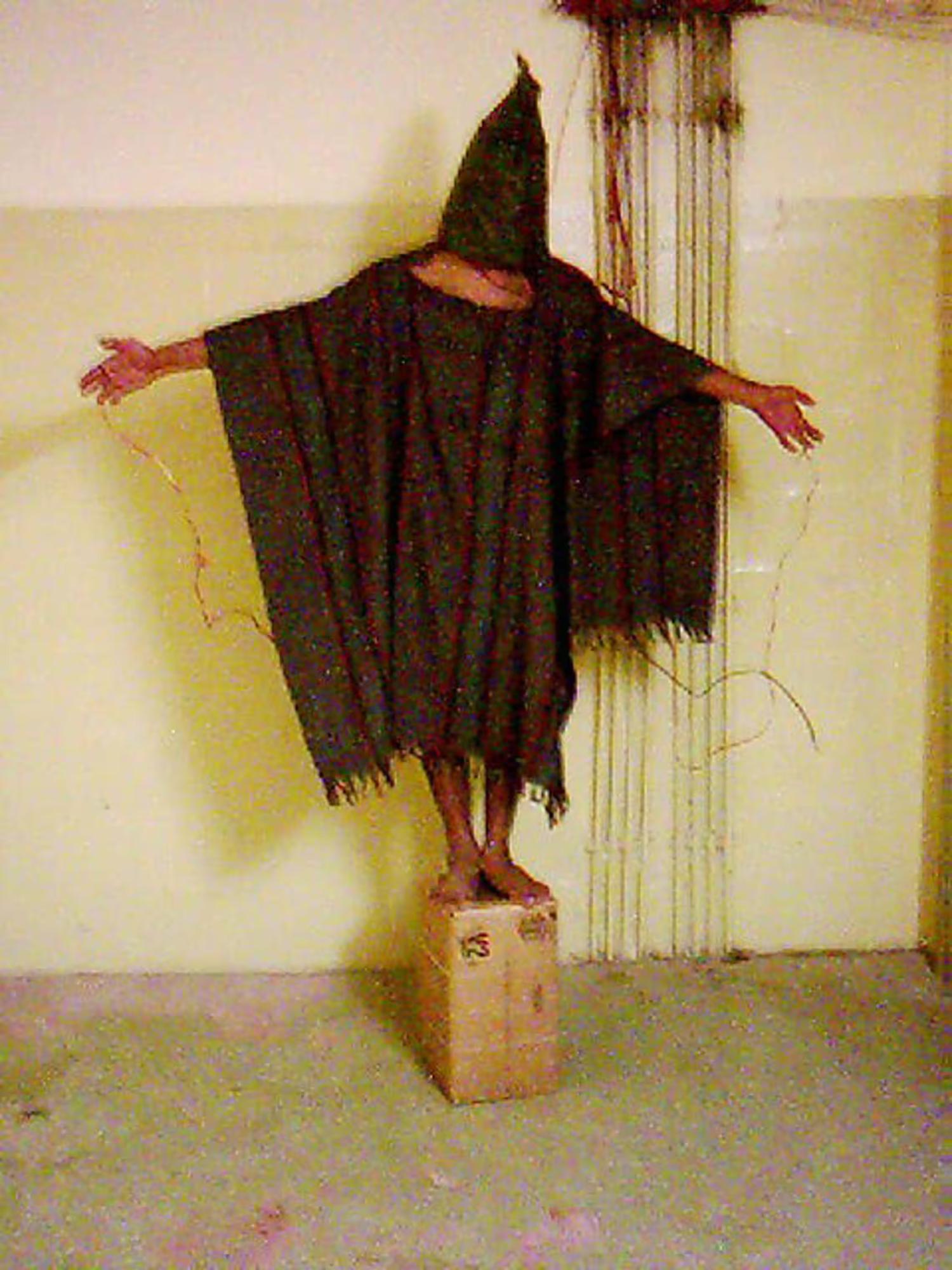
The first trial to contend with the post-9/11 abuse of detainees in US custody begins on Monday, in a case brought by three men who were held in the US-run Abu Ghraib prison in Iraq. The jury trial, in a federal court in Virginia, comes nearly 20 years to the day that the photographs depicting torture and abuse in the prison were first revealed to the public, prompting an international scandal that came to symbolize the treatment of detainees in the US "war on terror". The long-delayed case was brought by Suhail Najim Abdullah Al Shimari, Salah Al-Ejaili and As'ad Al-Zuba'e, three Iraqi civilians who were detained at Abu Ghraib, before being released without charge in 2004. The men are suing CACI Premier Technology, a private company that was contracted by the US government to provide interrogators at the prison. Only a handful of lower-rank soldiers faced military trials; no military or political leaders, or private contractors, were held legally accountable for what happened at Abu Ghraib or at any other facility where US detainees were tortured. As governments' reliance on private actors in conflict zones and crisis situations has grown exponentially since the war in Iraq, the case is also a test of the courts' ability to hold those contractors responsible for human rights abuses. The wars in Iraq and Afghanistan ... earned private companies trillions in defense and other government contracts. To this day, CACI continues to make millions in US government contracts.
Latest
Latest News
Each news summary is created according to strict standards. Here's how we do it.
Each summary is created using a consistent editorial procedure. The target length is approximately 16 lines of 11-point Arial text in a 650-pixel-wide column. Up to 25% of a summary may be set in bold to emphasize the most important ideas. Summaries are composed of verbatim excerpts presented in the same sequence as they appear in the original news source, with very minor editorial additions. Where material has been omitted between excerpts, the omission is indicated with ellipses (...). Any words added by an editor for clarity or context appear in [brackets]. Our original news editor was Fred Burks. Tod Fletcher edited most summaries from 2007 through 2014, and Mark Bailey has served as news editor since 2014.