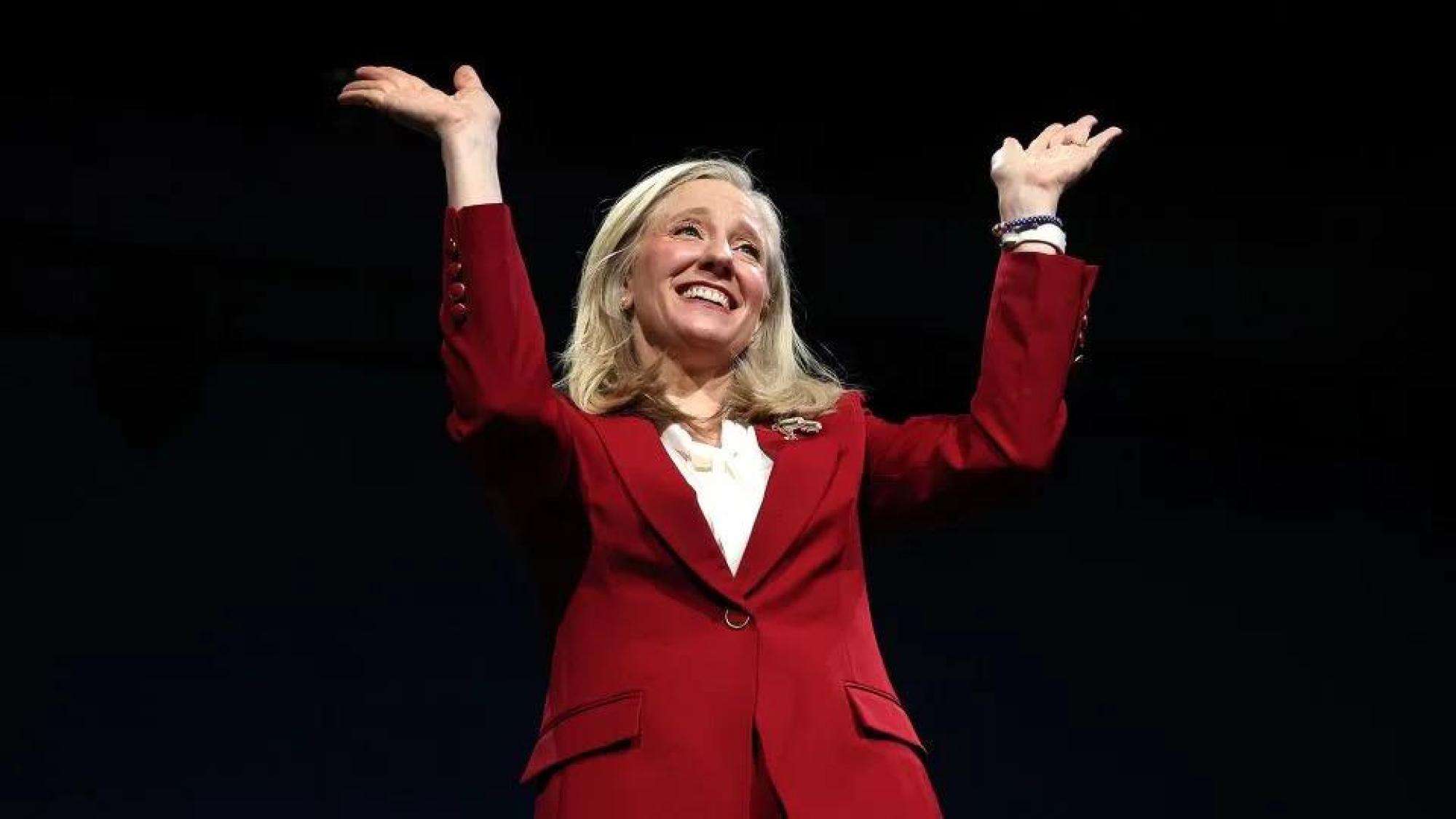
On November 4, Abigail Spanberger, a CIA case officer in the Middle East from 2006 to 2014, was elected as Virginia's 75th governor. Spanberger's CIA background raises concern that she will appoint people who will advance the CIA's interests and ... enable greater CIA penetration of higher education. The latter is already a big problem, with the CIA planting professors, setting up journals and carrying out recruitment on many campuses, and even running covert operations through them. She also voted for massive military aid appropriations to Ukraine; pushed to have Russia designated as a state sponsor of terrorism; supported the U.S. strikes on Iranian nuclear sites; supported sanctions against Russia, Syria, Venezuela and other countries that took a devastating humanitarian toll; and expressed vocal support for Israel as it was carrying out genocide in Gaza and bombed Syria, Iran and Lebanon. While the CIA may not have directly assisted her campaign, which would be illegal, her election can still be considered a violation of constitutional principles mandating a separation of powers given her presumed loyalty to an Executive Branch agencythe CIA. John Kiriakou, a CIA whistleblower who lives in Virginia, stated that "Spanberger's election as governor of Virginia is a real positive for the CIA, in that the CIA has countless facilities across the state and will be assured of continued cooperation with the Governor's Office. With that said, every Virginia governor, of both parties, has kowtowed to the CIA over the years, so don't expect any changes."
Latest
Latest News
Each news summary is created according to strict standards. Here's how we do it.
Each summary is created using a consistent editorial procedure. The target length is approximately 16 lines of 11-point Arial text in a 650-pixel-wide column. Up to 25% of a summary may be set in bold to emphasize the most important ideas. Summaries are composed of verbatim excerpts presented in the same sequence as they appear in the original news source, with very minor editorial additions. Where material has been omitted between excerpts, the omission is indicated with ellipses (...). Any words added by an editor for clarity or context appear in [brackets]. Our original news editor was Fred Burks. Tod Fletcher edited most summaries from 2007 through 2014, and Mark Bailey has served as news editor since 2014.