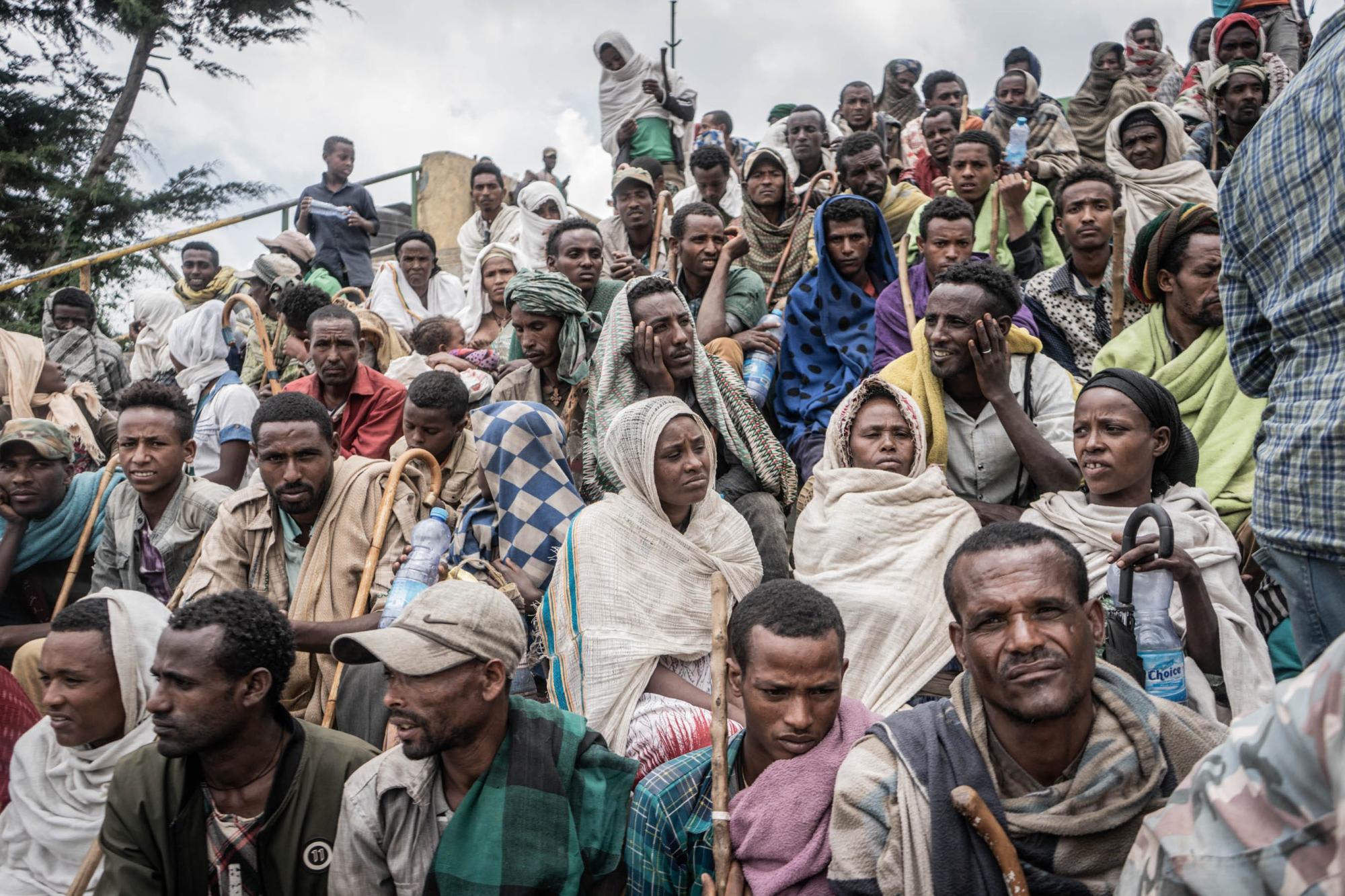
In Sudan ... civilians have endured 16 months of a violent civil war. Last week, talks to end the war began in Switzerland, but only one of the two warring factions showed up. By the weekend, however, each side had taken a critical step. The armed group attending the talks agreed to enable the delivery of emergency aid to parts of the East African country where hundreds of thousands of people are at risk of starvation. About the same time, and seemingly independently, the other faction opened a vital border crossing for the same purpose. The mutual acknowledgment of the need to protect innocent life may have opened a door to solving one of the world's gravest crises. "These constructive decisions by both parties will enable the entry of aid needed to stop the famine, address food insecurity and respond to immense humanitarian needs," international mediators in Geneva said in a joint statement. Recent trends in conflict resolution, the International Committee of the Red Cross noted, have shown that protecting innocent civilians from harm "can have an impact on the success of peace negotiations and agreements, as well as on the chances for post-conflict reconciliation." Humanitarian gestures, the ICRC observed, helped the Colombian government build trust with guerrilla factions and strengthen compliance with a 2016 peace accord. More recently, two armed groups in the Democratic Republic of Congo signed a mutual pledge in March to respect and protect civilians caught in the vast African country's fragmented wars.
Latest
Latest News
Each news summary is created according to strict standards. Here's how we do it.
Each summary is created using a consistent editorial procedure. The target length is approximately 16 lines of 11-point Arial text in a 650-pixel-wide column. Up to 25% of a summary may be set in bold to emphasize the most important ideas. Summaries are composed of verbatim excerpts presented in the same sequence as they appear in the original news source, with very minor editorial additions. Where material has been omitted between excerpts, the omission is indicated with ellipses (...). Any words added by an editor for clarity or context appear in [brackets]. Our original news editor was Fred Burks. Tod Fletcher edited most summaries from 2007 through 2014, and Mark Bailey has served as news editor since 2014.