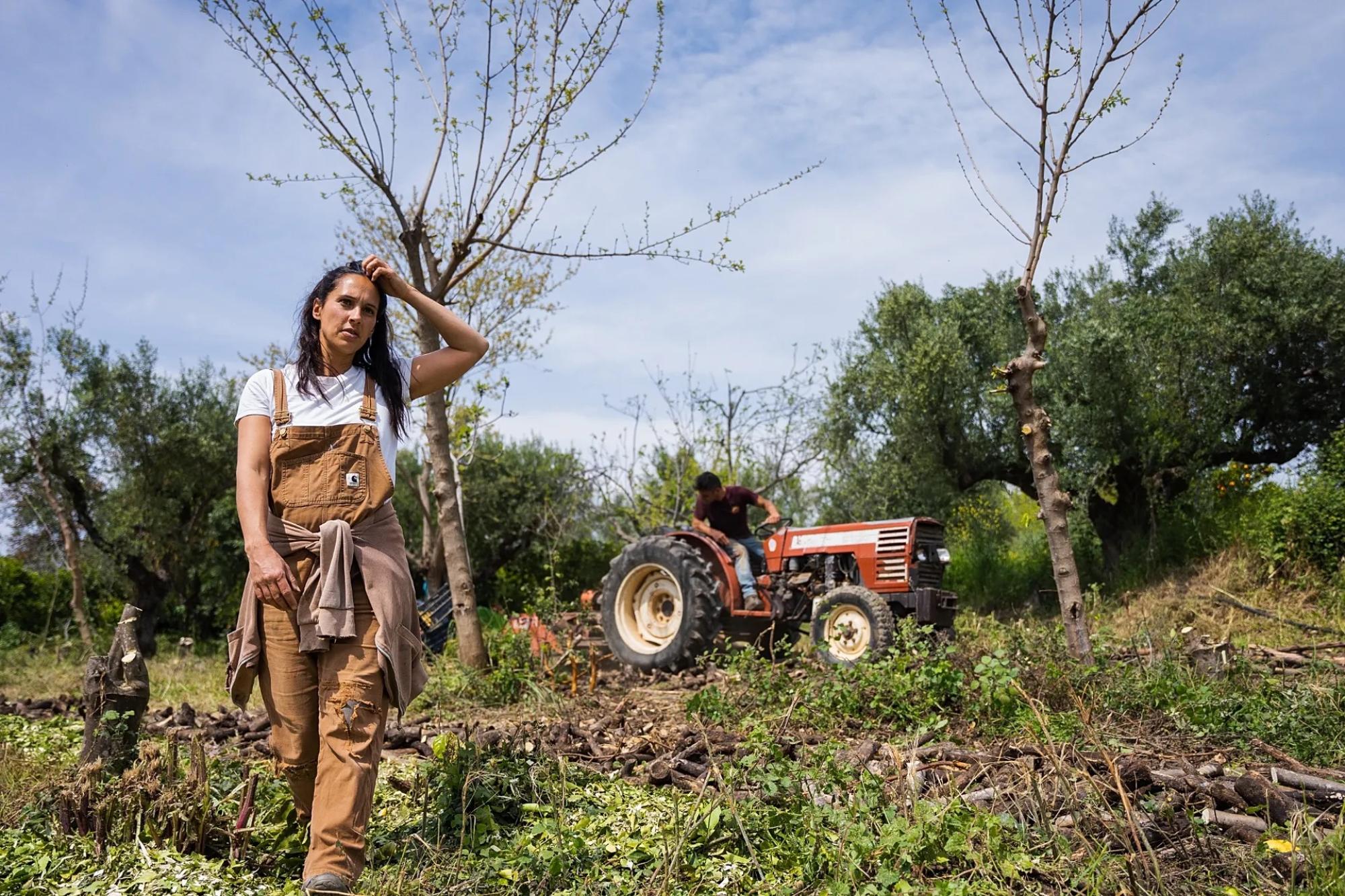
A crisis is looming on European farms as the war on Iran threatens fertiliser supplies and sends fuel prices soaring. But some are more shielded than others. Regenerative farms are less reliant on imported synthetic fertilisers than their conventional counterparts while having very similar yields at much lower costs. They improve the soil's natural fertility with compost, animal manure, rotational grazing, and cover crops, which are planted in the off-season specifically to build healthy soil. They're less affected when global supply chains are disrupted. It also secures their future by reducing pollution, encouraging biodiversity and even improving public health. Overuse of synthetic nitrogen-based fertilisers is eroding the resilience of farms by polluting the water and air, degrading the soil, and posing risks to human health. On her farm in Greece, third-generation farmer Sheila Darmos generates nitrogen naturally through plants. "We integrate permaculture, syntropic agriculture, and agroforestry practices, and have been shredding tree prunings and leaving them on the soil for over 30 years, building rich fertile soil through decomposing organic matter," she explains. "We also grow nitrogen-fixing plants on the farm itself, so the system generates its own nitrogen without needing to import any synthetic fertiliser." Regenerative agriculture is not only about ecological regeneration and resilience: it also improves social and economic resilience to shocks and crises.
Latest
Latest News
Each news summary is created according to strict standards. Here's how we do it.
Each summary is created using a consistent editorial procedure. The target length is approximately 16 lines of 11-point Arial text in a 650-pixel-wide column. Up to 25% of a summary may be set in bold to emphasize the most important ideas. Summaries are composed of verbatim excerpts presented in the same sequence as they appear in the original news source, with very minor editorial additions. Where material has been omitted between excerpts, the omission is indicated with ellipses (...). Any words added by an editor for clarity or context appear in [brackets]. Our original news editor was Fred Burks. Tod Fletcher edited most summaries from 2007 through 2014, and Mark Bailey has served as news editor since 2014.