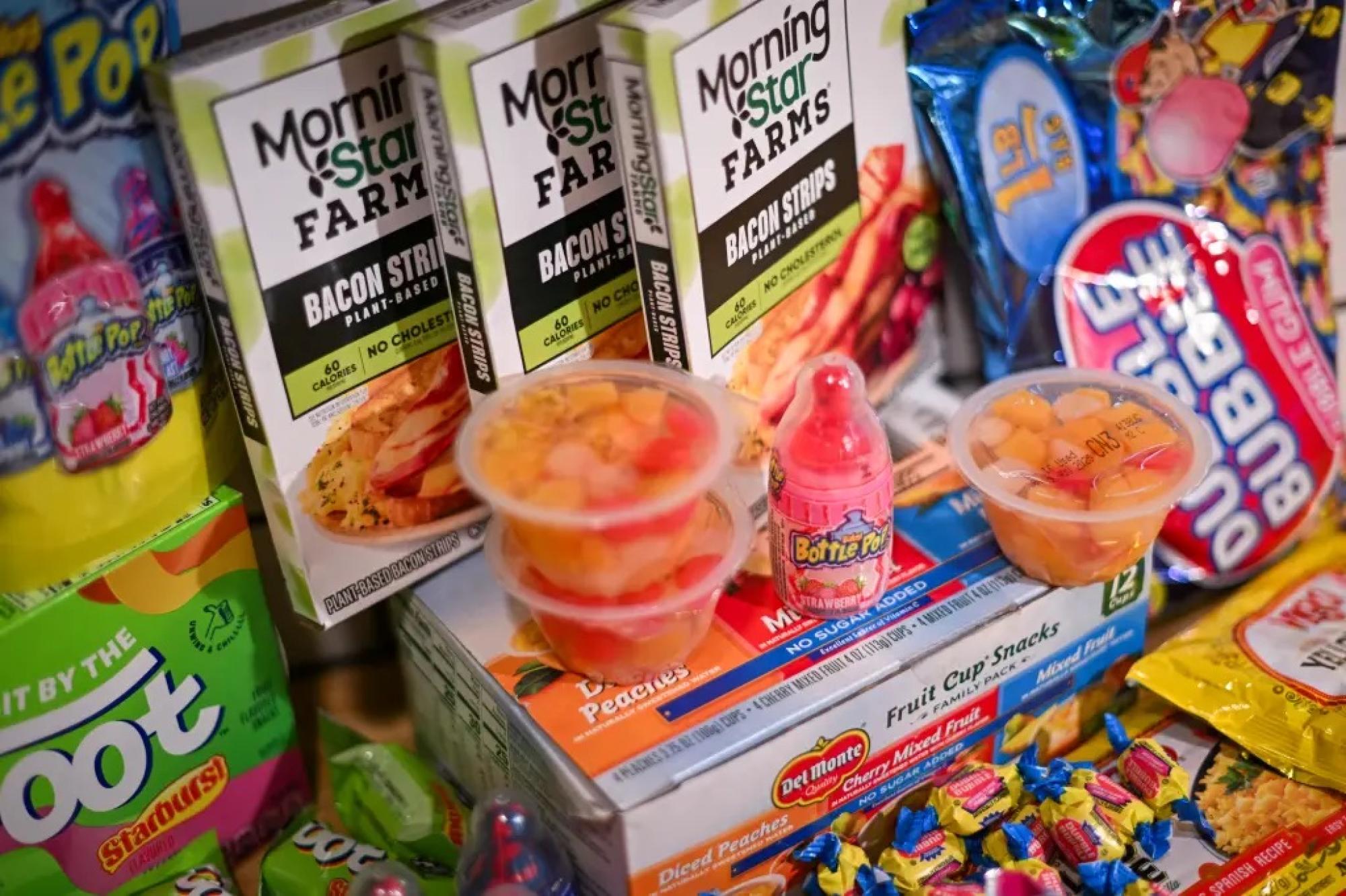
The Food and Drug Administration said Wednesday it's banning the use of Red No. 3, a synthetic dye that gives food and drinks their bright red cherry color but has been linked to cancer in animals. The dye is still used in thousands of foods, including candy, cereals, cherries in fruit cocktails and strawberry-flavored milkshakes, according to the Center for Science in the Public Interest, a food safety advocacy group that petitioned the agency in 2022 to end its use. More than 9,200 food items contain the dye, including hundreds of products made by large food companies. The FDA is not prohibiting other artificial dyes, including Red No. 40, which has been linked to behavioral issues in children. The FDA's decision is a victory for consumer advocacy groups and some U.S. lawmakers who have long urged it to revoke Red No. 3's approval, citing ample evidence that its use in beverages, dietary supplements, cereals and candies may cause cancer as well as affect children's behavior. "At long last, the FDA is ending the regulatory paradox of Red 3 being illegal for use in lipstick, but perfectly legal to feed to children in the form of candy," said Dr. Peter Lurie, president of the CSPI. The agency banned the additive in cosmetics in 1990 under the Delaney Clause, a federal law that requires the FDA to ban food additives that are found to cause or induce cancer in humans or animals. Food manufacturers will have until Jan. 15, 2027, to reformulate their products.
Latest
Latest News
Each news summary is created according to strict standards. Here's how we do it.
Each summary is created using a consistent editorial procedure. The target length is approximately 16 lines of 11-point Arial text in a 650-pixel-wide column. Up to 25% of a summary may be set in bold to emphasize the most important ideas. Summaries are composed of verbatim excerpts presented in the same sequence as they appear in the original news source, with very minor editorial additions. Where material has been omitted between excerpts, the omission is indicated with ellipses (...). Any words added by an editor for clarity or context appear in [brackets]. Our original news editor was Fred Burks. Tod Fletcher edited most summaries from 2007 through 2014, and Mark Bailey has served as news editor since 2014.