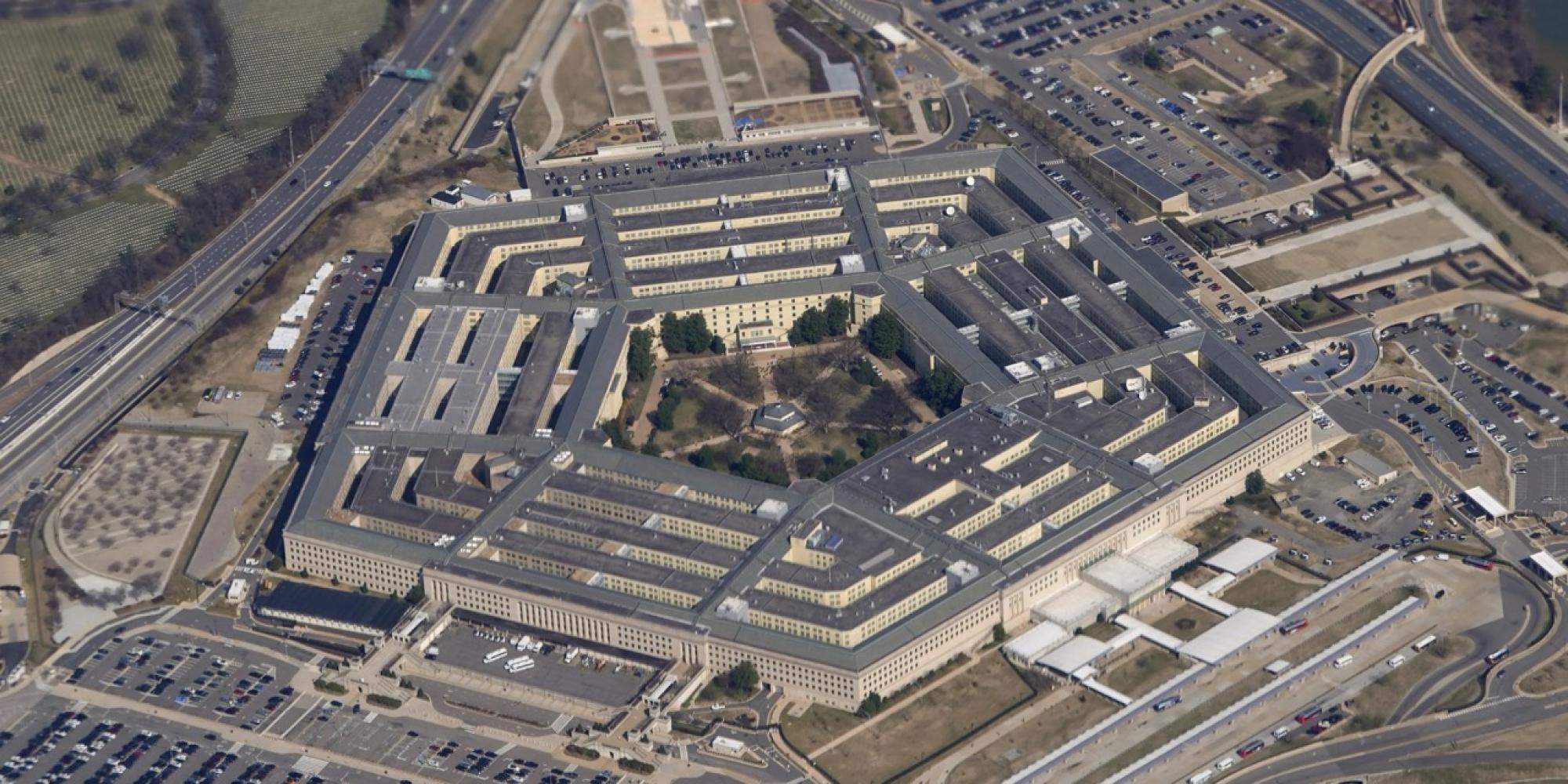
Elon Musk's so-called Department of Government Efficiency began its cost-cutting efforts by dismantling the U.S. Agency for International Development. DOGE has since targeted agencies focused on children's education, protecting the natural world, and food safety. But after more than a month running roughshod through government, DOGE has made strikingly few cuts at the Pentagon, whose bloated budget tips the scales at around $850 billion accounting for about 13 percent of federal spending. One Pentagon official said that DOGE has so far taken on "weak" agencies, but that Musk's cost-cutters will be "steamrolled" if they lock horns with the Defense Department. Major savings at the Pentagon can be found through the reduction or elimination of dysfunctional, expensive, or dangerous weapon systems like the F-35 combat aircraft; vulnerable Navy ships with limited utility like a new generation of aircraft carriers; and the Sentinel intercontinental ballistic missile program, according to William Hartung, a senior research fellow at the Quincy Institute for Responsible Statecraft. The F-35 combat aircraft is a bloated boondoggle, and it's already on Musk's radar. More than two decades in, the F-35 is still suffering from key flaws in its software and hardware " a total of 873 unresolved defects, according to one Pentagon analysis. If it's allowed to run its course, the F-35 will be the most expensive weapons program in history, at a total cost of $1.7 trillion.
Latest
Latest News
Each news summary is created according to strict standards. Here's how we do it.
Each summary is created using a consistent editorial procedure. The target length is approximately 16 lines of 11-point Arial text in a 650-pixel-wide column. Up to 25% of a summary may be set in bold to emphasize the most important ideas. Summaries are composed of verbatim excerpts presented in the same sequence as they appear in the original news source, with very minor editorial additions. Where material has been omitted between excerpts, the omission is indicated with ellipses (...). Any words added by an editor for clarity or context appear in [brackets]. Our original news editor was Fred Burks. Tod Fletcher edited most summaries from 2007 through 2014, and Mark Bailey has served as news editor since 2014.