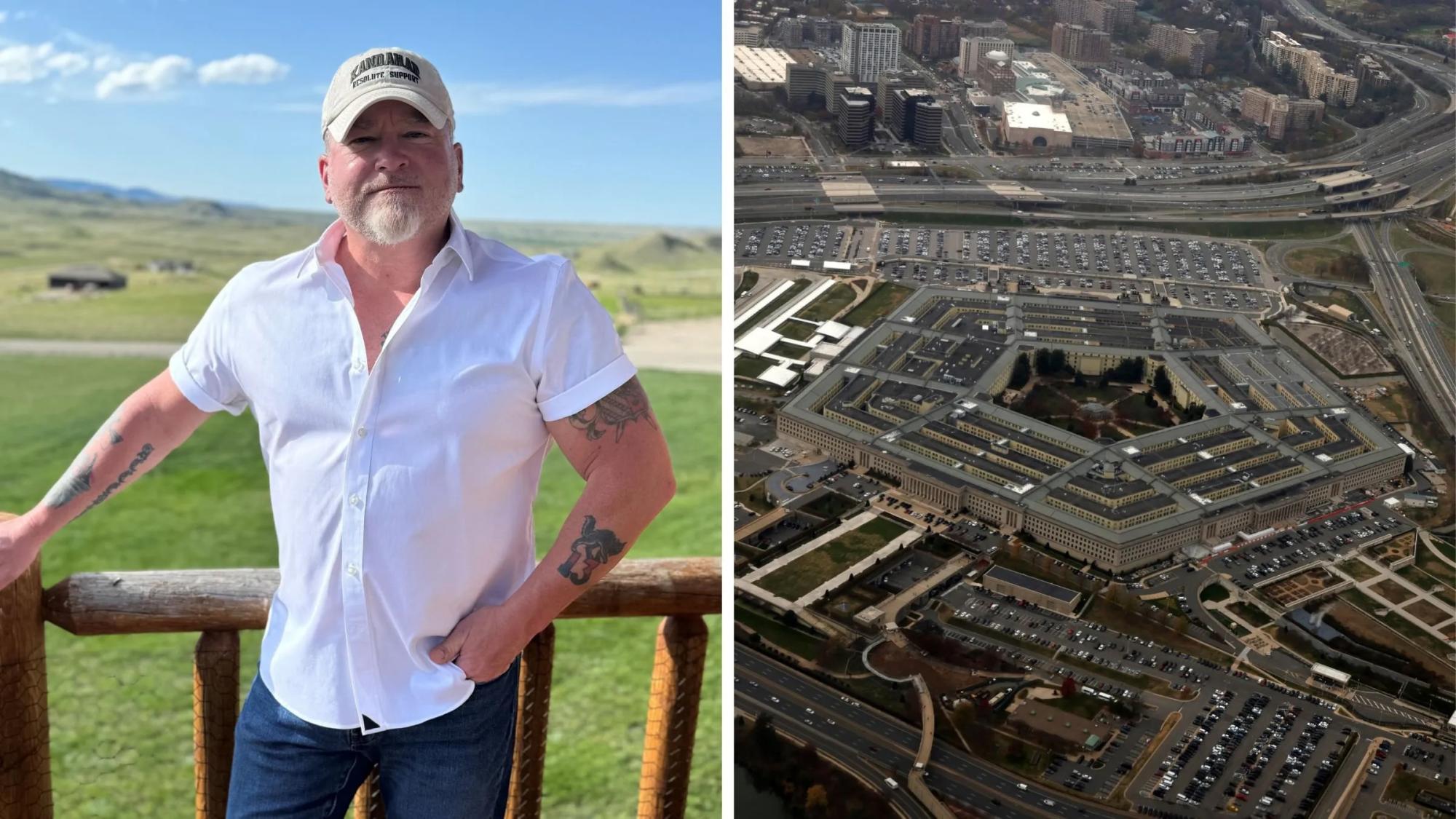
Luis Elizondo [was the] director of the [Pentagon's] Advanced Aerospace Threat Identification Programme (AATIP). He claims to have been told categorically by senior fellow researchers that the notorious Roswell incident in New Mexico in 1947 really did involve a UAP crash, perhaps involving two flying saucers " and that "four deceased non-human bodies" were recovered from the wreckage and examined. Asked what happened to these supposed bodies, he says on our video call: "We know where they were. We don't know where they are." He adds: "I've got to be careful what I say here, to not get in trouble " I still have my security clearance." Other bodies have also been retrieved from subsequent incidents. He accuses major aerospace companies of trying to obtain crashed UAPs, to "reverse-engineer" the advanced machinery and replicate it. He warns that UAPs appear to be attracted to nuclear technology, sometimes interfering with weapons. He claims to have once even discussed setting a "trap" to catch a UAP by using US nuclear-powered aircraft carriers and submarines as bait. And he believes that UAPs have already cost lives. Ten people are said to have died in the "Colares incidents" after being harmed by lasers on a Brazilian island in the 1970s. Many of Elizondo's assertions rely on unnamed people, who he describes as "credible sources." But he also believes he's seen pieces of a UAP himself " and that he's even handled "alleged alien implants found in humans".
Latest
Latest News
Each news summary is created according to strict standards. Here's how we do it.
Each summary is created using a consistent editorial procedure. The target length is approximately 16 lines of 11-point Arial text in a 650-pixel-wide column. Up to 25% of a summary may be set in bold to emphasize the most important ideas. Summaries are composed of verbatim excerpts presented in the same sequence as they appear in the original news source, with very minor editorial additions. Where material has been omitted between excerpts, the omission is indicated with ellipses (...). Any words added by an editor for clarity or context appear in [brackets]. Our original news editor was Fred Burks. Tod Fletcher edited most summaries from 2007 through 2014, and Mark Bailey has served as news editor since 2014.