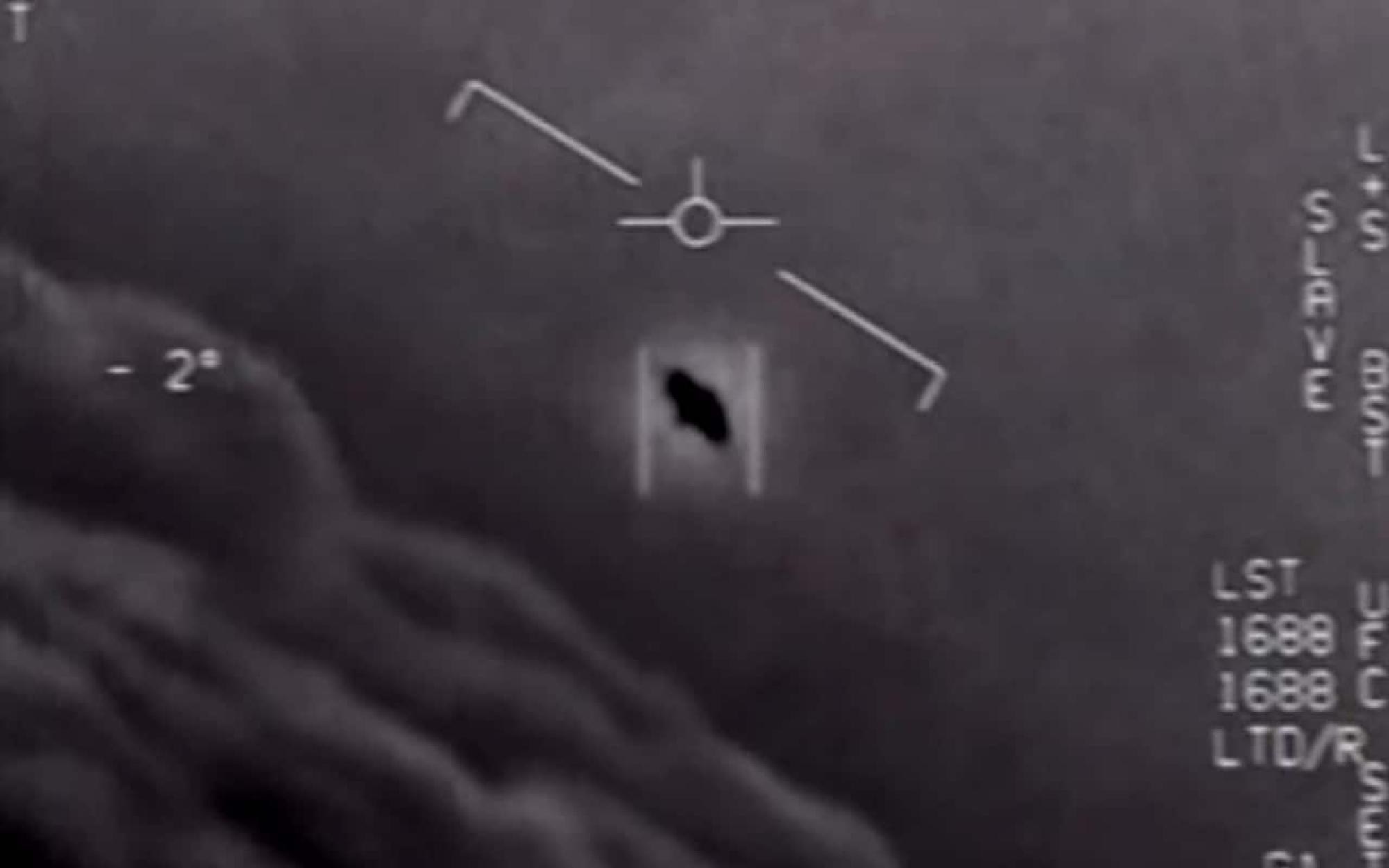
At the end of last year, a US government bill that would have mandated the controlled release of all classified documents and artifacts relating to UFOs was significantly watered down at the last minute so that it would get through Congress. Interest in unidentified aerial phenomena (UAPs), the new term for UFOs, reignited in June 2023 when ex-US intelligence agency whistleblower David Grusch told the Debrief website that during his official duties he had discovered the US had indeed been retrieving spacecraft of non-human origin for decades. The prospect of alien spacecraft raises serious issues that go beyond whether we're alone in the universe. Lots of scientific work is under way not only to look for signs of extraterrestrial life, but more recently to ask what it would mean psychologically for us if aliens really do exist, and " potentially worse " if the authorities have been lying to us about what they know. What happens if [someone] uncovers irrefutable proof that non-human intelligences have visited or are visiting Earth? Physicist John Priestland ... found himself wondering what this would mean to us as individuals. "There are a lot of people who will be affected. There isn't an entity out there, as far as I can see, that is putting people first," he says. So he set up Unhidden, a charity dedicated to decreasing the stigma associated with discussing UAPs, non-human intelligences, and the possibility that evidence is being covered up by governments.
Latest
Latest News
Each news summary is created according to strict standards. Here's how we do it.
Each summary is created using a consistent editorial procedure. The target length is approximately 16 lines of 11-point Arial text in a 650-pixel-wide column. Up to 25% of a summary may be set in bold to emphasize the most important ideas. Summaries are composed of verbatim excerpts presented in the same sequence as they appear in the original news source, with very minor editorial additions. Where material has been omitted between excerpts, the omission is indicated with ellipses (...). Any words added by an editor for clarity or context appear in [brackets]. Our original news editor was Fred Burks. Tod Fletcher edited most summaries from 2007 through 2014, and Mark Bailey has served as news editor since 2014.