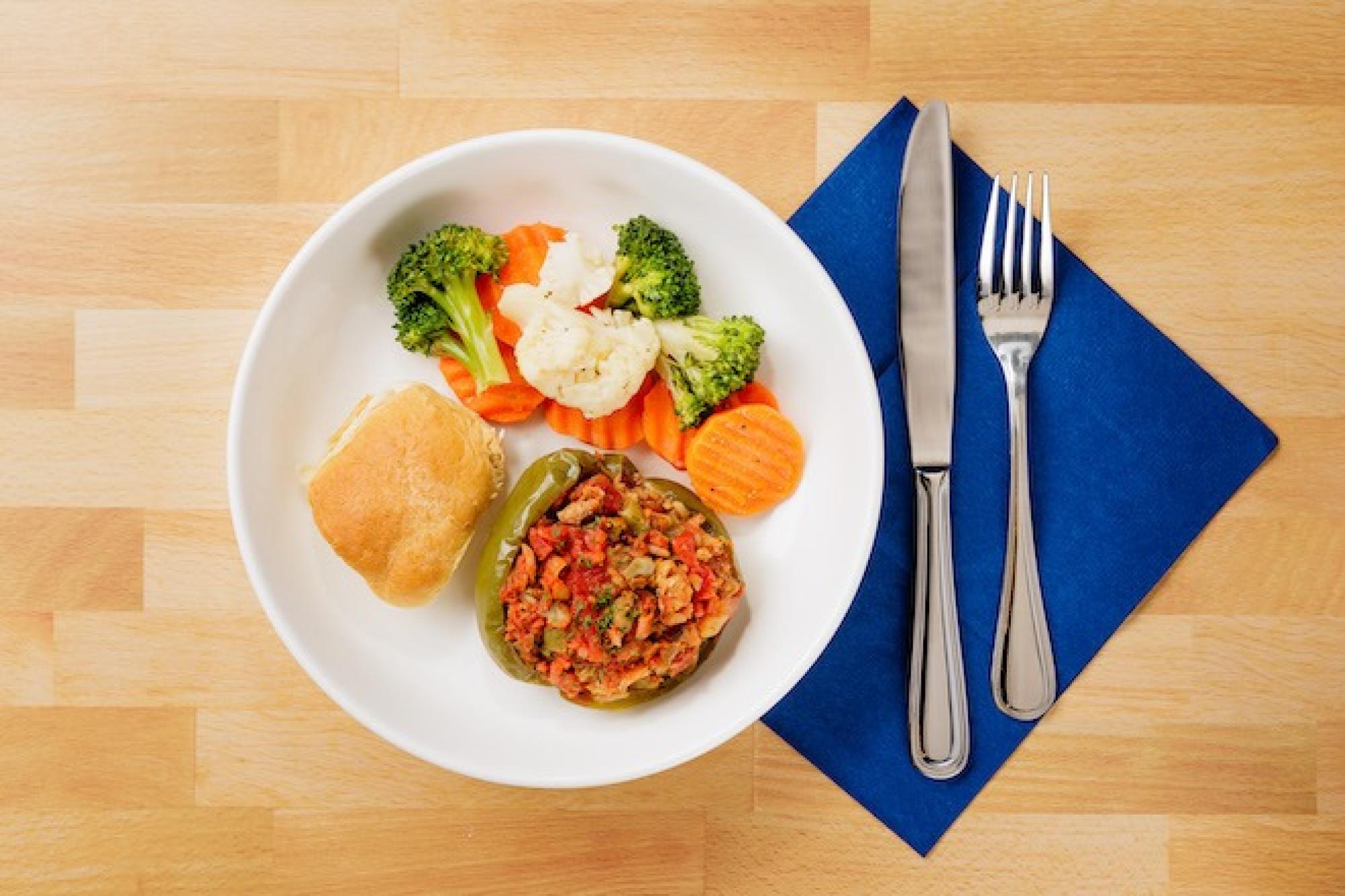
MANNA [is a] nonprofit that provides free, medically-tailored meals (MTMs) and education about how nutrition affects health conditions to Philadelphians who need it. Last month, the journal BMC Nutrition released research ... showing that its clients achieved a "significant decrease in malnutrition risk" and meaningful changes in conditions like diabetes and hypertension. "This is the first of its kind," explains Jule Anne Henstenburg, PhD, director of The MANNA Institute. "There has never been research involving an in-depth evaluation of a functioning medically tailored meal program." Of the clients at risk for malnutrition when starting the program, 56 percent experienced a clinically significant reduction in malnutrition risk by program finish; 62 percent of clients with hypertension reduced their blood pressure by five or more units; among clients with diabetes, median hemoglobin A1C dropped from 8.3 percent to 7.7 percent, indicating improved blood sugar control. Body mass index (BMI) remained stable or decreased for 88 percent of clients who started the program with obesity. Clients can be referred to MANNA either by their medical care provider or through their health insurance plan. The majority of MANNA's clients are low-income, a population that often lives in food deserts, where healthy food is already hard to come by, and health literacy (the kind of insight needed to understand medically complex diets) can be low. "I see MANNA as the pharmacy for your prescription diet," [Chief executive officer of MANNA Sue] Daugherty says. "Imagine getting a prescription for your high blood pressure medicine and not having a pharmacy to fill it " that's what happens every day when folks are discharged with complex diets." The top five illnesses MANNA serves are heart disease, cancer, diabetes, HIV / AIDS and congestive heart failure. Originally created in 1990 to provide comfort foods to patients with AIDS, MANNA overhauled its menu and began expanding its reach to anyone with a life-threatening illness 10 years later.
Latest
Latest News
Each news summary is created according to strict standards. Here's how we do it.
Each summary is created using a consistent editorial procedure. The target length is approximately 16 lines of 11-point Arial text in a 650-pixel-wide column. Up to 25% of a summary may be set in bold to emphasize the most important ideas. Summaries are composed of verbatim excerpts presented in the same sequence as they appear in the original news source, with very minor editorial additions. Where material has been omitted between excerpts, the omission is indicated with ellipses (...). Any words added by an editor for clarity or context appear in [brackets]. Our original news editor was Fred Burks. Tod Fletcher edited most summaries from 2007 through 2014, and Mark Bailey has served as news editor since 2014.