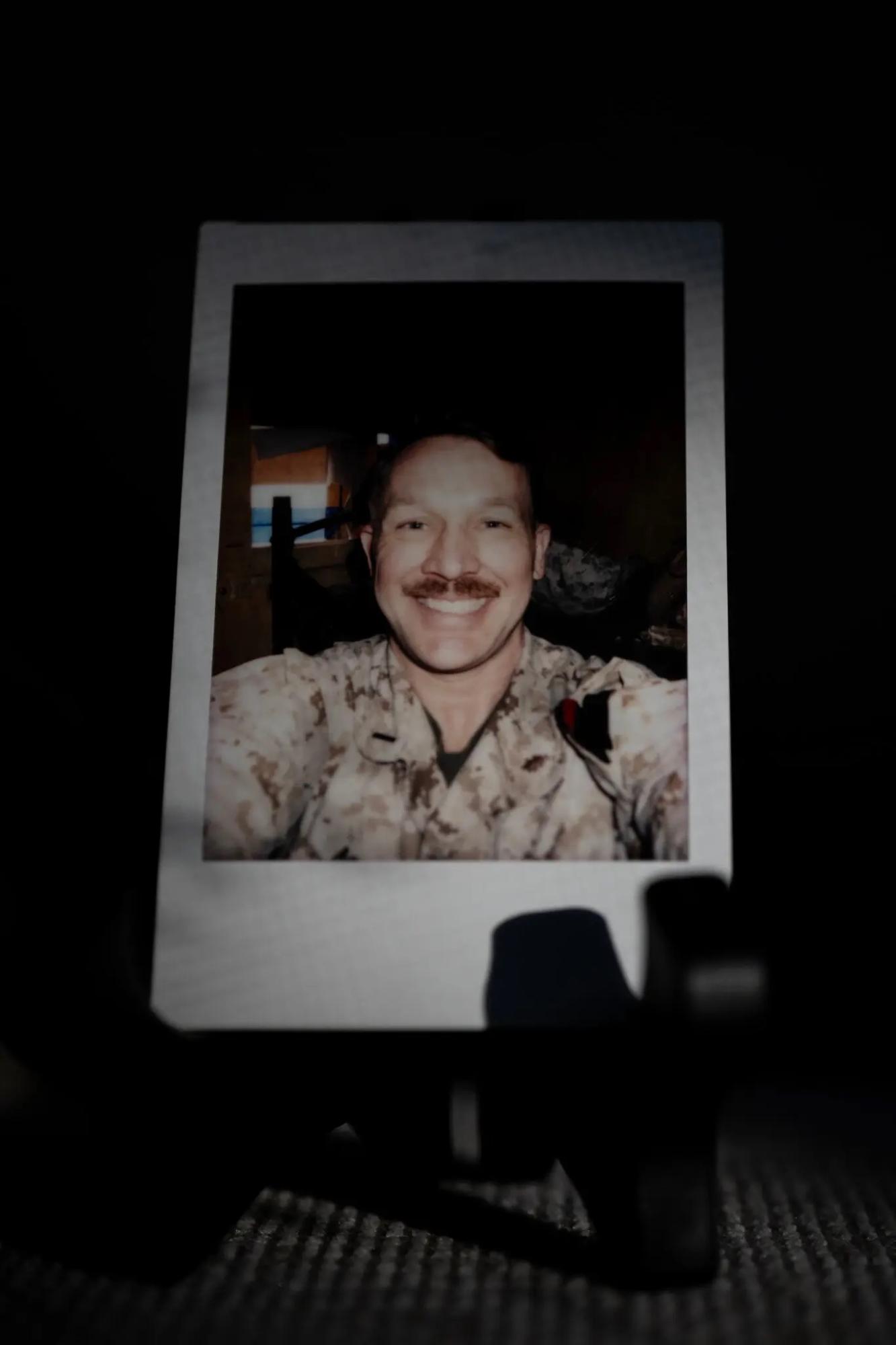
David Metcalf's last act in life was an attempt to send a message that years as a Navy SEAL had left his brain so damaged that he could barely recognize himself. He shot himself in the heart, preserving his brain to be analyzed by a state-of-the-art Defense Department laboratory in Maryland. The lab found an unusual pattern of damage seen only in people exposed repeatedly to blast waves. The vast majority of blast exposure for Navy SEALs comes from firing their own weapons, not from enemy action. The damage pattern suggested that years of training intended to make SEALs exceptional was leaving some barely able to function. At least a dozen Navy SEALs have died by suicide in the last 10 years. A grass-roots effort by grieving families delivered eight of their brains to the lab. Researchers discovered blast damage in every single one. The damage may be just as widespread in SEALs who are still alive. A Harvard study ... scanned the brains of 30 career Special Operators and found an association between blast exposure and altered brain structure and compromised brain function. The more blast exposure the men had experienced, the more problems they reported with health and quality of life. Doctors treating the injured troops give them diagnoses of psychiatric disorders that miss the underlying physical damage. Much of what is categorized as post-traumatic stress disorder may actually be caused by repeated exposure to blasts.
Latest
Latest News
Each news summary is created according to strict standards. Here's how we do it.
Each summary is created using a consistent editorial procedure. The target length is approximately 16 lines of 11-point Arial text in a 650-pixel-wide column. Up to 25% of a summary may be set in bold to emphasize the most important ideas. Summaries are composed of verbatim excerpts presented in the same sequence as they appear in the original news source, with very minor editorial additions. Where material has been omitted between excerpts, the omission is indicated with ellipses (...). Any words added by an editor for clarity or context appear in [brackets]. Our original news editor was Fred Burks. Tod Fletcher edited most summaries from 2007 through 2014, and Mark Bailey has served as news editor since 2014.