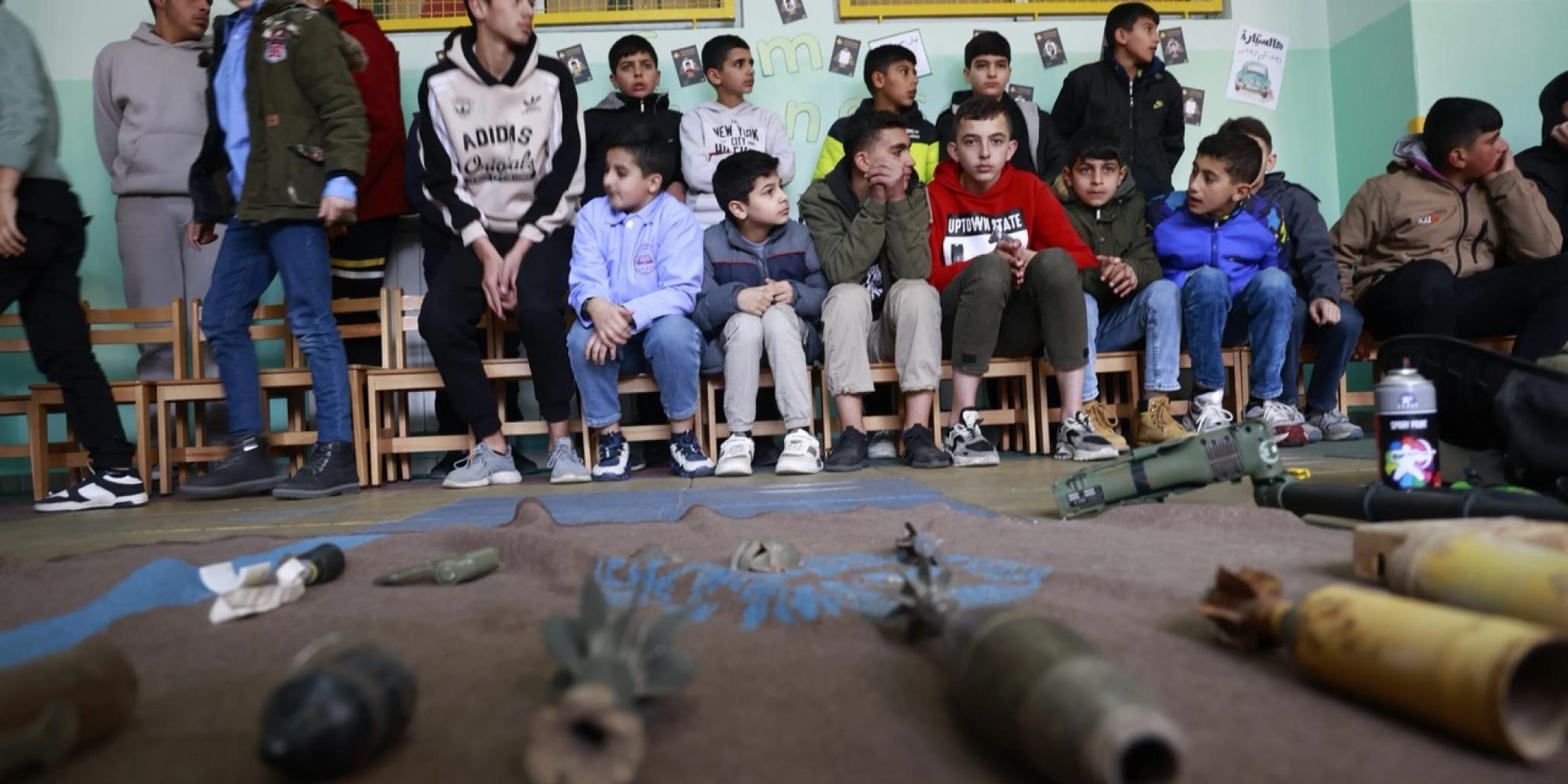
The Department of Defense has quietly signed a $210 million deal to buy advanced cluster shells from one of Israel's state-owned arms companies, marking unusually large new commitments to a class of weapons and an Israeli defense establishment both widely condemned for their indiscriminate killing of civilians. The deal, signed in September and not previously reported, is the department's largest contract to purchase weapons from an Israeli company in available records. The shells are designed to replace decades-old and often defective cluster shells that left live explosives scattered across Vietnam, Laos, Iraq, and other nations. The terror of cluster weapons persists long after the guns that fired them have quieted, as civilians return to fields, forests, and settlements laced with bomblets that can explode years later without warning. "The footprint of the injuries of these weapons is so horrifying," said Alma Taslidžan, advocacy manager for the aid organization Humanity & Inclusion. The Cluster Munition Monitor has documented more than 24,800 cluster munition injuries and deaths since the 1960s, three-quarters from unexploded remnants. In 2024, cluster munitions killed at least 314 civilians, the majority of them in Ukraine. Major military powers " like Russia, China, Israel, India, Pakistan, and the United States " have never signed the Convention on Cluster Munitions, which bans its 112 member states from using or producing those weapons.
Latest
Latest News
Each news summary is created according to strict standards. Here's how we do it.
Each summary is created using a consistent editorial procedure. The target length is approximately 16 lines of 11-point Arial text in a 650-pixel-wide column. Up to 25% of a summary may be set in bold to emphasize the most important ideas. Summaries are composed of verbatim excerpts presented in the same sequence as they appear in the original news source, with very minor editorial additions. Where material has been omitted between excerpts, the omission is indicated with ellipses (...). Any words added by an editor for clarity or context appear in [brackets]. Our original news editor was Fred Burks. Tod Fletcher edited most summaries from 2007 through 2014, and Mark Bailey has served as news editor since 2014.