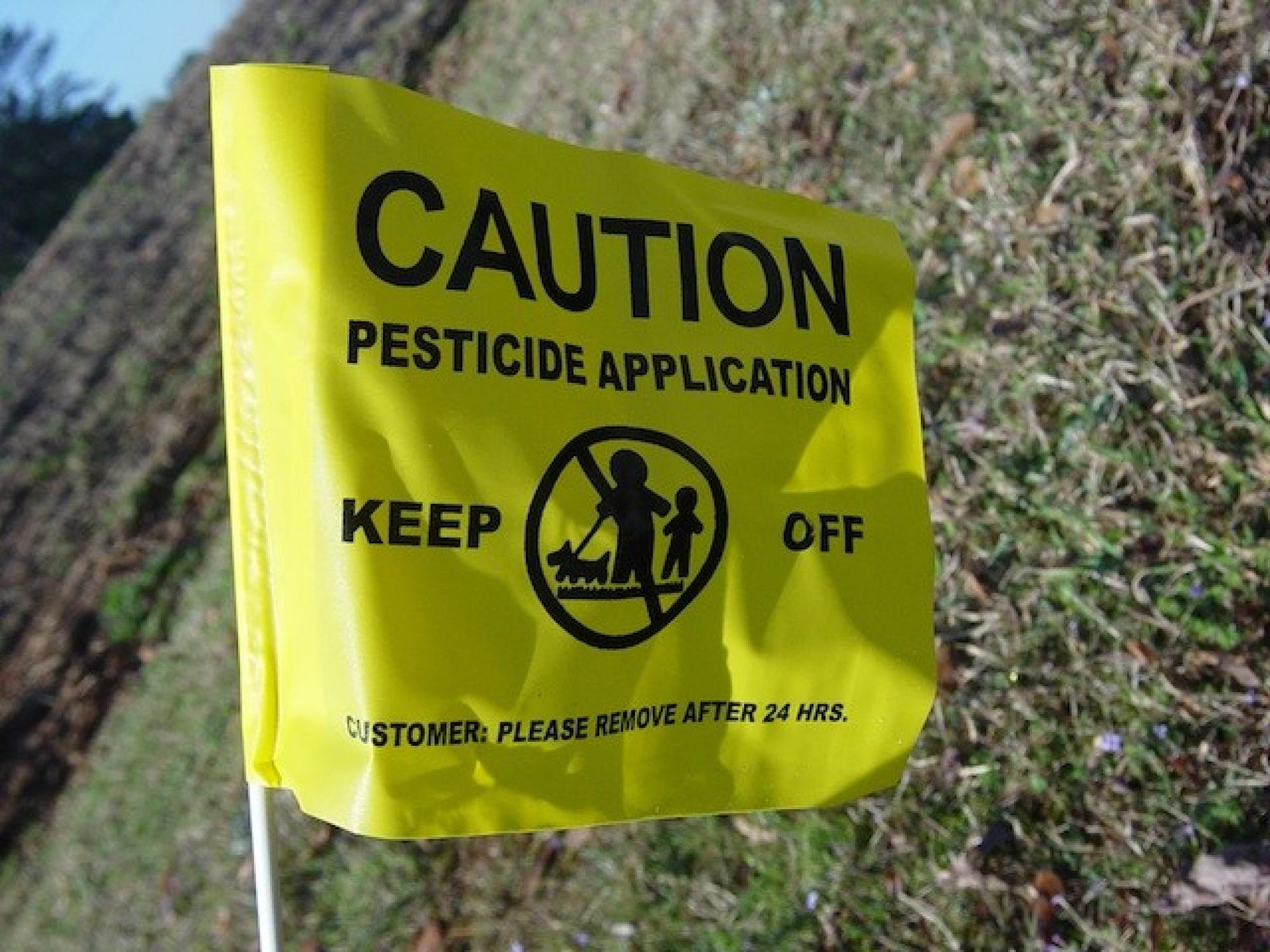
Pesticides may cause cancer on a level equivalent to smoking cigarettes, a new study has found. The widespread use of pesticides may lead to hundreds of thousands of additional cancer cases in major corn-producing states like Iowa, Illinois, Indiana, Missouri and Ohio even for Americans who don't work on farms, according to findings published ... in Frontiers in Cancer Control and Society. In February, scientists from the Endocrine Society and the International Pollutants Elimination Network raised concerns that there was no safe level of exposure to many common pesticides. Research ... has tended to focus on specific pesticides, regions or cohorts of the population (like farm workers) " which obscures the fact that pesticides are used across the country, and that those exposed to any of them tend to be exposed to many of them, creating a greater compound risk. The researchers found a difference of 154,000 cancer cases per year, adjusted for population, between the area with the lowest pesticide use " the Great Plains " and that with the highest, the corn belt of the inner Midwest, where hundreds of millions of pounds of glyphosate are applied each year across millions of acres. When it came to individual cancers, pesticide use seemed to have the strongest association with blood cancers like leukemia or non-Hodgkin lymphoma. Half again as many cases of the latter appeared to be "caused by pesticides compared to smoking," the researchers wrote.
Latest
Latest News
Each news summary is created according to strict standards. Here's how we do it.
Each summary is created using a consistent editorial procedure. The target length is approximately 16 lines of 11-point Arial text in a 650-pixel-wide column. Up to 25% of a summary may be set in bold to emphasize the most important ideas. Summaries are composed of verbatim excerpts presented in the same sequence as they appear in the original news source, with very minor editorial additions. Where material has been omitted between excerpts, the omission is indicated with ellipses (...). Any words added by an editor for clarity or context appear in [brackets]. Our original news editor was Fred Burks. Tod Fletcher edited most summaries from 2007 through 2014, and Mark Bailey has served as news editor since 2014.