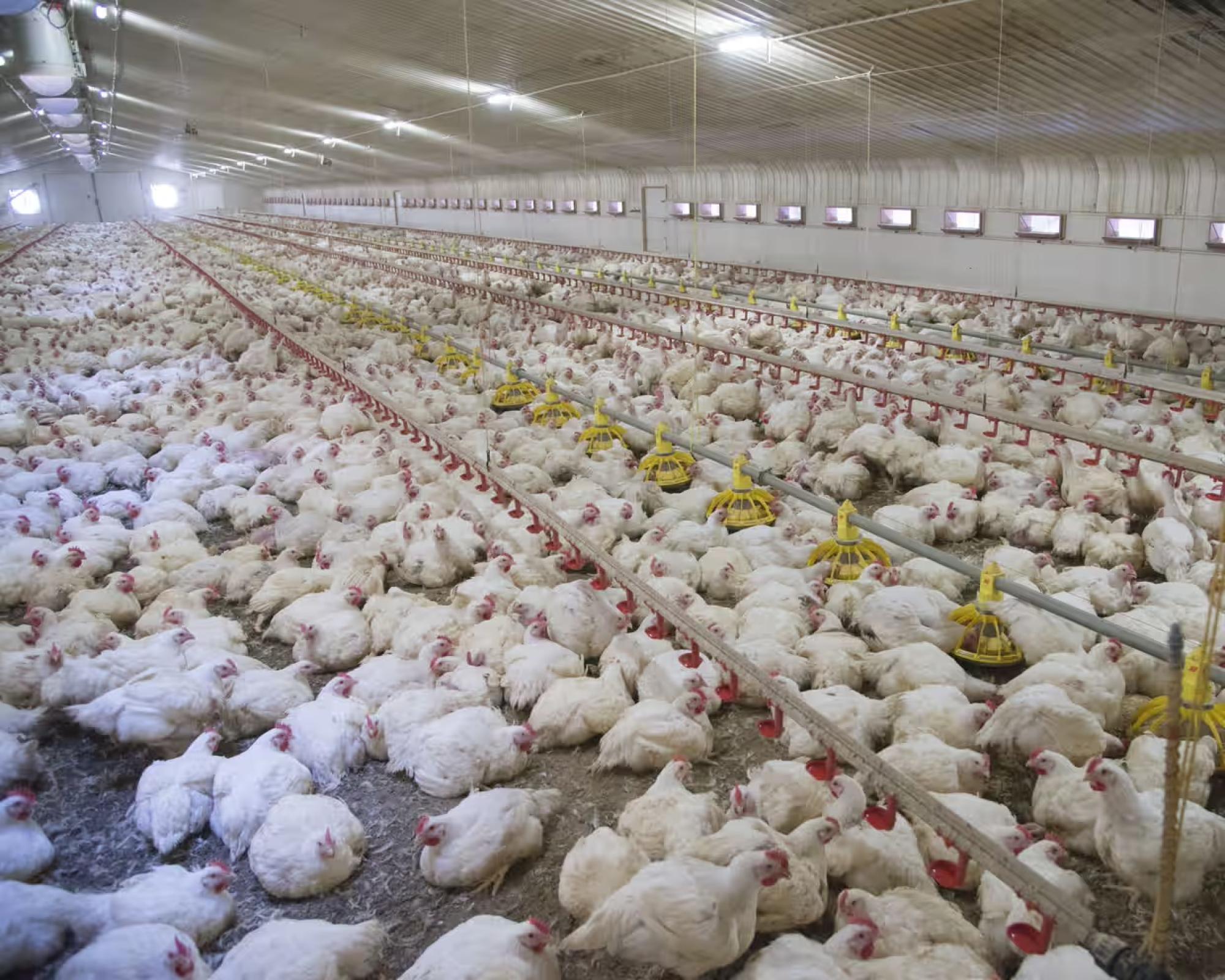
American-style intensive livestock farms are spreading across Europe, with new data revealing more than 24,000 megafarms across the continent. In the UK alone, there are now 1,824 industrial-scale pig and poultry farms. The countries with the largest number of intensive poultry farm units are France, UK, Germany, Italy and Poland in that order. For poultry farming alone, the UK ranks as having the second-highest number of intensive farms at 1,553, behind France with 2,342. Intensive livestock units are farms where 40,000 or more poultry, 2,000 or more fattening pigs, or 750 or more breeding sows are being held at any one time. The increase in so-called megafarms across Europe comes as the number of small farms has reduced dramatically, and the income gap between large and small farms has increased. The rise in intensive farming has coincided with a decline in birds, tree species and butterfly numbers. Across Europe the rise in large intensive poultry units is a key driver of river pollution. Chicken droppings contain more phosphates " which starve fish and river plants of oxygen " than any other animal manure. According to data released under freedom of information laws to Terry Jermy, the MP for South West Norfolk, megafarms in England have breached environmental regulations nearly 7,000 times since 2015. The Environment Agency carried out about 17 inspections of intensive livestock units a week in which 75% of those inspections found breaches.
Latest
Latest News
Each news summary is created according to strict standards. Here's how we do it.
Each summary is created using a consistent editorial procedure. The target length is approximately 16 lines of 11-point Arial text in a 650-pixel-wide column. Up to 25% of a summary may be set in bold to emphasize the most important ideas. Summaries are composed of verbatim excerpts presented in the same sequence as they appear in the original news source, with very minor editorial additions. Where material has been omitted between excerpts, the omission is indicated with ellipses (...). Any words added by an editor for clarity or context appear in [brackets]. Our original news editor was Fred Burks. Tod Fletcher edited most summaries from 2007 through 2014, and Mark Bailey has served as news editor since 2014.