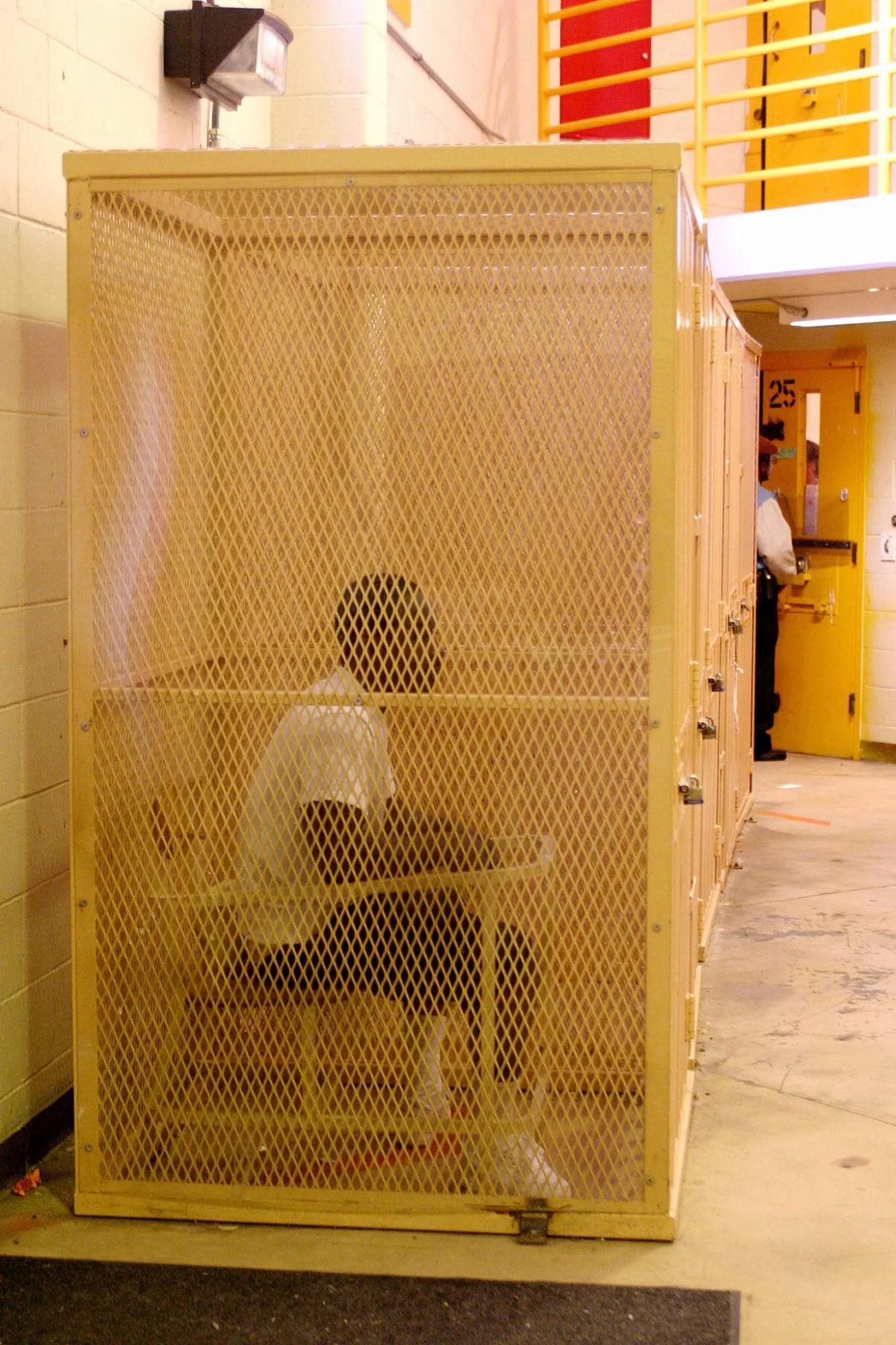
More than a decade ago, I walked into the Challenger Memorial Youth Center in Los Angeles County to gather data for a lawsuit related to their "failure to provide an adequate education to detained youth." What our team found was much more horrifying: masses of teachers not showing up or late to work, leaving youth in their cells; children in solitary confinement for weeks; sexual assault by probation officers and detention staff; teacher-run fight clubs during class; and more. These abuses continue even today, as exposed earlier this year by sex tapes recorded in a juvenile detention facility in Seattle and videos of gladiator fights between teens in custody in Los Angeles County. The juvenile justice system was originally designed to be supportive and child-centered, but it became increasingly punitive and harsh through the War on Drugs in the 1980s, which resulted in exponentially higher rates of arrests and imprisonment. As a result, children with externalizing symptoms of trauma " abuse, neglect, domestic violence " have been incarcerated without treatment for their behavioral and mental health symptoms. Youth incarceration is extremely harmful to communities, causing worse adult health and functional limits. If we want a healthy society, we need to address trauma through treatment, not incarceration. Punishment provides immediate, visible results, while empowering youth requires patience, understanding and time.
Latest
Latest News
Each news summary is created according to strict standards. Here's how we do it.
Each summary is created using a consistent editorial procedure. The target length is approximately 16 lines of 11-point Arial text in a 650-pixel-wide column. Up to 25% of a summary may be set in bold to emphasize the most important ideas. Summaries are composed of verbatim excerpts presented in the same sequence as they appear in the original news source, with very minor editorial additions. Where material has been omitted between excerpts, the omission is indicated with ellipses (...). Any words added by an editor for clarity or context appear in [brackets]. Our original news editor was Fred Burks. Tod Fletcher edited most summaries from 2007 through 2014, and Mark Bailey has served as news editor since 2014.