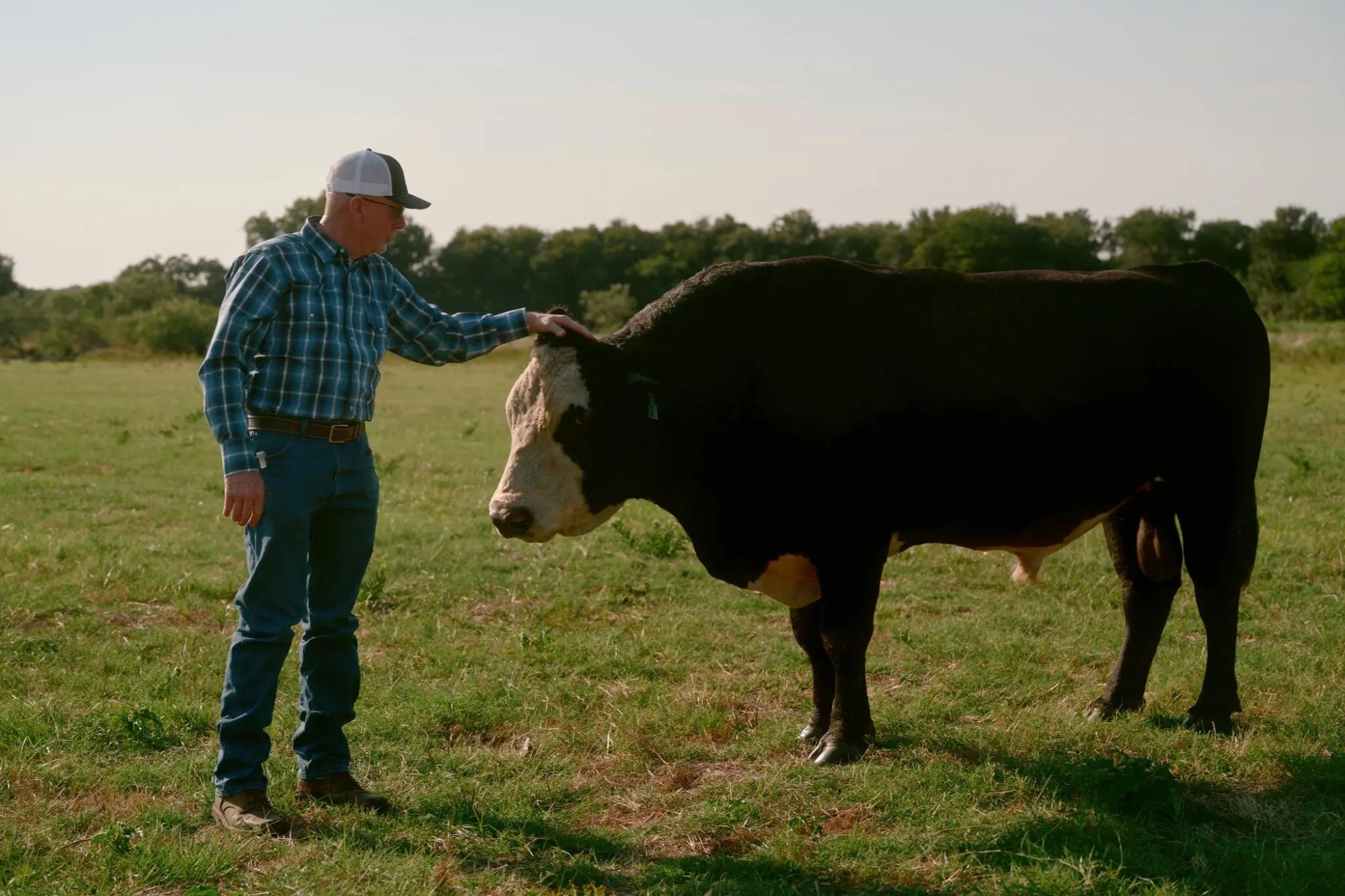
For decades, a little-known company now owned by a Goldman Sachs fund has been making millions of dollars from the unlikely dregs of American life: sewage sludge. Synagro, sells farmers treated [sewage] sludge from factories and homes to use as fertilizer. But that fertilizer, also known as biosolids, can contain harmful "forever chemicals" known as PFAS linked to serious health problems including cancer and birth defects. Farmers are starting to find the chemicals contaminating their land, water, crops and livestock. Just this year, two common types of PFAS were declared hazardous substances by the Environmental Protection Agency under the Superfund law. Now, Synagro is part of a major effort to lobby Congress to limit the ability of farmers and others to sue to clean up fields polluted by the sludge fertilizer. In a letter to the Senate Committee on Environment and Public Works in March, sludge-industry lobbyists argued that they shouldn't be held liable because the chemicals were already in the sludge before they received it and made it into fertilizer. [Synagro's] earnings hit $100 million to $120 million last year. An investment fund run by Goldman Sachs ... acquired Synagro in 2020 in a deal reported to be worth at least $600 million. As concerns over PFAS risks have grown, Synagro has stepped up its lobbying. Chemical giants 3M and DuPont, the original manufacturers of PFAS, for decades hid evidence of the chemicals' dangers. The chemicals are now so ubiquitous ... that nearly all Americans carry PFAS in their bloodstream. As many as 200 million Americans are exposed to PFAS through tap water.
Latest
Latest News
Each news summary is created according to strict standards. Here's how we do it.
Each summary is created using a consistent editorial procedure. The target length is approximately 16 lines of 11-point Arial text in a 650-pixel-wide column. Up to 25% of a summary may be set in bold to emphasize the most important ideas. Summaries are composed of verbatim excerpts presented in the same sequence as they appear in the original news source, with very minor editorial additions. Where material has been omitted between excerpts, the omission is indicated with ellipses (...). Any words added by an editor for clarity or context appear in [brackets]. Our original news editor was Fred Burks. Tod Fletcher edited most summaries from 2007 through 2014, and Mark Bailey has served as news editor since 2014.