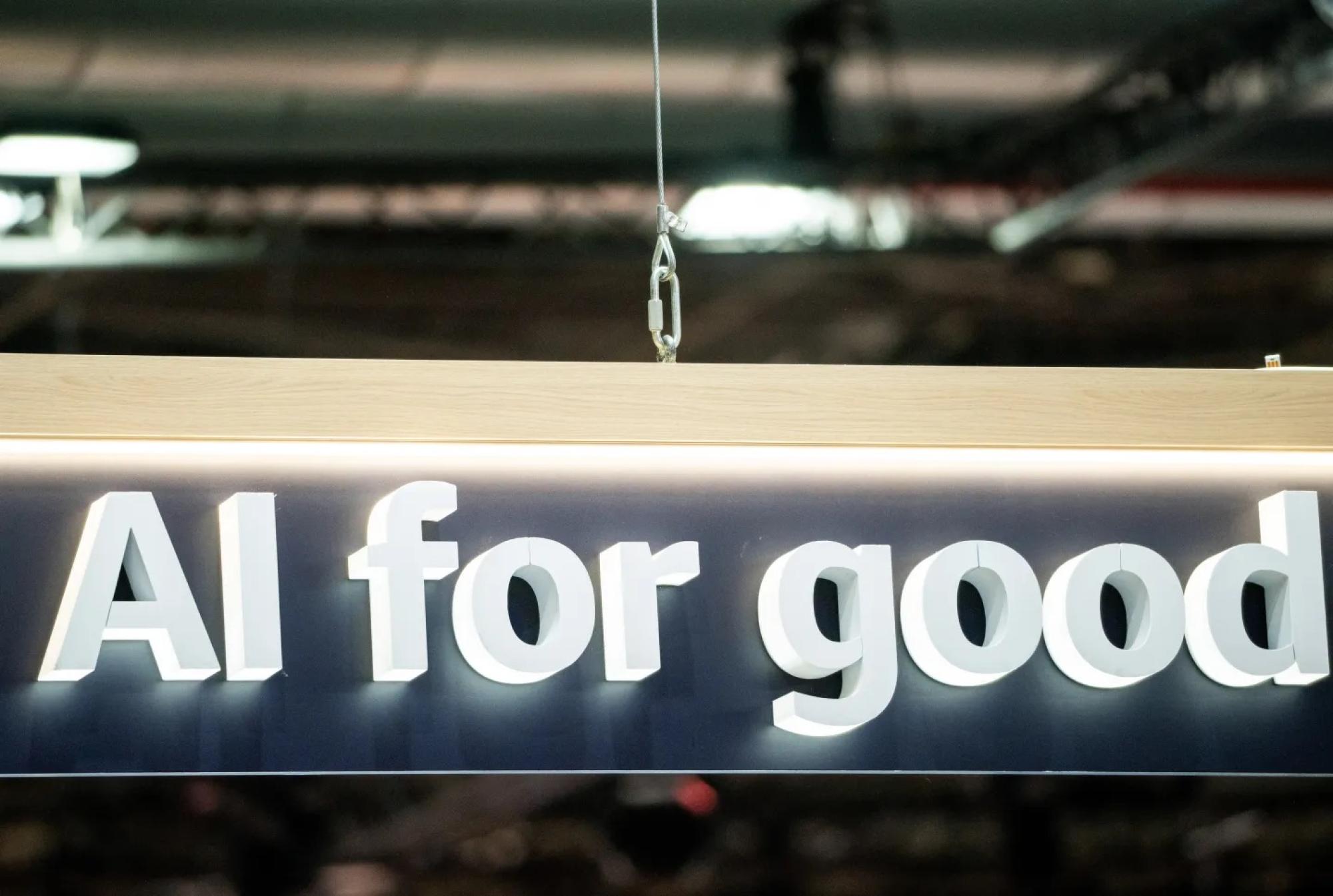
Negative or fear-framed coverage of AI in mainstream media tends to outnumber positive framings. The emphasis on the negative in artificial intelligence risks overshadowing what could go right both in the future as this technology continues to develop and right now. AlphaFold, which was developed by the Google-owned AI company DeepMind, is an AI model that predicts the 3D structures of proteins based solely on their amino acid sequences. That's important because scientists need to predict the shape of protein to better understand how it might function and how it might be used in products like drugs. By speeding up a basic part of biomedical research, AlphaFold has already managed to meaningfully accelerate drug development in everything from Huntington's disease to antibiotic resistance. A timely warning about a natural disaster can mean the difference between life and death. That is why Google Flood Hub is so important. An open-access, AI-driven river-flood early warning system, Flood Hub provides seven-day flood forecasts for 700 million people in 100 countries. It works by marrying a global hydrology model that can forecast river levels even in basins that lack physical flood gauges with an inundation model that converts those predicted levels into high-resolution flood maps. This allows villagers to see exactly what roads or fields might end up underwater. Flood Hub ... is one of the clearest examples of how AI can be used for good.
Latest
Latest News
Each news summary is created according to strict standards. Here's how we do it.
Each summary is created using a consistent editorial procedure. The target length is approximately 16 lines of 11-point Arial text in a 650-pixel-wide column. Up to 25% of a summary may be set in bold to emphasize the most important ideas. Summaries are composed of verbatim excerpts presented in the same sequence as they appear in the original news source, with very minor editorial additions. Where material has been omitted between excerpts, the omission is indicated with ellipses (...). Any words added by an editor for clarity or context appear in [brackets]. Our original news editor was Fred Burks. Tod Fletcher edited most summaries from 2007 through 2014, and Mark Bailey has served as news editor since 2014.