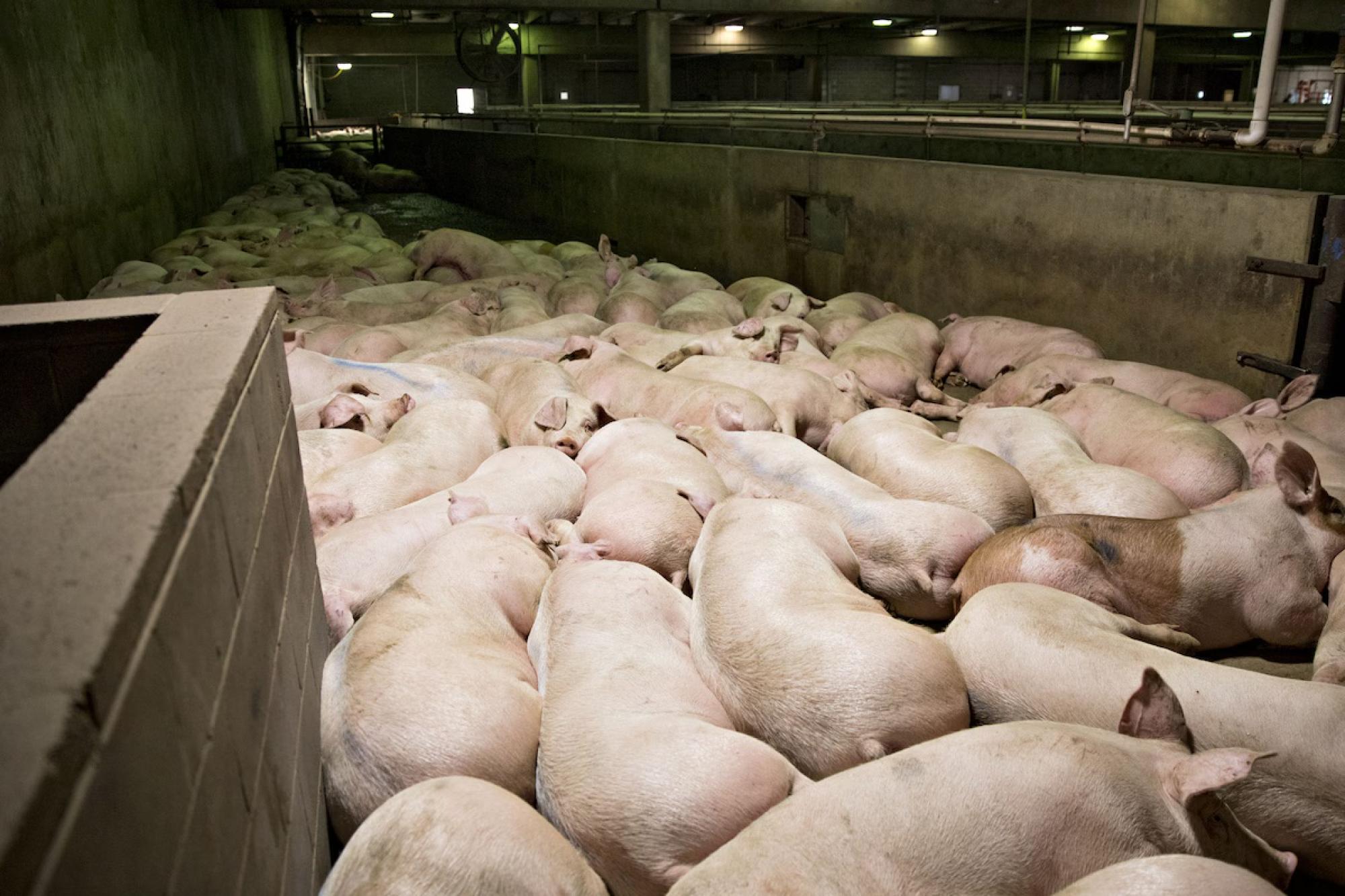
Most of us are raised on stories and songs of the family farm, where the barns are rust-red and picturesque, and cute animals gambol happily in a picket-fenced yard. "Little Red Barns," [journalist Will Potter's] second book, is the reportage of his epic, emotionally and physically draining 10-year investigation into American factory farms " also known as CAFOs, "concentrated animal feeding operations" " and the dedicated activists seeking to expose the mass suffering within. Like his first book, "Green Is the New Red" (2011), an exploration of how agencies such as the FBI target environmental and animal rights activists, it's impassioned and deeply researched. The book is a lucid indictment of a food system whose normalization of cruelty on a staggering scale is rivaled only by the tightly controlled, government-sanctioned regime of non-transparency that enables it. Discussing the history of undercover efforts to expose abuses in farm factories " in which the advent of phone cameras and other concealable, portable video equipment in the 2000s played a key role " Potter describes the subsequent rise of "ag-gag" laws, passed to stop reporters and activists from filming such private abuses and making them public. Keep in mind, Potter notes, that the U.S. agriculture lobby spends as much on buying influence with politicians every year as the fossil fuel lobby; in 2023 alone, it spent $177 million.
Latest
Latest News
Each news summary is created according to strict standards. Here's how we do it.
Each summary is created using a consistent editorial procedure. The target length is approximately 16 lines of 11-point Arial text in a 650-pixel-wide column. Up to 25% of a summary may be set in bold to emphasize the most important ideas. Summaries are composed of verbatim excerpts presented in the same sequence as they appear in the original news source, with very minor editorial additions. Where material has been omitted between excerpts, the omission is indicated with ellipses (...). Any words added by an editor for clarity or context appear in [brackets]. Our original news editor was Fred Burks. Tod Fletcher edited most summaries from 2007 through 2014, and Mark Bailey has served as news editor since 2014.