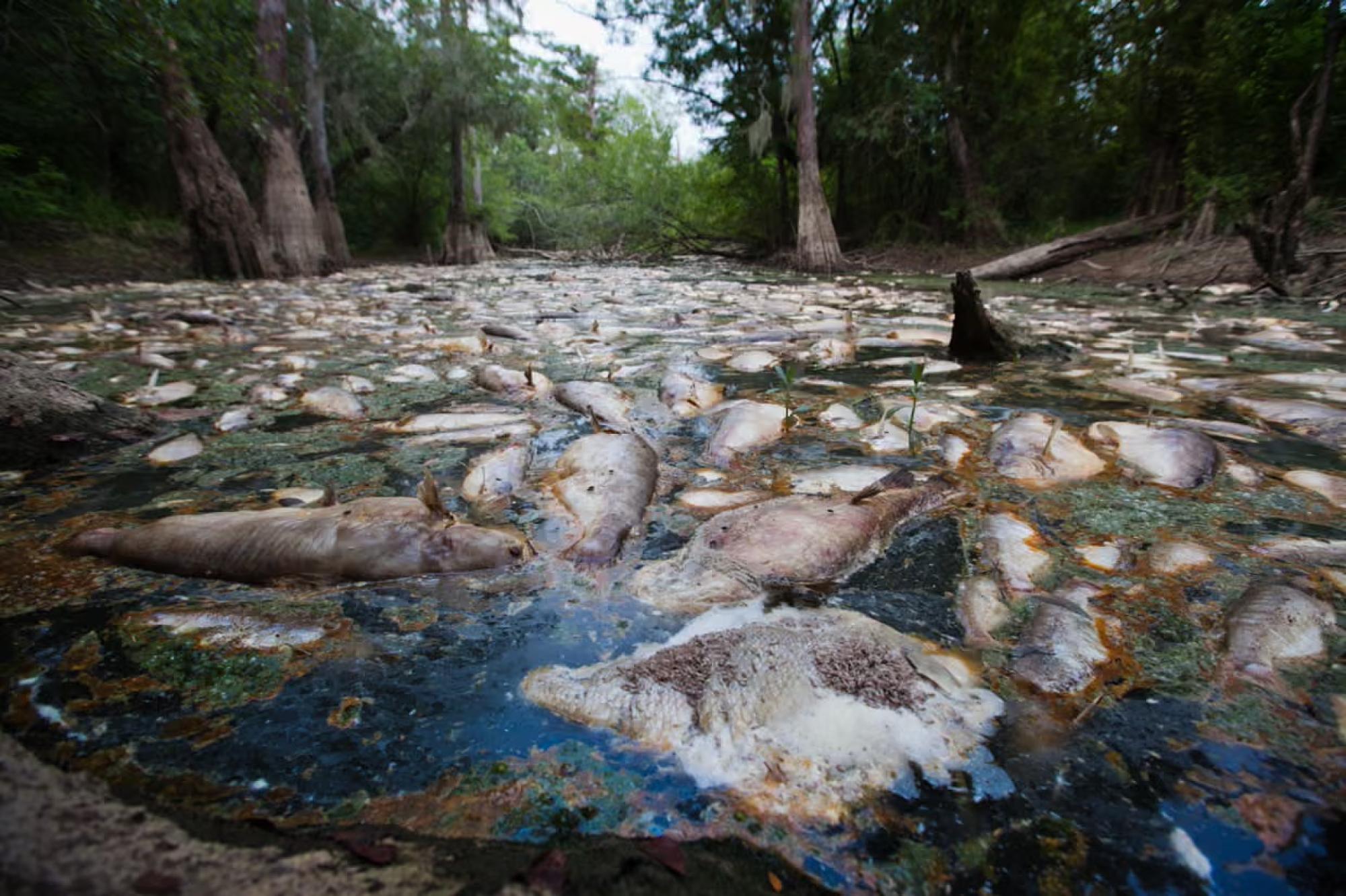
America's factory farms generate nearly a trillion pounds of manure every year, and way too much of it ends up in rivers, lakes and estuaries. Unlike factories, most factory farms aren't legally responsible for their pollution. Unlike human poop, animal poop isn't legally required to be treated before it is released into the environment. America's concentrated animal feeding operations, the industrial livestock farms known as C.A.F.O.s, produce twice as much waste as America's toilets, but nobody is tracking where or how it gets flushed. C.A.F.O.s keep getting bigger, even though they are wildly unpopular. Polls from the A.S.P.C.A. suggest that 89 percent of Americans are concerned about factory farms and 74 percent want to ban new ones. The critics now include right-wing natural-food advocates as well as left-wing environmentalists and animal rights activists. Like it or not, 99 percent of U.S. meat now comes from factory farms. The solution to pollution from big C.A.F.O.s is not to ban them or even to restrict their size. It's to regulate them like any other industrial polluter. States enforce the Clean Water Act, and some are more vigilant than others about preventing farmers from applying their manure in ways that tend to wash it into waterways. But a lot still ends up there. A feedlot cow can unload 100 pounds of manure a day, and unlike fracking water, nuclear waste and municipal sewage, nobody's really responsible for making sure it doesn't contaminate nature.
Latest
Latest News
Each news summary is created according to strict standards. Here's how we do it.
Each summary is created using a consistent editorial procedure. The target length is approximately 16 lines of 11-point Arial text in a 650-pixel-wide column. Up to 25% of a summary may be set in bold to emphasize the most important ideas. Summaries are composed of verbatim excerpts presented in the same sequence as they appear in the original news source, with very minor editorial additions. Where material has been omitted between excerpts, the omission is indicated with ellipses (...). Any words added by an editor for clarity or context appear in [brackets]. Our original news editor was Fred Burks. Tod Fletcher edited most summaries from 2007 through 2014, and Mark Bailey has served as news editor since 2014.