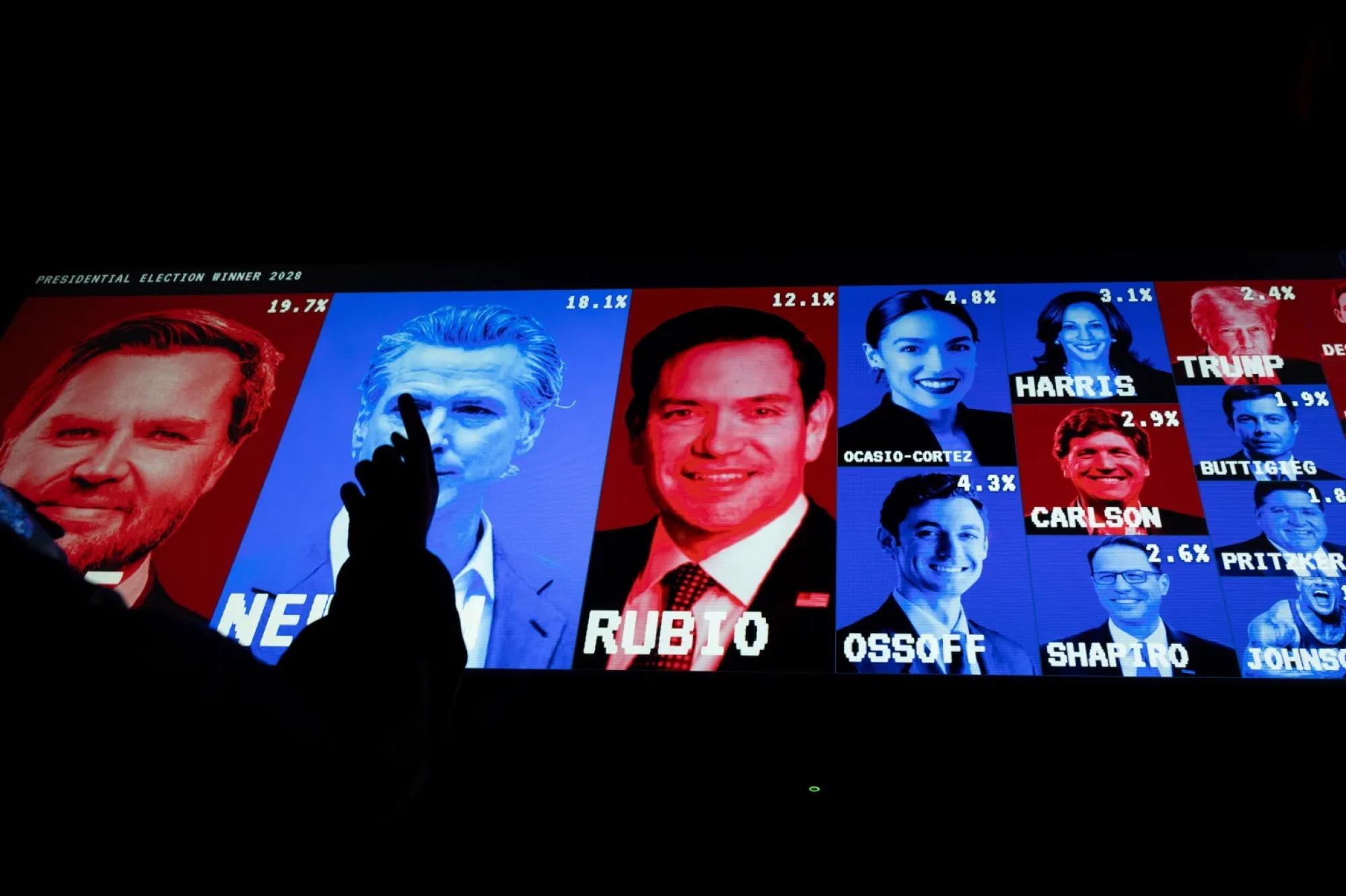
On Thursday, a U.S. Army Special Forces soldier who was involved in the raid to capture Nicolás Maduro in Venezuela was arrested on charges that he used classified information to make more than $400,000 by betting on the operation before it happened. In the hours before the U.S. attacked Iran, hundreds of anonymous bets over $1,000 were placed on the U.S. striking Iran by the next day, which the New York Times said suggested that some users might've "seen the strike coming." Prediction markets, such as industry leaders Polymarket and Kalshi, have exploded in popularity. They create or exacerbate an array of problems, but at the Media and Democracy Project, or MAD, we believe they have the potential to severely harm the way news is reported, perceived, and engaged with. Suppose that prediction markets achieve their claims of providing better forecasts than other methods. Casino journalism [would still be] bad for journalism and the public. Most of the "propositions" offered on these markets are based on news reports; reporters provide the raw material on which these bets are made. In effect, traders on prediction markets are betting on the content of news stories. An Israeli journalist recently received death threats over his refusal to rewrite his report on an Iranian missile strike, on which $23 million of prediction market "investments" were riding. As the markets become larger, and their use in news increases, the incentive for market manipulation will also grow.
Latest
Latest News
Each news summary is created according to strict standards. Here's how we do it.
Each summary is created using a consistent editorial procedure. The target length is approximately 16 lines of 11-point Arial text in a 650-pixel-wide column. Up to 25% of a summary may be set in bold to emphasize the most important ideas. Summaries are composed of verbatim excerpts presented in the same sequence as they appear in the original news source, with very minor editorial additions. Where material has been omitted between excerpts, the omission is indicated with ellipses (...). Any words added by an editor for clarity or context appear in [brackets]. Our original news editor was Fred Burks. Tod Fletcher edited most summaries from 2007 through 2014, and Mark Bailey has served as news editor since 2014.