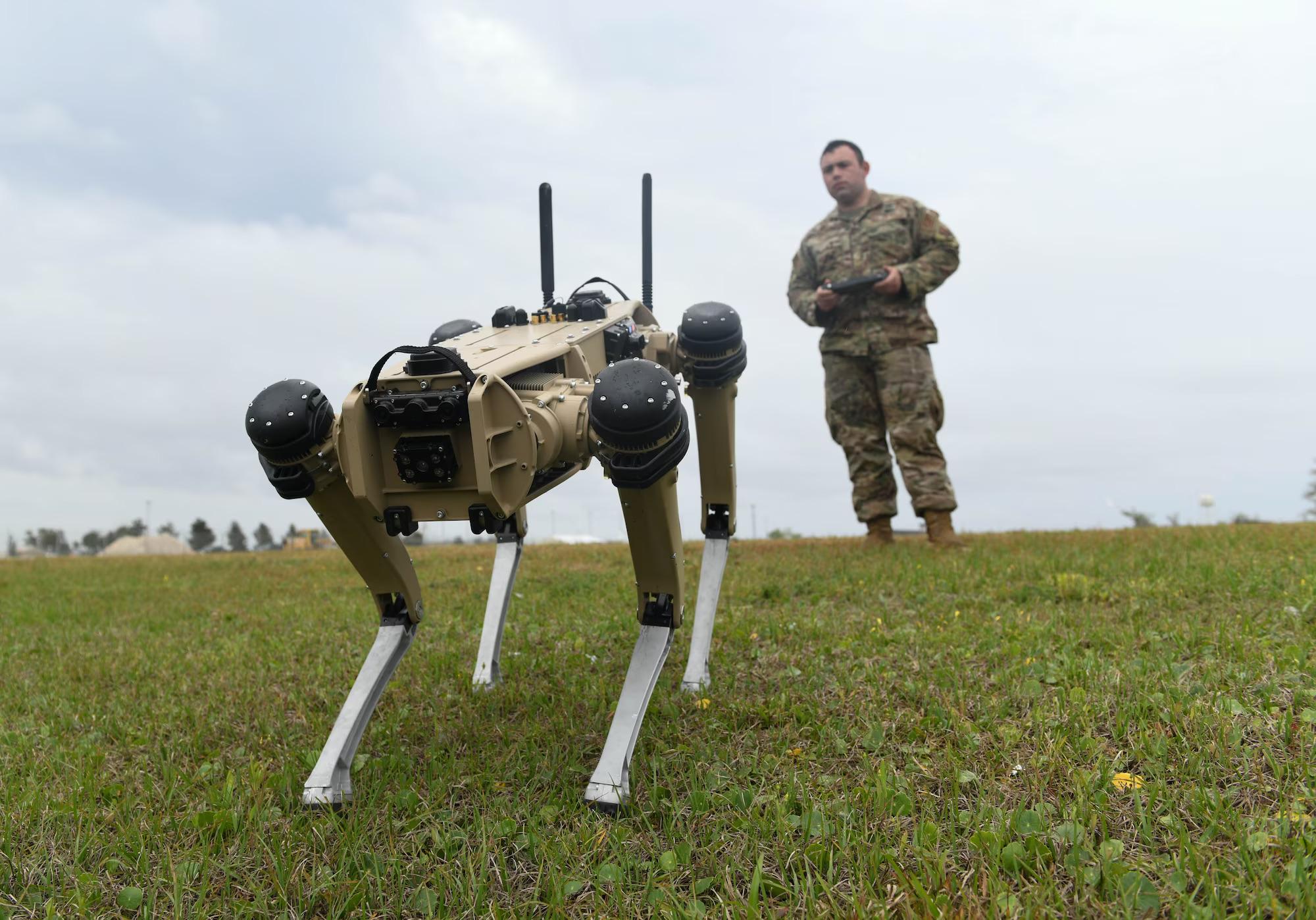
Militaries, law enforcement, and more around the world are increasingly turning to robot dogs " which, if we're being honest, look like something straight out of a science-fiction nightmare " for a variety of missions ranging from security patrol to combat. Robot dogs first really came on the scene in the early 2000s with Boston Dynamics' "BigDog" design. They have been used in both military and security activities. In November, for instance, it was reported that robot dogs had been added to President-elect Donald Trump's security detail and were on patrol at his home in Mar-a-Lago. Some of the remote-controlled canines are equipped with sensor systems, while others have been equipped with rifles and other weapons. One Ohio company made one with a flamethrower. Some of these designs not only look eerily similar to real dogs but also act like them, which can be unsettling. In the Ukraine war, robot dogs have seen use on the battlefield, the first known combat deployment of these machines. Built by British company Robot Alliance, the systems aren't autonomous, instead being operated by remote control. They are capable of doing many of the things other drones in Ukraine have done, including reconnaissance and attacking unsuspecting troops. The dogs have also been useful for scouting out the insides of buildings and trenches, particularly smaller areas where operators have trouble flying an aerial drone.
Latest
Latest News
Each news summary is created according to strict standards. Here's how we do it.
Each summary is created using a consistent editorial procedure. The target length is approximately 16 lines of 11-point Arial text in a 650-pixel-wide column. Up to 25% of a summary may be set in bold to emphasize the most important ideas. Summaries are composed of verbatim excerpts presented in the same sequence as they appear in the original news source, with very minor editorial additions. Where material has been omitted between excerpts, the omission is indicated with ellipses (...). Any words added by an editor for clarity or context appear in [brackets]. Our original news editor was Fred Burks. Tod Fletcher edited most summaries from 2007 through 2014, and Mark Bailey has served as news editor since 2014.