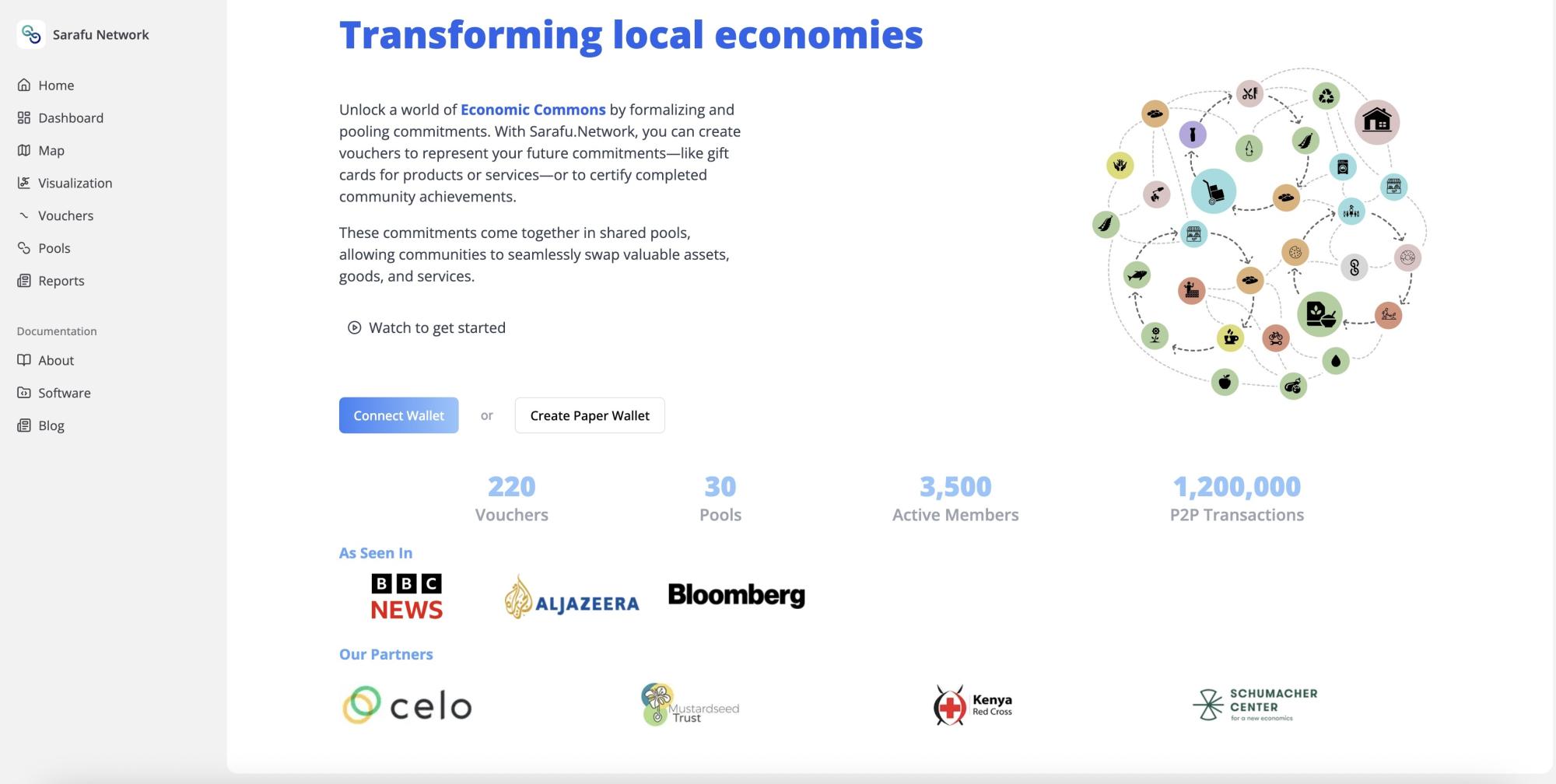
In many parts of the world, building a house or farming a field means taking out loans. But in Kenya, a time-tested system of mutual aid ... has long been the foundation of local economies. Now, Grassroots Economics Foundation is bringing this age-old practice into the digital age. At the helm of this transformation is Njambi Njoroge, Operations Director at Grassroots Economics. Grassroots Economics is built on a concept called commitment pooling," inspired by indigenous economic systems. Traditionally, in Kenyan villages, neighbours would come together to build houses, farm land, or provide childcare, repaying each other in labor rather than money. These informal debts balanced themselves over time, ensuring that no one was left behind. "We're not inventing anything new," Njoroge says. "We're automating what has always existed." Using blockchain, Grassroots Economics formalizes these commitments into digital vouchers"secure, trackable tokens that represent labor, goods, or services. The blockchain-powered system functions as a local exchange, where people contribute their skills and pull from a shared pool of community resources. The technology ensures that every commitment has a unique digital signature, preventing fraud and allowing real-time tracking of transactions. "On our platform, Sarafu.network, you can see all the transactions happening in a village"how many houses were built, how many farms were tilled, how much labor was exchanged," Njoroge explains. With blockchain, communities can see tangible data showing how much work they've accomplished together.
Latest
Latest News
Each news summary is created according to strict standards. Here's how we do it.
Each summary is created using a consistent editorial procedure. The target length is approximately 16 lines of 11-point Arial text in a 650-pixel-wide column. Up to 25% of a summary may be set in bold to emphasize the most important ideas. Summaries are composed of verbatim excerpts presented in the same sequence as they appear in the original news source, with very minor editorial additions. Where material has been omitted between excerpts, the omission is indicated with ellipses (...). Any words added by an editor for clarity or context appear in [brackets]. Our original news editor was Fred Burks. Tod Fletcher edited most summaries from 2007 through 2014, and Mark Bailey has served as news editor since 2014.