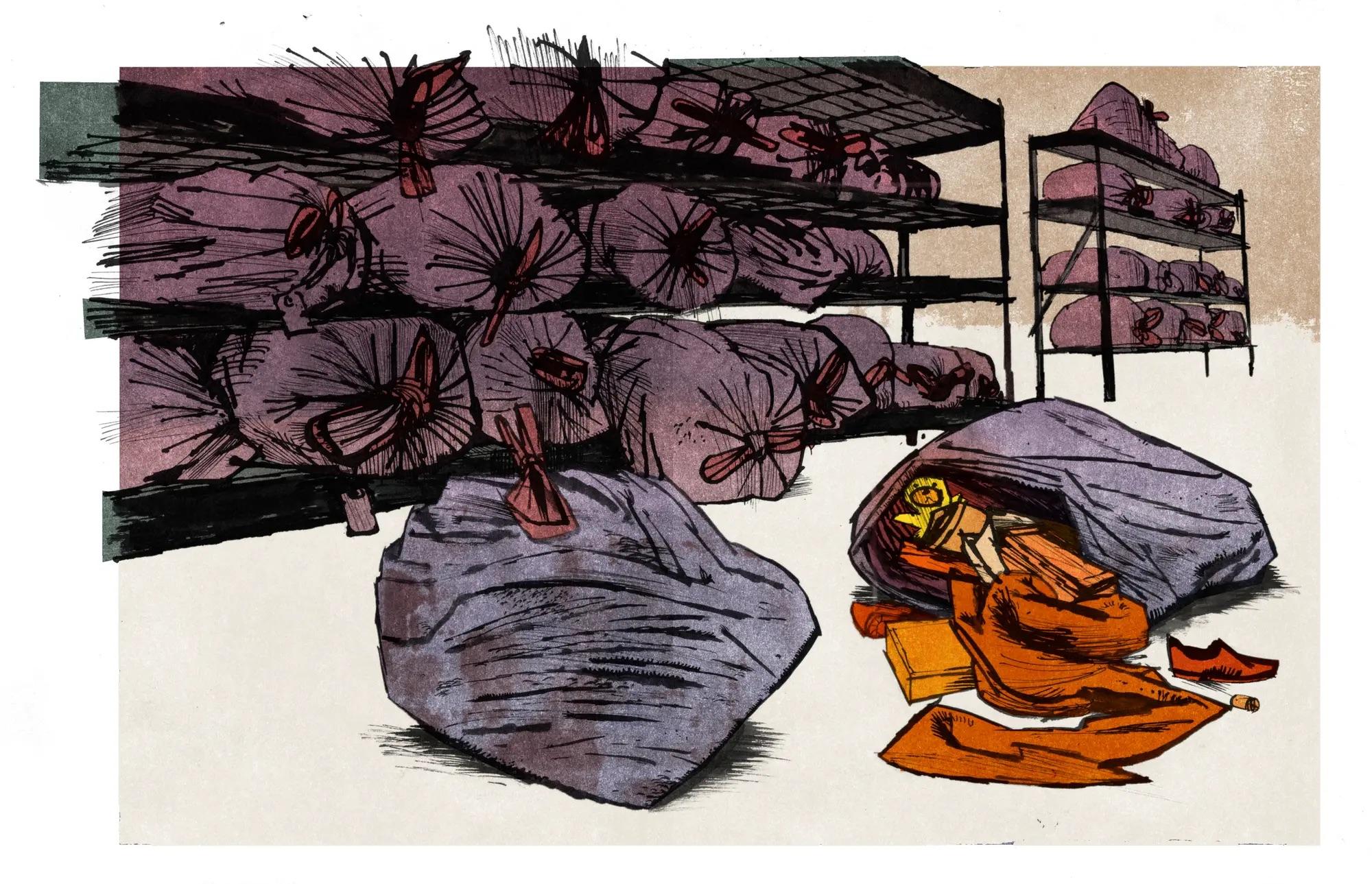
My colleagues Ruth Talbot, Asia Fields, Maya Miller and I have investigated how cities have sometimes ignored their own policies and court orders, which has resulted in them taking homeless people's belongings during encampment clearings. We also found that some cities have failed to store the property so it could be returned. People told us about local governments taking everything from tents and sleeping bags to journals, pictures and mementos. Even when cities are ordered to stop seizing belongings and to provide storage for the property they take, we found that people are rarely reunited with their possessions. The losses are traumatizing, can worsen health outcomes, and can make it harder for people like Stratton to find stability and get back inside. Cities have recently passed new camping bans or started enforcing ones already on the books following a Supreme Court decision in June that allows local officials to punish people for sleeping outside. The U.S. Interagency Council on Homelessness earlier this year released updated strategies for addressing encampments "humanely and effectively," advising communities to treat encampment responses with the same urgency they would any other crises. The council recommends providing 30 days' notice before a removal and giving people two days to pack. The council also recommends that cities store belongings for as long as it typically takes for someone to get permanent housing.
Latest
Latest News
Each news summary is created according to strict standards. Here's how we do it.
Each summary is created using a consistent editorial procedure. The target length is approximately 16 lines of 11-point Arial text in a 650-pixel-wide column. Up to 25% of a summary may be set in bold to emphasize the most important ideas. Summaries are composed of verbatim excerpts presented in the same sequence as they appear in the original news source, with very minor editorial additions. Where material has been omitted between excerpts, the omission is indicated with ellipses (...). Any words added by an editor for clarity or context appear in [brackets]. Our original news editor was Fred Burks. Tod Fletcher edited most summaries from 2007 through 2014, and Mark Bailey has served as news editor since 2014.