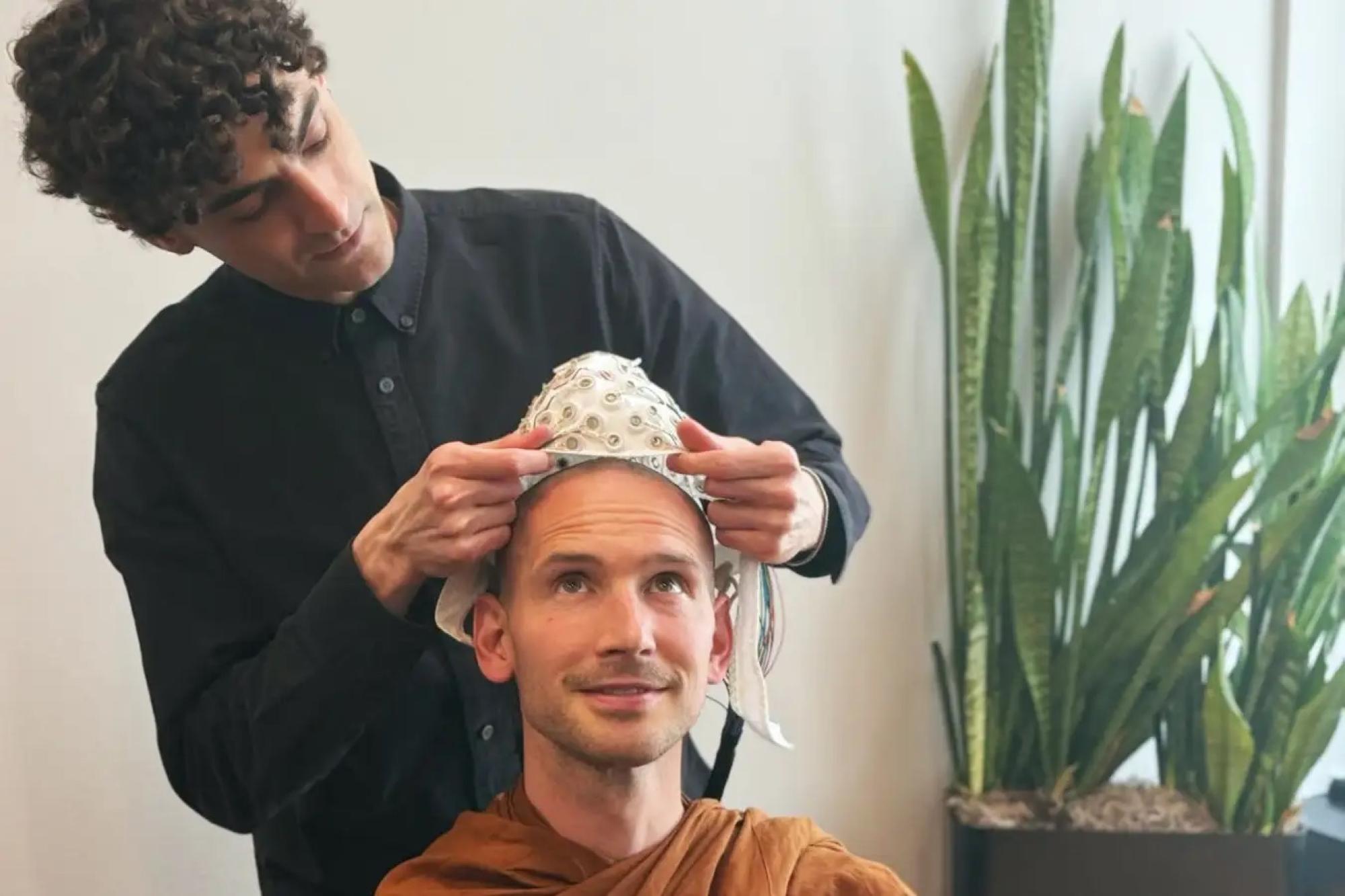
Reducing stress and softening the sharper edges of anxiety in this way are beginners' steps when it comes to the practice of meditation. Put in the hours, though, and you may well reach the deep end: a place where radical, long-lasting upgrades to how you feel and what you experience are possible. Now, these mental transformations are being examined and understood by neuroscientists at world-leading institutions. Matthew Sacchet [is the] director of the Meditation Research Program at Harvard Medical School. His team works hand in hand with advanced meditators, such as Buddhist monks, exploring how the material brain changes because of subjective experiences that are often considered spiritual in nature. Using state-of-the-art brain scanners, his team pinpoints the neural changes that occur across a variety of deep meditative practices. Beyond mindfulness-related stress reduction, advanced practitioners report experiences of ecstatic bliss, deep insights into their own minds, radical compassionate states and prosocial ways of being, and even shifts in their fundamental sense of self. Advanced meditators sometimes report states of consciousness that are described as deeply peaceful, mentally clear or subjectively non-dual meaning there is no perceived distinction between self and other. These aren't just subjective reports: we observe changes in the brain that support their existence.
Latest
Latest News
Each news summary is created according to strict standards. Here's how we do it.
Each summary is created using a consistent editorial procedure. The target length is approximately 16 lines of 11-point Arial text in a 650-pixel-wide column. Up to 25% of a summary may be set in bold to emphasize the most important ideas. Summaries are composed of verbatim excerpts presented in the same sequence as they appear in the original news source, with very minor editorial additions. Where material has been omitted between excerpts, the omission is indicated with ellipses (...). Any words added by an editor for clarity or context appear in [brackets]. Our original news editor was Fred Burks. Tod Fletcher edited most summaries from 2007 through 2014, and Mark Bailey has served as news editor since 2014.