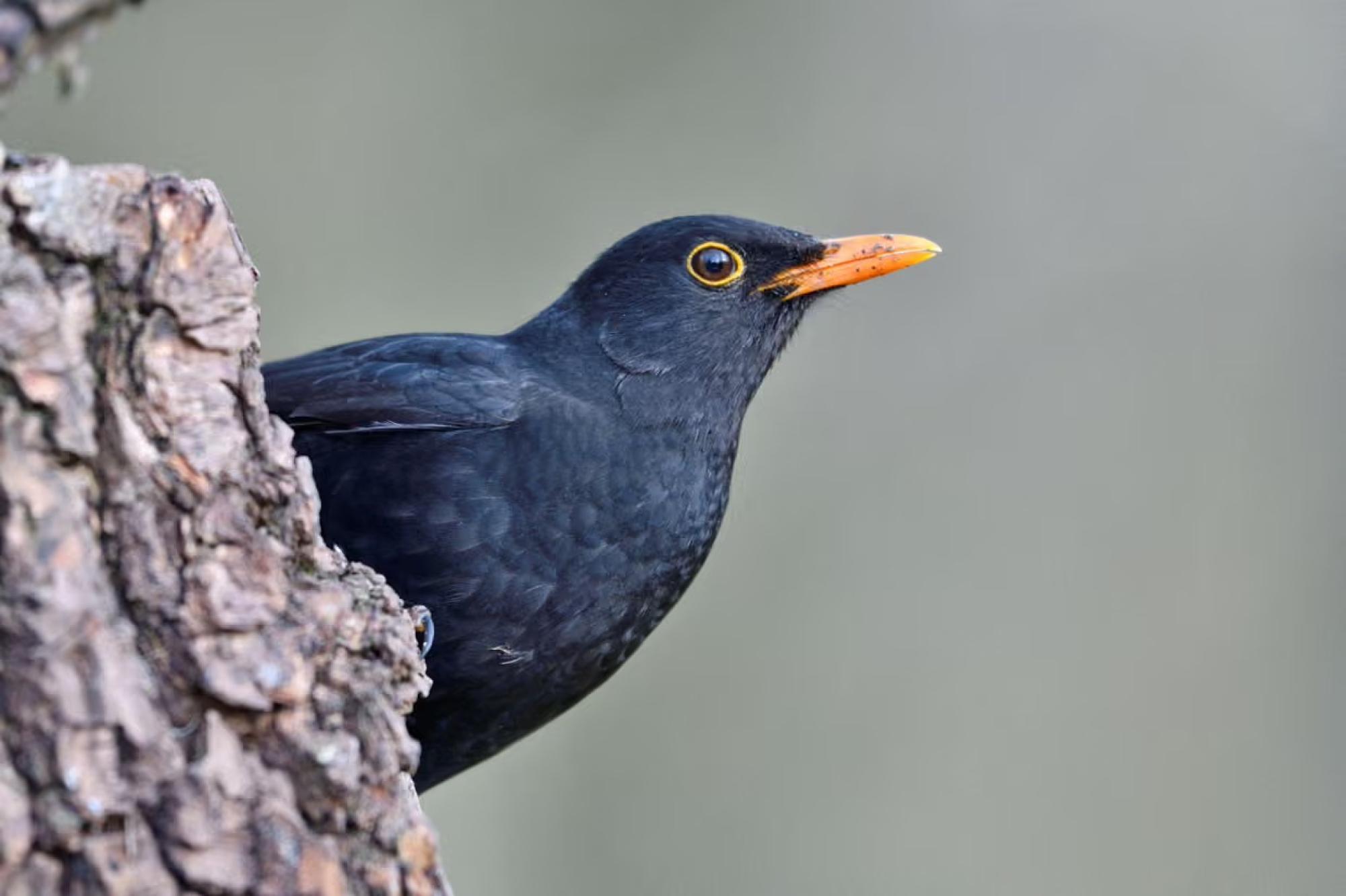
Insect-eating bird populations in France appear to be making a tentative recovery after a ban on bee-harming pesticides, according to the first study to examine how wildlife is returning in Europe. Neonicotinoids are the world's most common class of insecticides, widely used in agriculture and for flea control in pets. By 2022, four years after the European Union banned neonicotinoid use in fields, researchers observed that France's population of insect-eating birds had increased by 2%-3%. These included blackbirds, blackcaps and chaffinches, which feed on insects as adults and as chicks. The results could be mirrored across the EU, where the neonicotinoid ban came into effect in late 2018, but research has not yet been done elsewhere. The lead researcher, Thomas Perrot from the Fondation pour la recherche sur la biodiversité in Paris, said: "Even a few percentage [points'] increase is meaningful " it shows the ban made a difference. Our results clearly point to neonicotinoid bans as an effective conservation measure for insectivorous birds." Like the EU, the UK banned neonicotinoids for outdoor general use in 2018, although they can be used in exceptional circumstances. They are still widely used in the US, which has lost almost 3 billion insectivorous birds since the 1970s. Sustainable farming, which reduced pesticides and restored semi-natural habitats, would help bird populations recover.
Latest
Latest News
Each news summary is created according to strict standards. Here's how we do it.
Each summary is created using a consistent editorial procedure. The target length is approximately 16 lines of 11-point Arial text in a 650-pixel-wide column. Up to 25% of a summary may be set in bold to emphasize the most important ideas. Summaries are composed of verbatim excerpts presented in the same sequence as they appear in the original news source, with very minor editorial additions. Where material has been omitted between excerpts, the omission is indicated with ellipses (...). Any words added by an editor for clarity or context appear in [brackets]. Our original news editor was Fred Burks. Tod Fletcher edited most summaries from 2007 through 2014, and Mark Bailey has served as news editor since 2014.