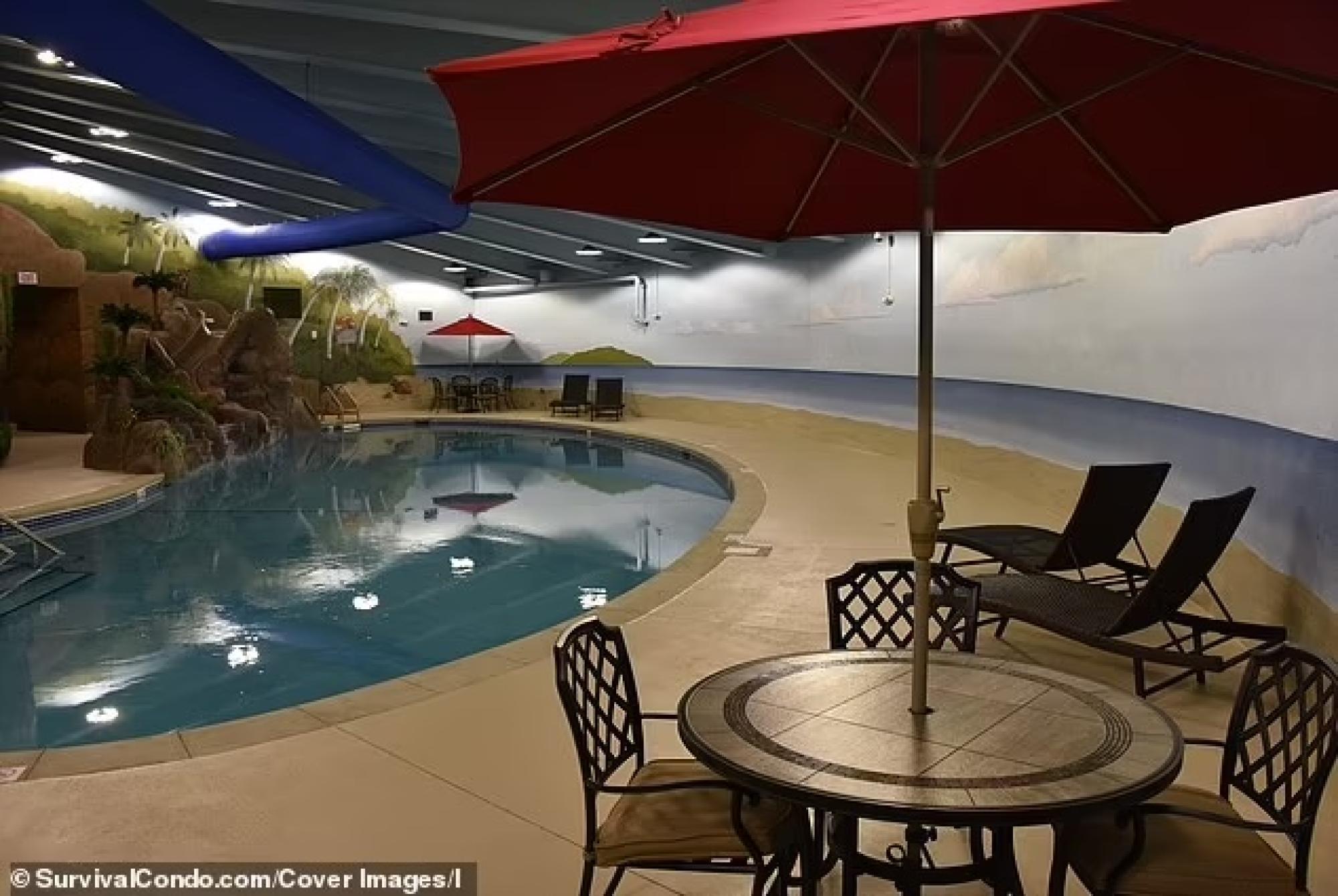
'Doomsday prepping' used to be seen as a hobby relegated to the paranoid fringe but ordinary Americans spent a staggering $11 billion on survival items, just last year, from April 2022 to April 2023. About a third of US citizens admit to prepping, surveys show, but few have the resources today's billionaire bunker-builders have to devote to their own shelters. The world's wealthiest have increasingly spent hundreds of millions on securing underground compounds, private islands and (for the merely rich) 'survival condos.' Last year, the nonprofit coalition of physicists and other researchers behind Bulletin of the Atomic Scientists set their Doomsday Clock 90 seconds to midnight: the closest humanity has been to doom in the clock's 76 year history. 'Russia's war on Ukraine has raised profound questions about how states interact, eroding norms of international conduct,' their 2023 Doomsday Clock statement explained. It's Gen-Z adults, those born after 1997, who have proven the most likely to be preparing for a disaster: a whooping 40 percent claimed to have spent money on doomsday supplies in 2022, according to a Finder survey. As one sustainable prepping influencer, content creator Brekke Wagoner, put it, 'Basically our weather is going to be more intense because of global climate change, if for no other reason you should have an emergency plan to deal with these inclement disasters, because they're coming whether we want them or not.'
Latest
Latest News
Each news summary is created according to strict standards. Here's how we do it.
Each summary is created using a consistent editorial procedure. The target length is approximately 16 lines of 11-point Arial text in a 650-pixel-wide column. Up to 25% of a summary may be set in bold to emphasize the most important ideas. Summaries are composed of verbatim excerpts presented in the same sequence as they appear in the original news source, with very minor editorial additions. Where material has been omitted between excerpts, the omission is indicated with ellipses (...). Any words added by an editor for clarity or context appear in [brackets]. Our original news editor was Fred Burks. Tod Fletcher edited most summaries from 2007 through 2014, and Mark Bailey has served as news editor since 2014.