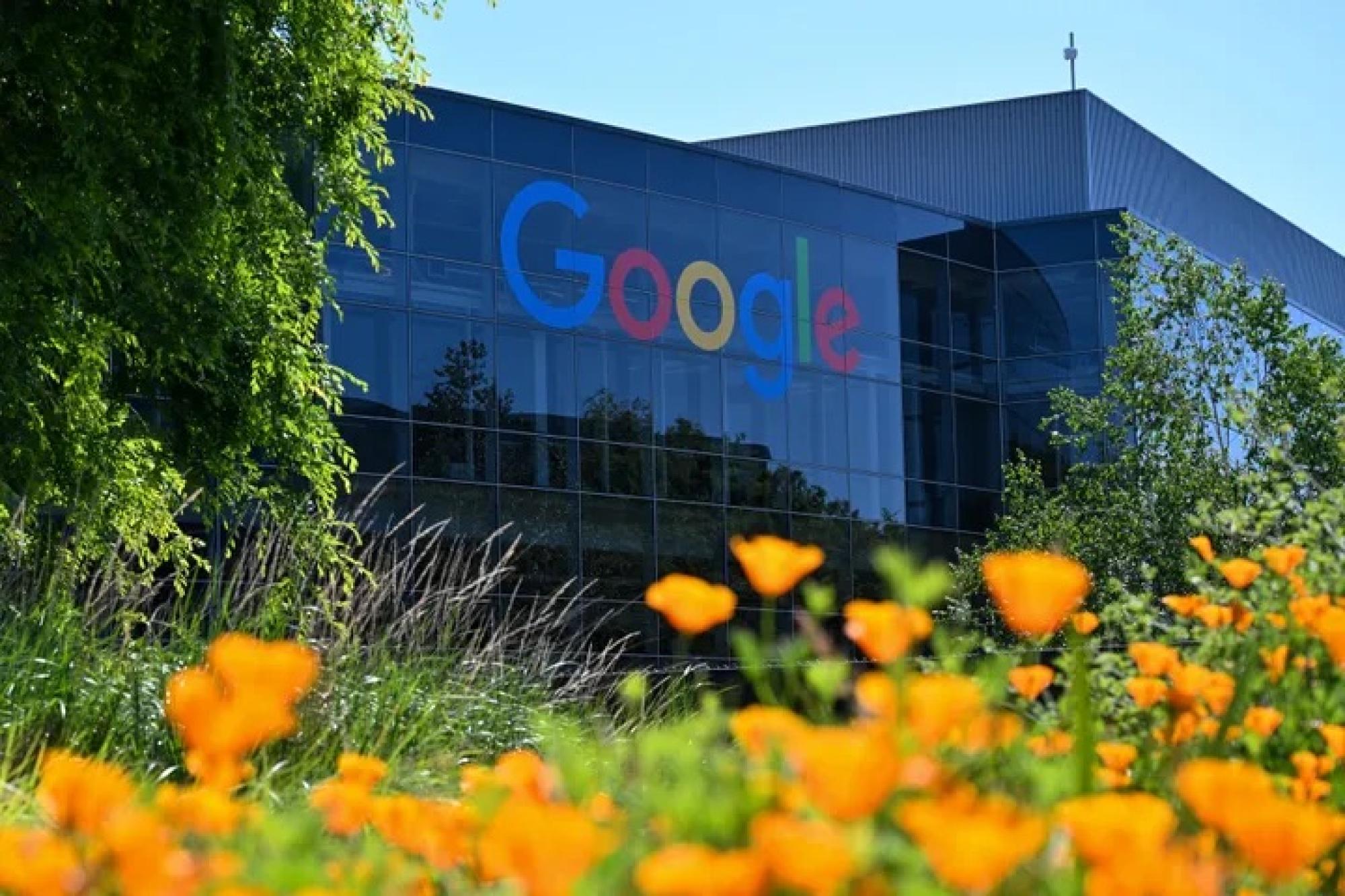
Alan Davidson currently leads the National Telecommunications and Information Administration, or NTIA, the agency now crafting recommendations on how federal regulators can hold AI companies accountable. But for years, he worked as Google's chief lobbyist in Washington. NTIA's recommendations will help form the basis of the Biden administration's response to AI and machine learning. People are warning that there are really serious downsides possible to AI, and I would want a hard-headed regulator to run down those concerns," said Jeff Hauser, the executive director of the Revolving Door Project, a watchdog focused on conflicts of interest in government. "Davidson is not likely, based on his CV, to be detached." Rapid advances in AI present a potential turning point for Silicon Valley's dominant tech firms. Notably, the first company to capture national attention with the launch of a new AI product was not a household name, like Google or Microsoft, but the independent research lab OpenAI, with its splashy launch of ChatGPT. Google reportedly sees the AI products it has in the pipeline as so pivotal to the company's future that Sergey Brin, the Google co-founder lately absorbed with outside projects, has returned to company headquarters to work directly with the team building its flagship AI system. "Google is the biggest player who cares about this issue," [said former Hill aide involved in antitrust policy]. "I cannot imagine Google doesn't view Alan Davidson as an asset to them."
Latest
Latest News
Each news summary is created according to strict standards. Here's how we do it.
Each summary is created using a consistent editorial procedure. The target length is approximately 16 lines of 11-point Arial text in a 650-pixel-wide column. Up to 25% of a summary may be set in bold to emphasize the most important ideas. Summaries are composed of verbatim excerpts presented in the same sequence as they appear in the original news source, with very minor editorial additions. Where material has been omitted between excerpts, the omission is indicated with ellipses (...). Any words added by an editor for clarity or context appear in [brackets]. Our original news editor was Fred Burks. Tod Fletcher edited most summaries from 2007 through 2014, and Mark Bailey has served as news editor since 2014.