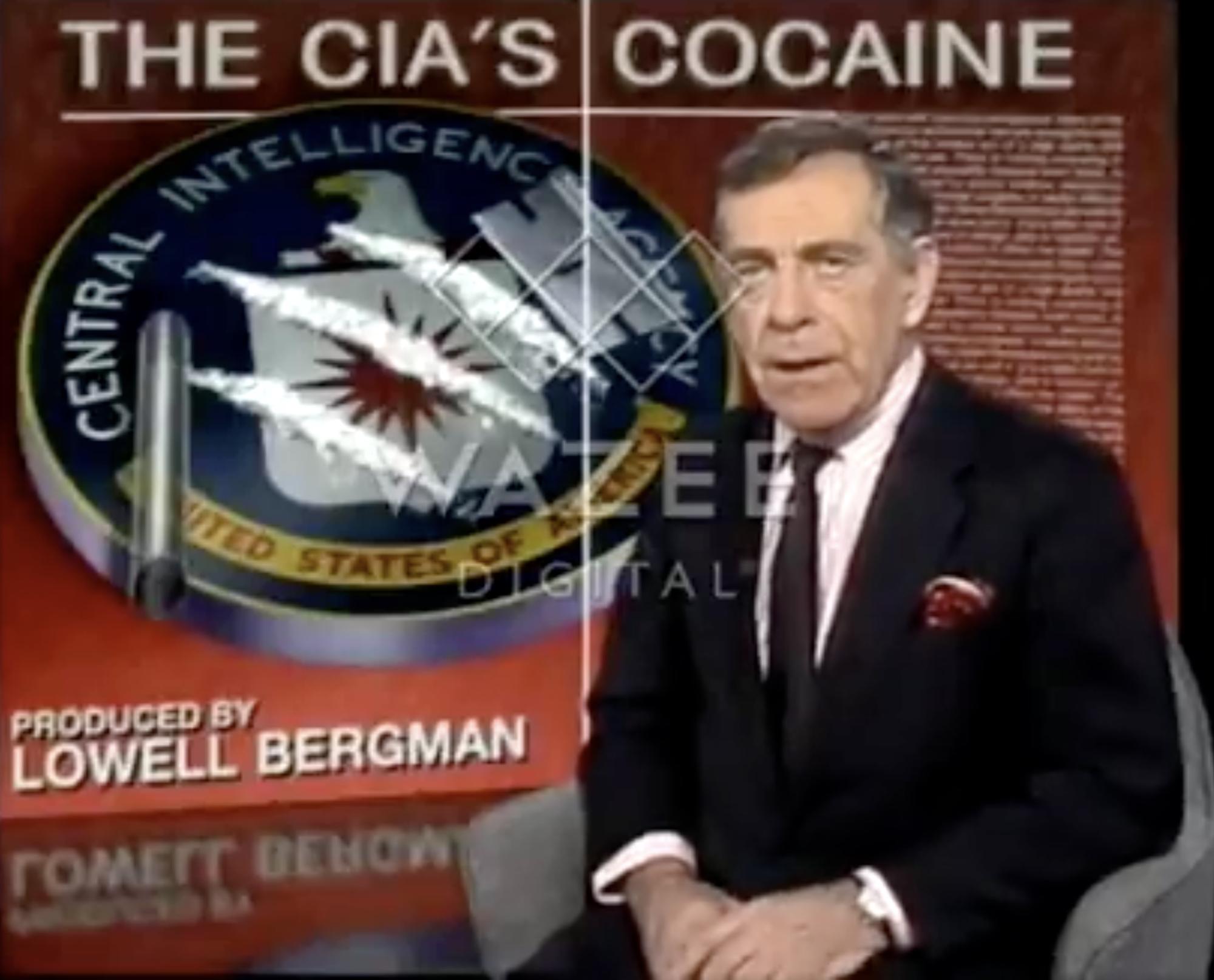
In 1993, 60 Minutes aired a report detailing how the CIA recruited Venezuelan military officer Gen. Ramón Guillén Dávila, enabling the shipment of roughly 22 tons of cocaine into U.S. cities under the guise of an intelligence operation. Once the so-called "Cartel of the Suns" outlived its usefulness to U.S. intelligence, it quietly vanishedonly to be revived years later by the U.S. government as a political weapon in its campaign against Venezuela. The Trump administration has accused Venezuelan President Nicolás Maduro of leading the long-defunct "Cartel of the Suns." But as journalist Diego Sequera explains, the cartel's origins trace back to the early 1990s, when the CIA allegedly directed one of its top Venezuelan military assets to facilitate the shipment of tons of cocaine into U.S. cities. The "Cartel of the Suns" functions less as a criminal organization than as a political fiction"one born from a U.S. intelligence operation, buried when it became inconvenient, and resurrected decades later to justify coercive measures against a government Washington seeks to remove. What remains consistent is not the evidence, but the utility of the accusation. And in the end, the "Cartel of the Suns" tells us far less about Venezuela than it does about U.S. power: how an intelligence-linked drug operation can be erased from history when it implicates Washington, then revived as propaganda when regime change again becomes the goal. The cartel never needed to exist"only the narrative did.
Latest
Latest News
Each news summary is created according to strict standards. Here's how we do it.
Each summary is created using a consistent editorial procedure. The target length is approximately 16 lines of 11-point Arial text in a 650-pixel-wide column. Up to 25% of a summary may be set in bold to emphasize the most important ideas. Summaries are composed of verbatim excerpts presented in the same sequence as they appear in the original news source, with very minor editorial additions. Where material has been omitted between excerpts, the omission is indicated with ellipses (...). Any words added by an editor for clarity or context appear in [brackets]. Our original news editor was Fred Burks. Tod Fletcher edited most summaries from 2007 through 2014, and Mark Bailey has served as news editor since 2014.