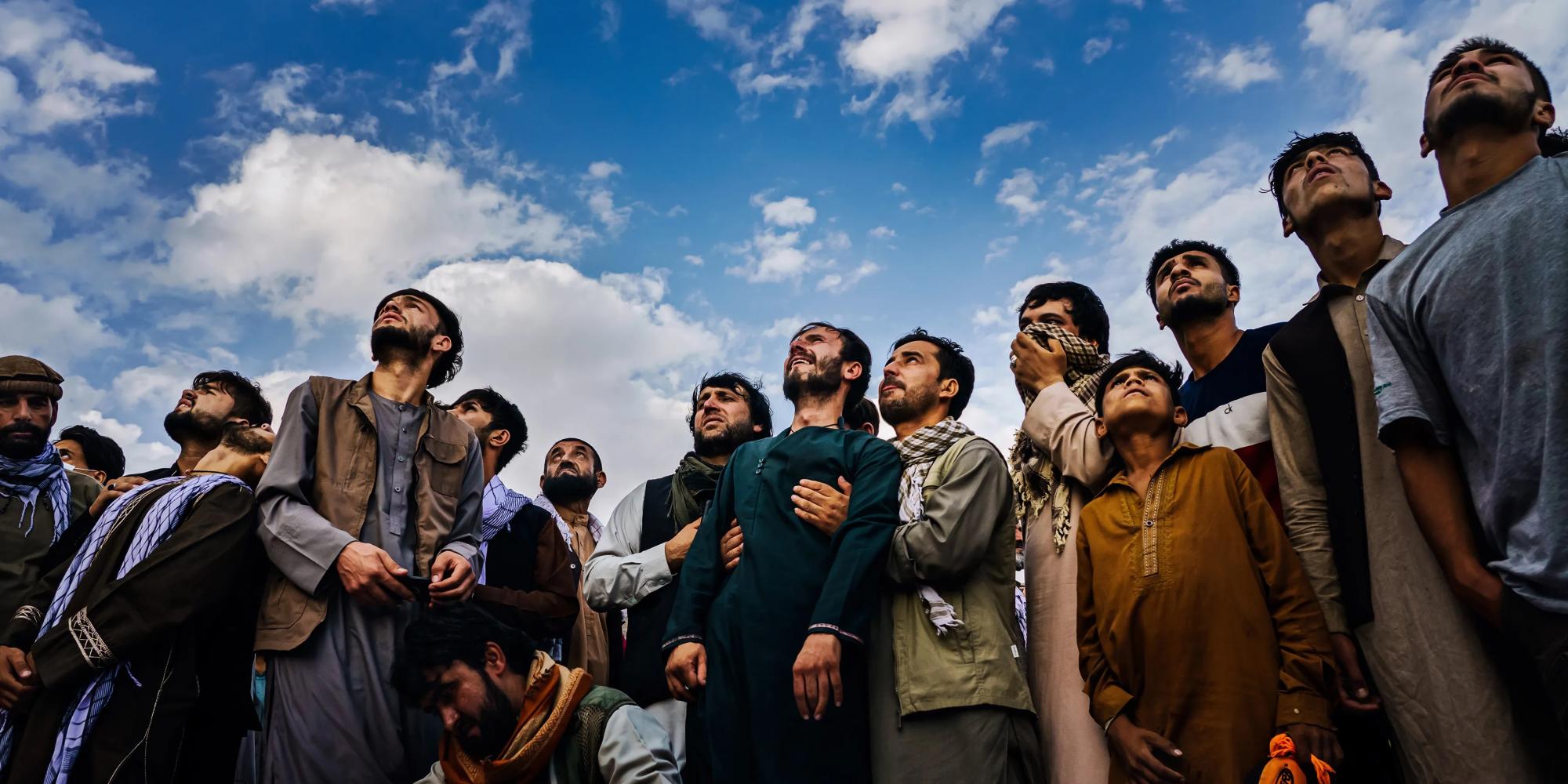
Over the last century, the U.S. military has shown a consistent disregard for civilian lives. It has repeatedly cast or misidentified ordinary people as enemies; failed to investigate civilian harm allegations; excused casualties as regrettable but unavoidable; and failed to prevent their recurrence or to hold troops accountable. These long-standing practices stand in stark contrast to the U.S. government's public campaigns to sell its wars as benign, its air campaigns as precise, its concern for civilians as overriding, and the deaths of innocent people as "tragic" anomalies. Such campaigns have mainly served to obscure the true toll of the American way of war, from the "banana wars" of the 1920s to the "forever wars" a century later. During the first 20 years of the war on terror, the U.S. conducted more than 91,000 airstrikes across seven major conflict zones " Afghanistan, Iraq, Libya, Pakistan, Somalia, Syria, and Yemen " and killed up to 48,308 civilians, according to a 2021 analysis by Airwars, a U.K.-based airstrike monitoring group. A 2020 study of post-9/11 civilian casualty incidents found most have gone uninvestigated. When they do come under official scrutiny, American military witnesses are interviewed while civilians " victims, survivors, family members " are almost totally ignored, "severely compromising the effectiveness of investigations," according to the Center for Civilians in Conflict and Columbia Law School's Human Rights Institute.
Latest
Latest News
Each news summary is created according to strict standards. Here's how we do it.
Each summary is created using a consistent editorial procedure. The target length is approximately 16 lines of 11-point Arial text in a 650-pixel-wide column. Up to 25% of a summary may be set in bold to emphasize the most important ideas. Summaries are composed of verbatim excerpts presented in the same sequence as they appear in the original news source, with very minor editorial additions. Where material has been omitted between excerpts, the omission is indicated with ellipses (...). Any words added by an editor for clarity or context appear in [brackets]. Our original news editor was Fred Burks. Tod Fletcher edited most summaries from 2007 through 2014, and Mark Bailey has served as news editor since 2014.