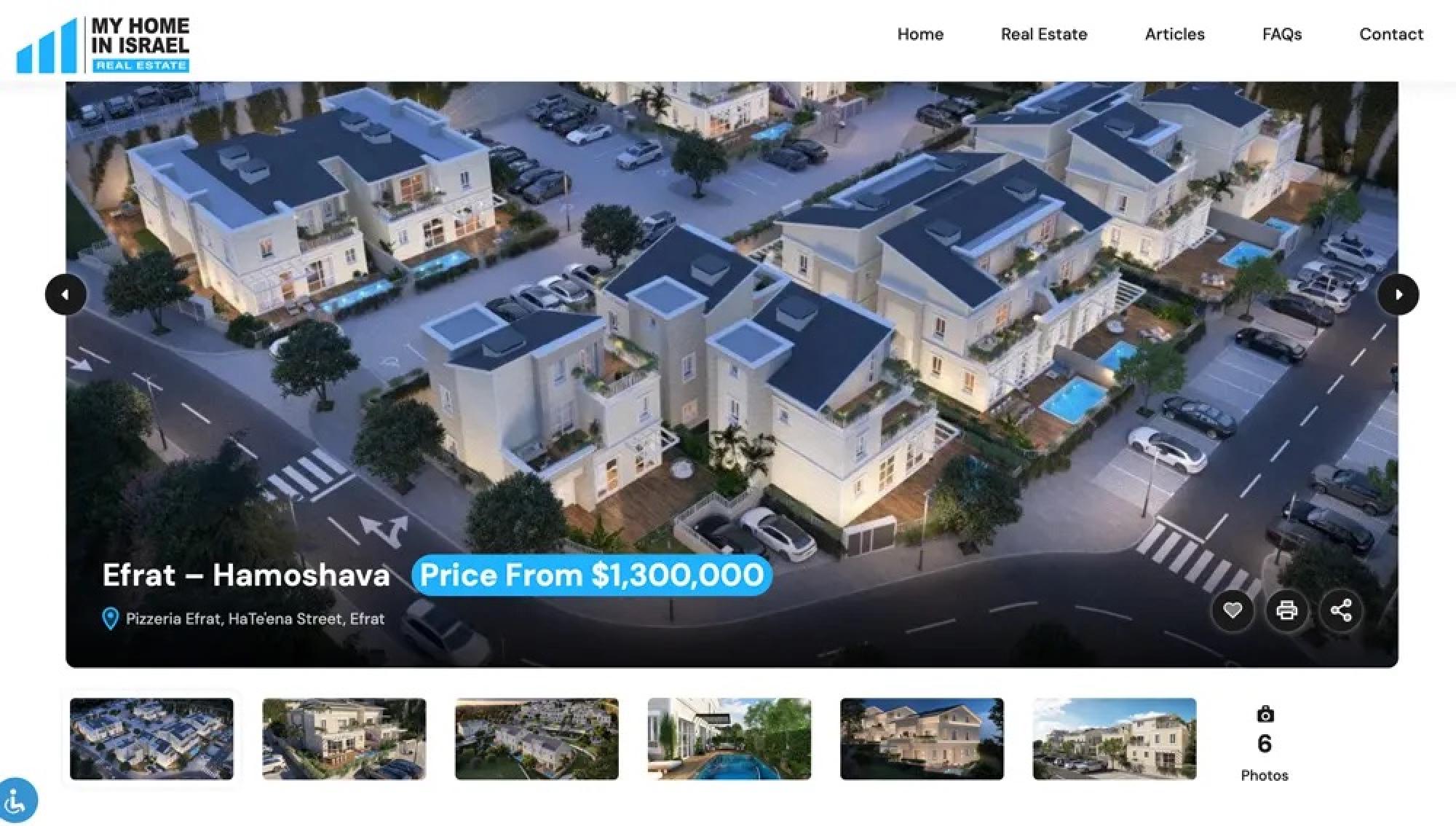
Real estate companies are making an explicit appeal to wartime patriotism, leading with the conflict as a selling point and a reason to invest. In late June, a company called My Israel Home hosted an expo at a Los Angeles synagogue catering to a specific clientele: Jewish Americans looking to buy a new home in Israel or on illegal Israeli settlements in the occupied West Bank. Similar real estate fairs have popped up across North America this year ... and several have faced protests as the war on Gaza has brought the issue of Israeli settlements and Palestinian sovereignty to the fore. On websites largely tailored for Jewish American buyers looking to move to Israel, prospective homeowners can browse properties that include listings for homes in settlement communities, which offer the typical trappings of suburban life. Around a dozen real estate firms have participated in real estate fairs organized by My Israel Home across North America this year. Six of these firms are actively marketing at least two dozen separate properties for sale located within eight different West Bank and East Jerusalem settlements, according to their online listings. Other real estate firms commonly list dozens of West Bank properties on their sites. West Bank settlements have long drawn criticism from the international community, which regards the settlements as illegal, in violation of Article 49 of the Geneva Conventions. Criticism of settlements have only intensified in recent months amid a spike in settler violence against Palestinians in the occupied territory.
Latest
Latest News
Each news summary is created according to strict standards. Here's how we do it.
Each summary is created using a consistent editorial procedure. The target length is approximately 16 lines of 11-point Arial text in a 650-pixel-wide column. Up to 25% of a summary may be set in bold to emphasize the most important ideas. Summaries are composed of verbatim excerpts presented in the same sequence as they appear in the original news source, with very minor editorial additions. Where material has been omitted between excerpts, the omission is indicated with ellipses (...). Any words added by an editor for clarity or context appear in [brackets]. Our original news editor was Fred Burks. Tod Fletcher edited most summaries from 2007 through 2014, and Mark Bailey has served as news editor since 2014.