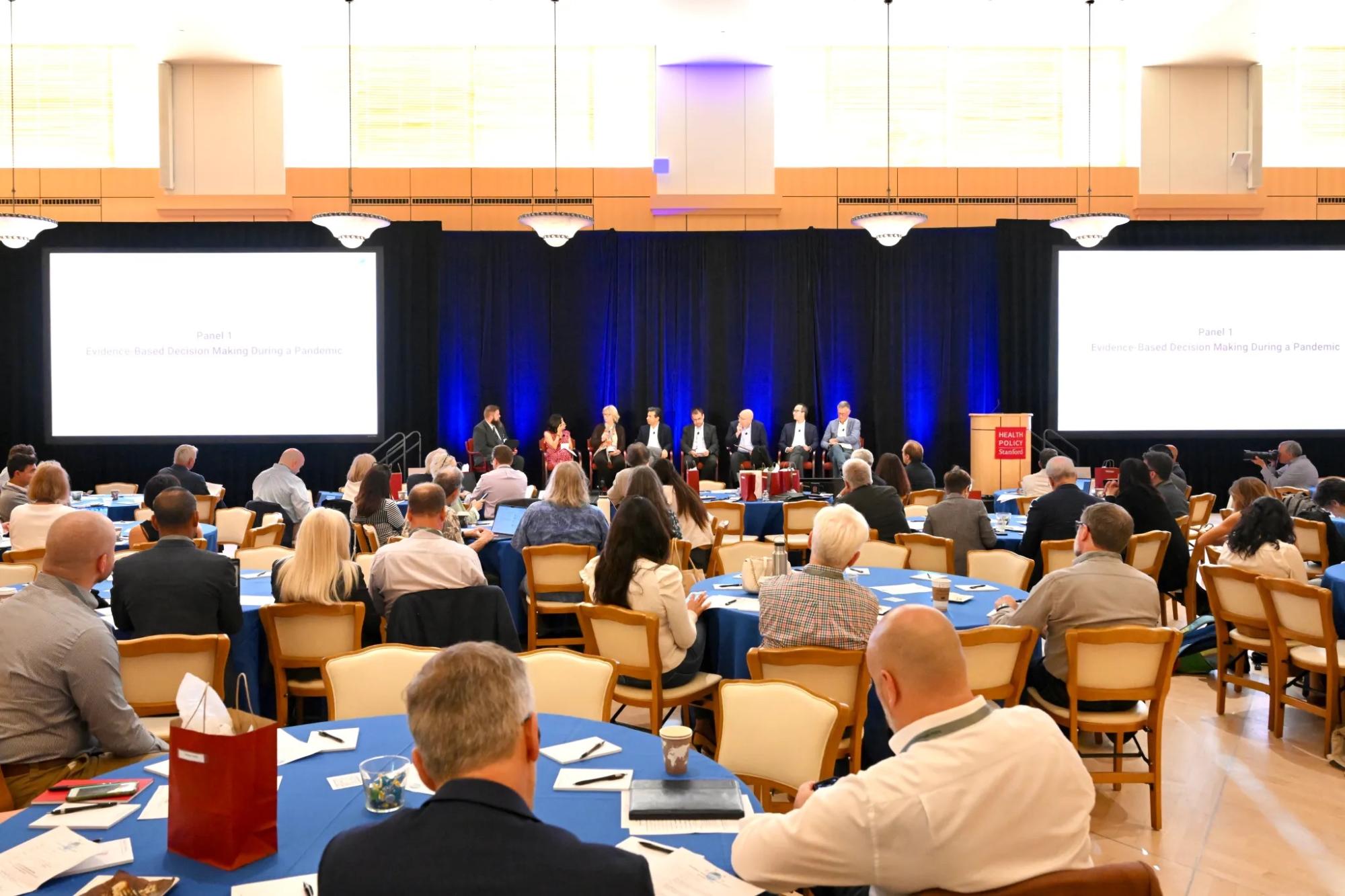
Stanford University hosted the first major university-sponsored conference where different viewpoints on the appropriate management of pandemics were aired and debated. For much of 2020-2022, critical debate about the wisdom and effectiveness of mandatory Covid policies ... was treated with deep hesitation at best and outright hostility at worst. Professors and students who publicly questioned the mainstream consensus were censored on social media, vilified by their colleagues, and, in the case of Covid vaccine mandates, fired by administrators. Universities failed in their mission to promote academic debate and freedom during the most significant domestic policy issue of this century. During these years, colleagues and students with critical, sceptical viewpoints and countless members of the public [asked] why institutions of higher education were not hosting reasoned debate. The pandemic taught us a valuable lesson for those interested to hear. We need more freedom of expression and academic debate during crises and emergencies, not less. Many are tired of the vapid arguments of ideologues and hungry for a return to the ... academic tradition of debate. By that standard, the Stanford Covid conference was a huge success. The panels addressed key issues regarding the evidence for Covid lockdowns, the management of information and censorship, the impact of lockdowns on the world's poor, and the contentious question of the origin of the virus. Experts who supported early school closures reasoned together with those who did not. Those who support the lab leak hypothesis argued their case with those who disagree. And they disagreed about the wisdom of social media censorship in a pandemic. In the end, the conference achieved its stated purpose: to bring serious thinkers and scientists into constructive dialogue with one another.
Latest
Latest News
Each news summary is created according to strict standards. Here's how we do it.
Each summary is created using a consistent editorial procedure. The target length is approximately 16 lines of 11-point Arial text in a 650-pixel-wide column. Up to 25% of a summary may be set in bold to emphasize the most important ideas. Summaries are composed of verbatim excerpts presented in the same sequence as they appear in the original news source, with very minor editorial additions. Where material has been omitted between excerpts, the omission is indicated with ellipses (...). Any words added by an editor for clarity or context appear in [brackets]. Our original news editor was Fred Burks. Tod Fletcher edited most summaries from 2007 through 2014, and Mark Bailey has served as news editor since 2014.