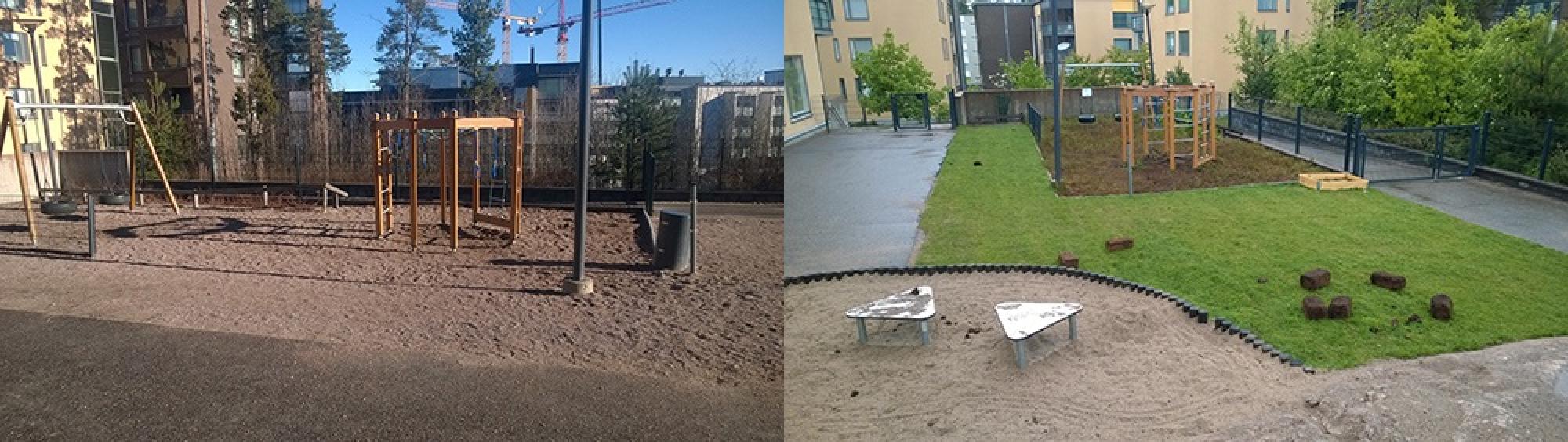
One daycare in Finland decided to invest in a playground that replicated the forest floor. The results were amazing. The daycare replaced their sandy playground surface with lawn and added indigenous forest species like dwarf heather and blueberries. They also added planter boxes and allowed children to tend them. After just one month, children at the daycare had healthier microbiomes and stronger immune systems than their counterparts in other urban daycares. Specifically, the children had increased T-cells, increased immune-boosting gammaproteobacteria microbes, and a reduction in interleukin-17A, a contributor to immune-transmitted disease. Environmental scientist Marja Roslund from the University of Helsinki said, "We also found that the intestinal microbiota of children who received greenery was similar to the intestinal microbiota of children visiting the forest every day." These results demonstrate that loss of biodiversity in urban areas can contribute to poorer health outcomes and that easy environmental manipulation can radically change these health dynamics, especially in young children. Children living in rural areas tend to have fewer cases of allergies and asthma which seems to be directly tied to time outdoors. More studies are needed to definitively draw the correlation between time in nature and childhood health, but this experiment strengthens the argument for this link.
Latest
Latest News
Each news summary is created according to strict standards. Here's how we do it.
Each summary is created using a consistent editorial procedure. The target length is approximately 16 lines of 11-point Arial text in a 650-pixel-wide column. Up to 25% of a summary may be set in bold to emphasize the most important ideas. Summaries are composed of verbatim excerpts presented in the same sequence as they appear in the original news source, with very minor editorial additions. Where material has been omitted between excerpts, the omission is indicated with ellipses (...). Any words added by an editor for clarity or context appear in [brackets]. Our original news editor was Fred Burks. Tod Fletcher edited most summaries from 2007 through 2014, and Mark Bailey has served as news editor since 2014.