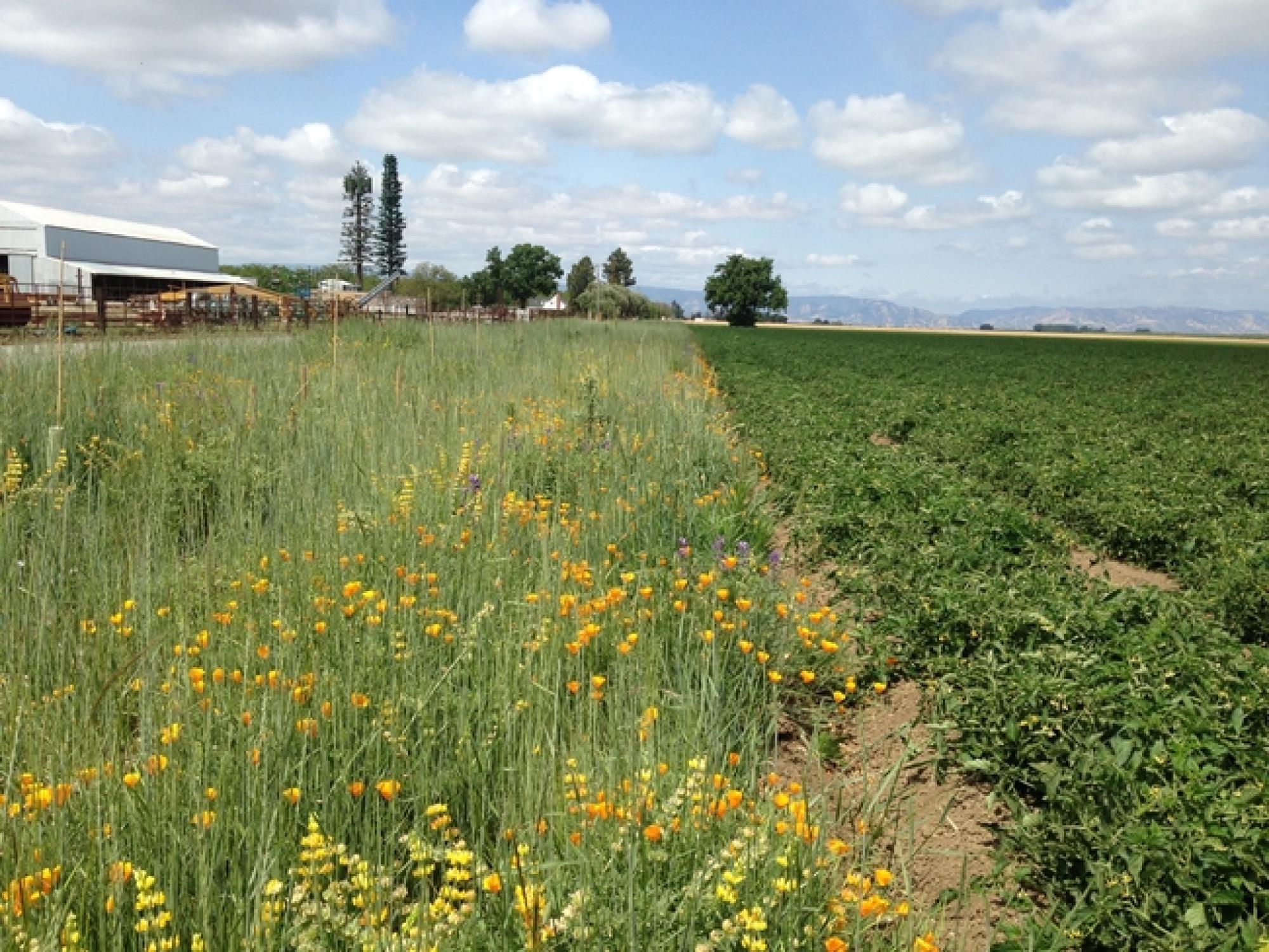
Lee Tesdell walks through a corridor of native prairie grasses and wildflowers. This is a prairie strip. Ranging from 10-40 metres (30-120ft) in width, these bands of native perennials are placed strategically in a row-crop field, often in areas with low yields and high runoff. Tesdell has three on his farm. He points out several native plants big bluestem, wild quinine, milkweed, common evening primrose " that came from a 70-species seed mix he planted here six years ago. These prairie plants help improve the soil while also protecting his more fertile fields from bursts of heavy rain and severe storms. Research shows that converting as little as 10% of a corn or soya bean field into a prairie strip can reduce soil erosion by 95%. Prairie strips also help reduce nutrient pollution, store excess carbon underground and provide critical habitat for pollinators and grassland birds. Thanks to federal funding through the USDA's conservation reserve programme, they've taken off in recent years. Farmer Eric Hoien says he first heard about the conservation practice a decade ago, right around the time he was becoming more concerned about water issues in Iowa. Hoien says prairie strips offer other benefits close to home. Neighbours often tell him they appreciate the wildflowers and hearing the "cackle" of pheasants. He also enjoys hunting in the prairie strips and spotting insects he's never seen before. The strips are hugely beneficial for pollinator populations.
Latest
Latest News
Each news summary is created according to strict standards. Here's how we do it.
Each summary is created using a consistent editorial procedure. The target length is approximately 16 lines of 11-point Arial text in a 650-pixel-wide column. Up to 25% of a summary may be set in bold to emphasize the most important ideas. Summaries are composed of verbatim excerpts presented in the same sequence as they appear in the original news source, with very minor editorial additions. Where material has been omitted between excerpts, the omission is indicated with ellipses (...). Any words added by an editor for clarity or context appear in [brackets]. Our original news editor was Fred Burks. Tod Fletcher edited most summaries from 2007 through 2014, and Mark Bailey has served as news editor since 2014.