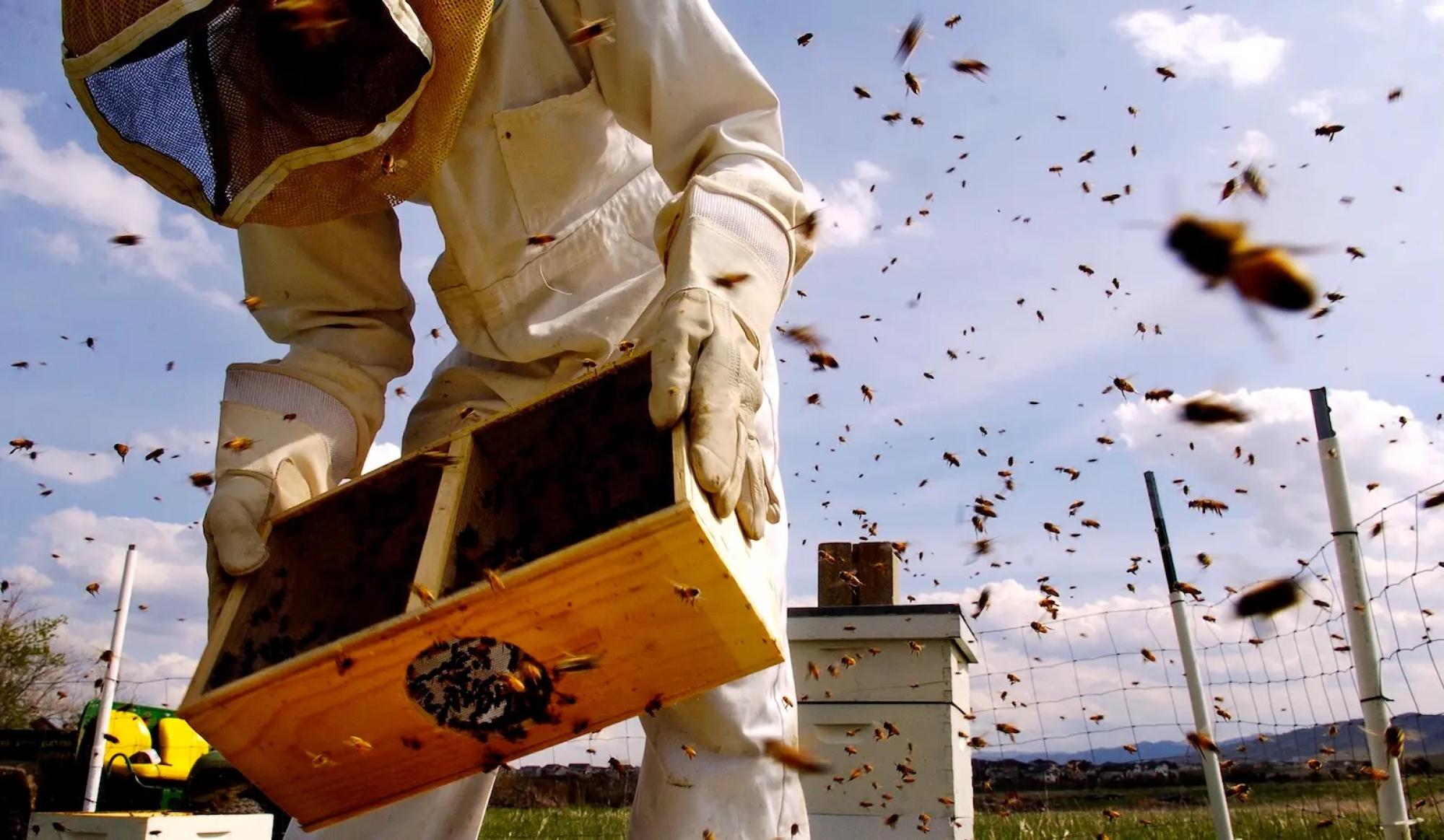
Cory Kreft began working on a honey farm at 15 years old ... eventually buying the business from his former boss. But in 2021, his bees suddenly began dying. He lost 85 percent of his hives. The losses continued the next year, and the next. After extensive testing, he identified the culprit: a relatively new class of pesticides called neonicotinoids, often shortened to neonics. Thanks in part to a federal regulatory loophole, the use of neonic-treated seed has quietly exploded in recent years, with little regulation or oversight. Almost all conventional corn and more than half of soy seed in the U.S. is now treated with neonics. When bees encounter neonic-contaminated pollen, the neurotoxin disrupts the neurological functions they rely on to navigate, forage, and survive. The hive then slowly declines and dies. "Over the last five years, we've seen between 60 to 85 percent hive mortality each year," said Kreft. "It's about a million dollars in losses for us annually." While the harm neonics inflict on pollinators is well documented, their effects on humans remain less certain. A recent study found that over 95 percent of pregnant women had neonics in their bodies. The chemicals have been linked to neurological, reproductive system, and developmental harms. Because neonics are now so widespread in food and water ... exposure has become nearly constant. "It's everywhere now," [researcher Jennifer Sass] said. "It's in breast milk, tap water, even in baby food."
Latest
Latest News
Each news summary is created according to strict standards. Here's how we do it.
Each summary is created using a consistent editorial procedure. The target length is approximately 16 lines of 11-point Arial text in a 650-pixel-wide column. Up to 25% of a summary may be set in bold to emphasize the most important ideas. Summaries are composed of verbatim excerpts presented in the same sequence as they appear in the original news source, with very minor editorial additions. Where material has been omitted between excerpts, the omission is indicated with ellipses (...). Any words added by an editor for clarity or context appear in [brackets]. Our original news editor was Fred Burks. Tod Fletcher edited most summaries from 2007 through 2014, and Mark Bailey has served as news editor since 2014.