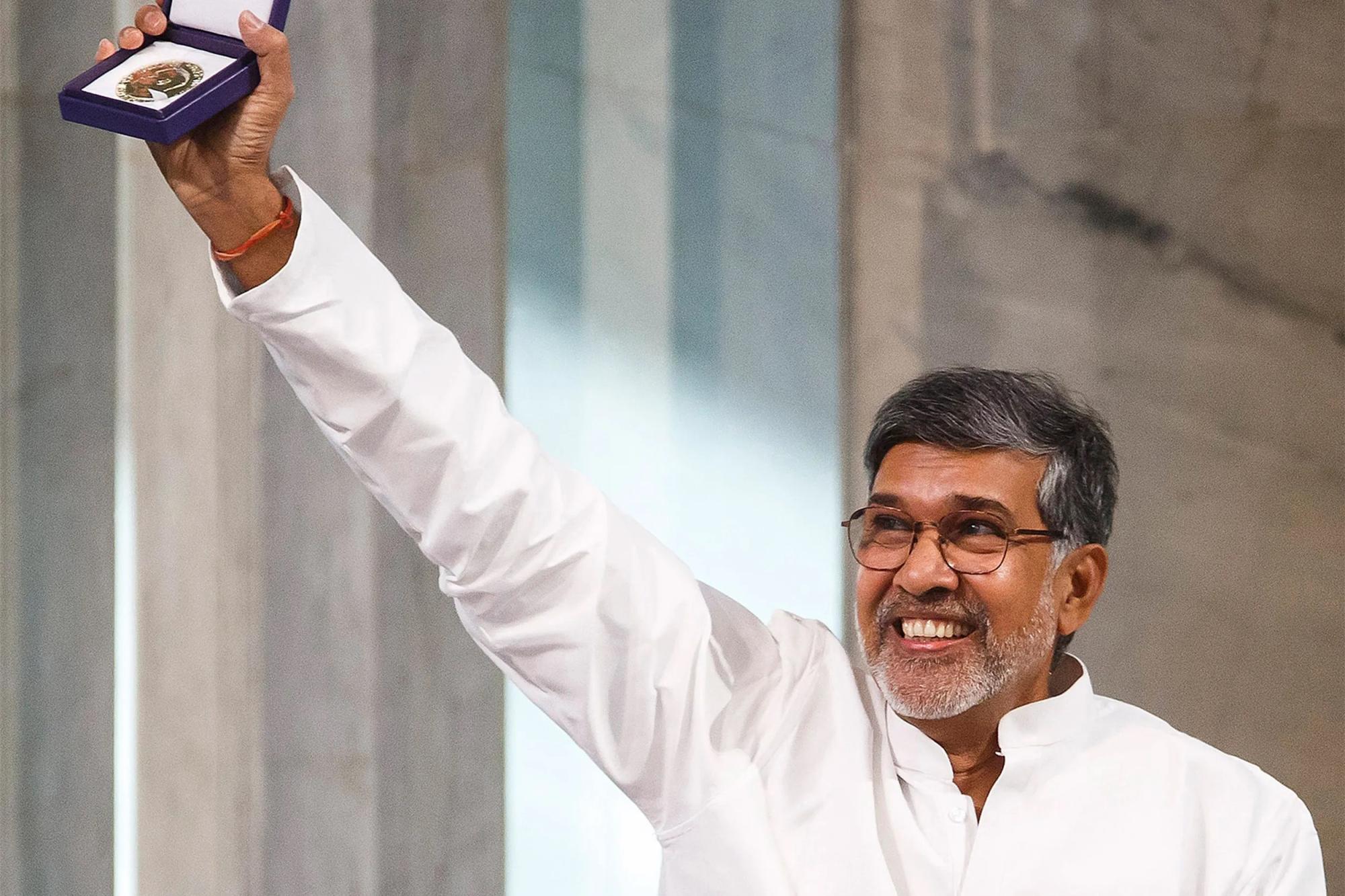
Kailash Satyarthi, the winner of a Nobel Peace Prize for his fight against child labor and exploitation, said his mission as a children's rights activist began when he himself was a child. On his first day of school, Satyarthi saw another kid about his age working as a shoeshine boy instead of attending class. It disturbed him. "I started looking at the world with different eyes, and I began questioning it because it wasn't right," [he said]. Satyarthi put his feelings into action. At just 11, he collected used books and created a book bank for poor children. The first rescue operation he undertook, with friends and colleagues, was to free a 14-year girl who had been abducted and was about to be sold to a brothel. As an adult he considered creating a charity or an orphanage, but instead founded an organization to defend children's rights, Bachpan Bachao Andolan (Save Childhood Movement), which campaigns to end bonded labor, child labor, and human trafficking, and advocates for education for all children. An admirer of Mahatma Gandhi, Satyarthi gave up his career as an electrical engineer and his high-caste name, Sharma, in the 1980s, swapping it for Satyarthi, which means "seeker of truth." He also started working full time for his cause. Through his organization, Satyarthi has freed more than 80,000 children from forced labor in dangerous rescue operations. Two members of his group have been killed, one shot and the other beaten to death by criminal gangs. "My mission in life is that every child on the earth is free; free to walk to school, free to laugh, free to play. When every child is free to be a child, only then my dream will come true."
Latest
Latest News
Each news summary is created according to strict standards. Here's how we do it.
Each summary is created using a consistent editorial procedure. The target length is approximately 16 lines of 11-point Arial text in a 650-pixel-wide column. Up to 25% of a summary may be set in bold to emphasize the most important ideas. Summaries are composed of verbatim excerpts presented in the same sequence as they appear in the original news source, with very minor editorial additions. Where material has been omitted between excerpts, the omission is indicated with ellipses (...). Any words added by an editor for clarity or context appear in [brackets]. Our original news editor was Fred Burks. Tod Fletcher edited most summaries from 2007 through 2014, and Mark Bailey has served as news editor since 2014.