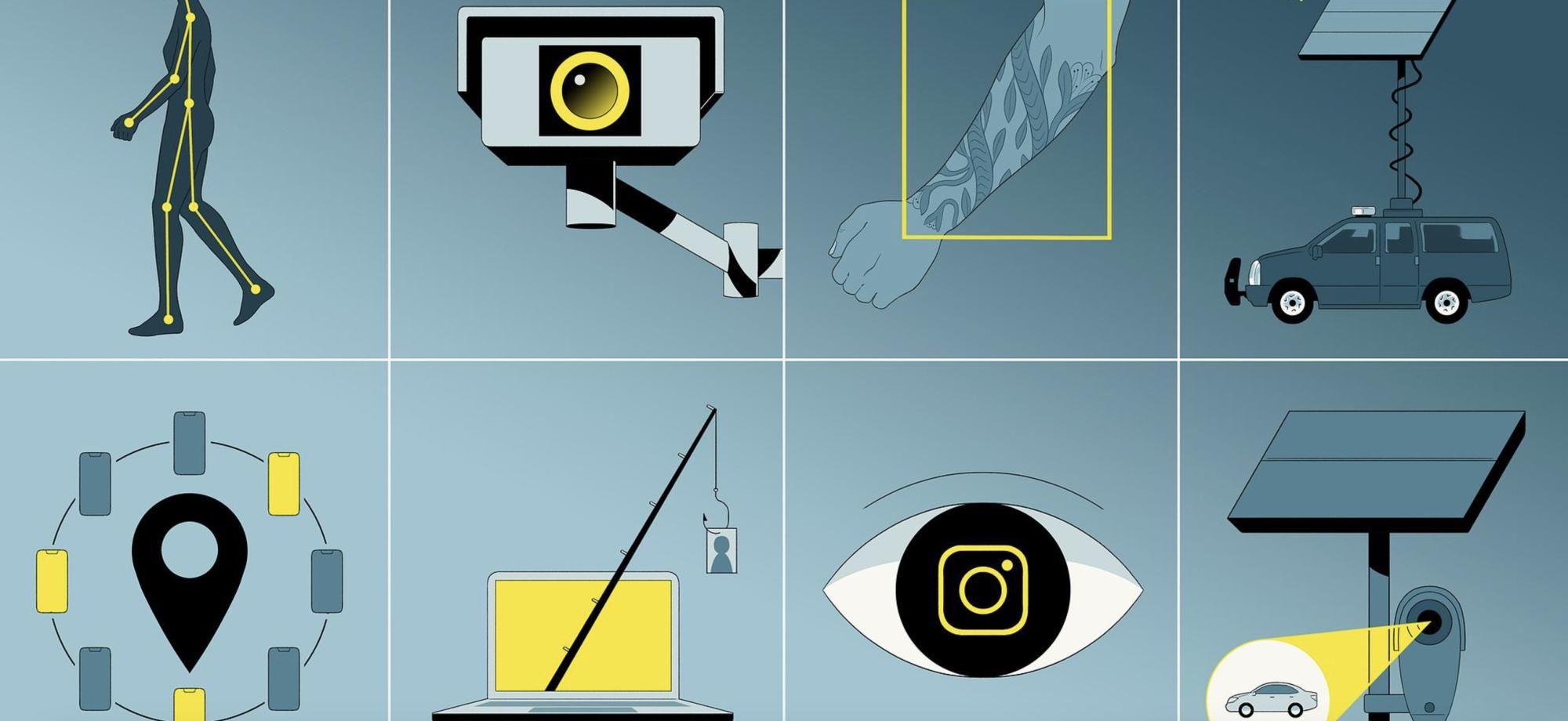
"Anonymity is a shield from the tyranny of the majority," wrote Supreme Court Justice John Paul Stevens in a 1995 ruling affirming Americans' constitutional right to engage in anonymous political speech. That shield has weakened in recent years due to advances in the surveillance technology available to law enforcement. Everything from social media posts, to metadata about phone calls, to the purchase information collected by data brokers, to location data showing every step taken, is available to law enforcement " often without a warrant. Avoiding all of this tracking would require such extrication from modern social life that it would be virtually impossible for most people. International Mobile Subscriber Identity (IMSI) catchers, or Stingrays, impersonate cell phone towers to collect the unique ID of a cell phone's SIM card. Geofence warrants, also known as reverse location warrants ... lets law enforcement request location data from apps on your phone or tech companies. Data brokers are companies that assemble information about people from a variety of usually public sources. Tons of websites and apps that everyday people use collect information on them, and this information is often sold to third parties who can aggregate or piece together someone's profile across the sites that are tracking them. Companies like Fog Data Science, LexisNexis, Precisely and Acxiom possess not only data on billions of people, they also ... have information about someone's political preferences as well as demographic information. Surveillance of social media accounts allows police to gather vast amounts of information about how protests are organized ... frequently utilizing networks of fake accounts. One firm advertised the ability to help police identify "activists and disruptors" at protests.
Latest
Latest News
Each news summary is created according to strict standards. Here's how we do it.
Each summary is created using a consistent editorial procedure. The target length is approximately 16 lines of 11-point Arial text in a 650-pixel-wide column. Up to 25% of a summary may be set in bold to emphasize the most important ideas. Summaries are composed of verbatim excerpts presented in the same sequence as they appear in the original news source, with very minor editorial additions. Where material has been omitted between excerpts, the omission is indicated with ellipses (...). Any words added by an editor for clarity or context appear in [brackets]. Our original news editor was Fred Burks. Tod Fletcher edited most summaries from 2007 through 2014, and Mark Bailey has served as news editor since 2014.