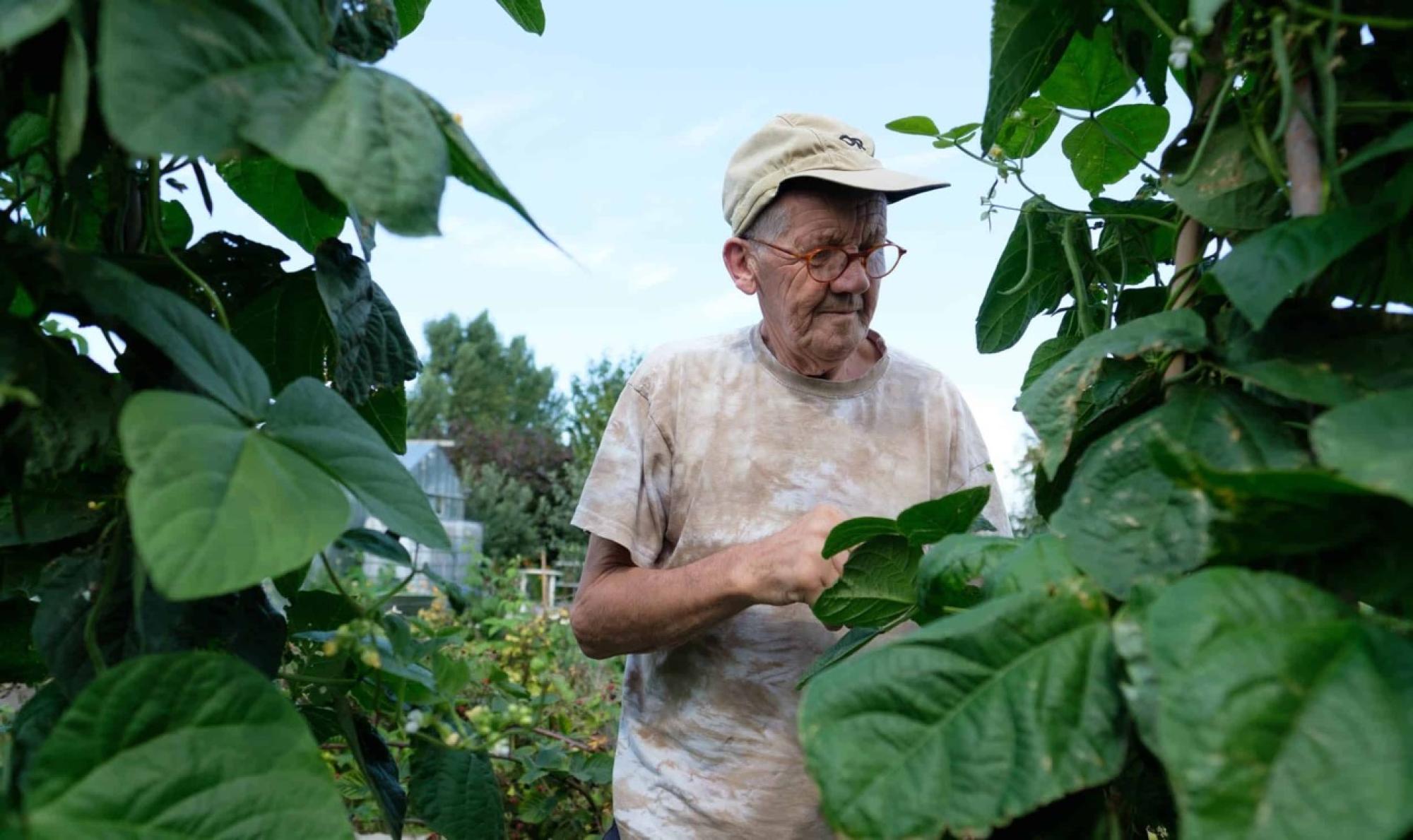
On Dutch 'care farms,' aging folks tend to livestock, harvest vegetables and make their own decisions. Boerderij Op Aarde is one of hundreds of Dutch "care farms" operated by people facing an array of illnesses or challenges, either physical or mental. Today, there are roughly 1,350 care farms in the Netherlands. They provide meaningful work in agricultural settings with a simple philosophy: rather than design care around what people are no longer able to do, design it to leverage and emphasize what they can accomplish. Studies in Norway and the Netherlands found that people with dementia at care farms tended to move more and participate in higher-intensity activities than those in traditional care, which can help with mobility in daily life and have a positive impact on cognition. Dementia is often linked to social isolation, and care farms were found to boost social involvement. In traditional dementia care settings ... the focus tends to be on preventing risk. There's often a fixed schedule of simple activities, like games or movies, and the only choice attendees are given is whether to participate or not. In the course of his research, [Jan] Hassink has spoken to countless people with dementia. Common to many of them is a desire to not only participate in society, but contribute to it. "We don't focus on what's missing, but what is still left," says Arjan Monteny, cofounder of Boerderij Op Aarde, "what is still possible to develop in everybody.
Latest
Latest News
Each news summary is created according to strict standards. Here's how we do it.
Each summary is created using a consistent editorial procedure. The target length is approximately 16 lines of 11-point Arial text in a 650-pixel-wide column. Up to 25% of a summary may be set in bold to emphasize the most important ideas. Summaries are composed of verbatim excerpts presented in the same sequence as they appear in the original news source, with very minor editorial additions. Where material has been omitted between excerpts, the omission is indicated with ellipses (...). Any words added by an editor for clarity or context appear in [brackets]. Our original news editor was Fred Burks. Tod Fletcher edited most summaries from 2007 through 2014, and Mark Bailey has served as news editor since 2014.