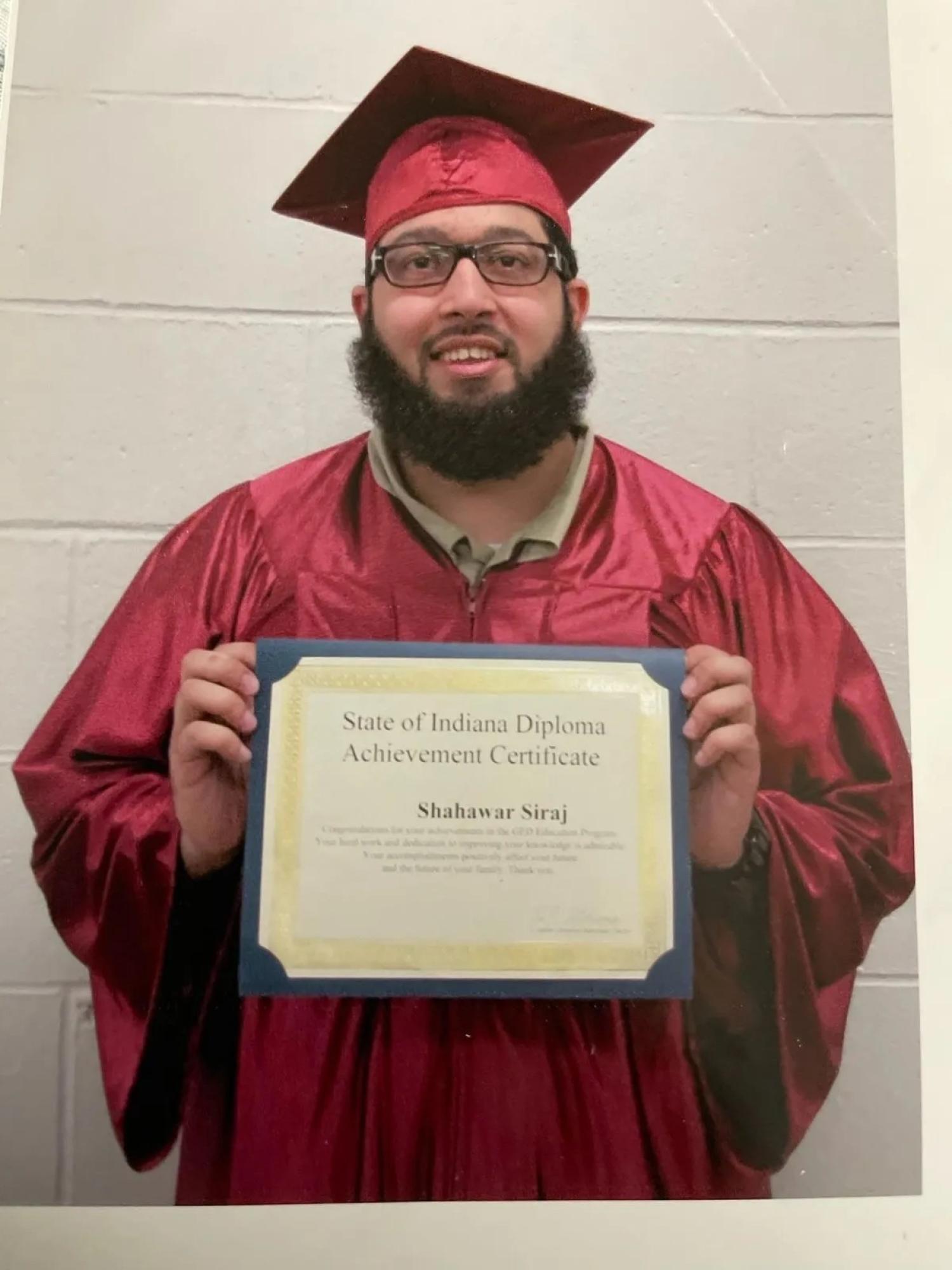
Two decades ago, Shahawar Matin Siraj started to feel uneasy about a plan to bomb a subway station in Manhattan. Osama Eldawoody, a New York City Police Department informant recruited after 9/11, had established himself as a father figure to Siraj, who was 21 when they met. But as it started to feel real, Siraj tried to back out insisting about 18 times that he was not willing to place bombs in the station. "I have to, you know, ask my mom's permission," he had said. Siraj [was] arrested a week later ... and was sentenced in 2007 to 30 years in prison after three years of pretrial detention. Siraj is one of almost 1,000 terrorism defendants prosecuted by the U.S. since 9/11. More than 350 defendants' cases involved FBI stings with an informant or undercover agent. The fear of this kind of surveillance transformed the social fabric of Muslim communities and made them more insular. "You didn't know if the person you're talking to was an informant or undercover," says Fahd Ahmed, executive director of Desis Rising Up and Moving, or DRUM. (Siraj's family are members.) A 2014 Human Rights Watch report closely reviewed 27 federal prosecutions involving 77 defendants and found that in some instances, "the FBI may have created terrorists out of law-abiding individuals by suggesting the idea of taking terrorist action or encouraging the target to act." The report also described a pattern of targeting people with mental or intellectual disabilities in these stings.
Latest
Latest News
Each news summary is created according to strict standards. Here's how we do it.
Each summary is created using a consistent editorial procedure. The target length is approximately 16 lines of 11-point Arial text in a 650-pixel-wide column. Up to 25% of a summary may be set in bold to emphasize the most important ideas. Summaries are composed of verbatim excerpts presented in the same sequence as they appear in the original news source, with very minor editorial additions. Where material has been omitted between excerpts, the omission is indicated with ellipses (...). Any words added by an editor for clarity or context appear in [brackets]. Our original news editor was Fred Burks. Tod Fletcher edited most summaries from 2007 through 2014, and Mark Bailey has served as news editor since 2014.